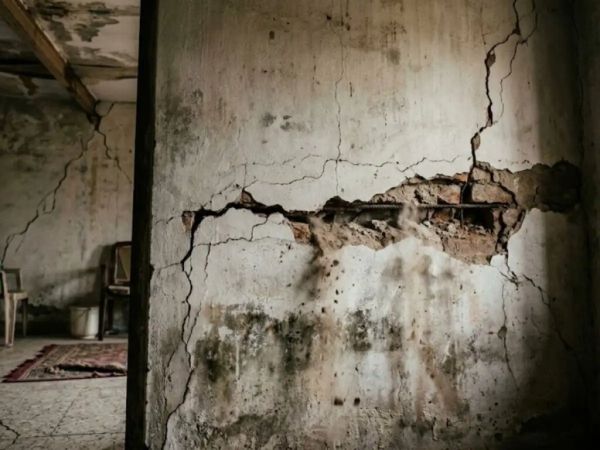
It is very important to know the strength of the house. Simply assuming that a house is new or recently constructed does not guarantee its soundness. Many times, signs of weakening of the building are already visible, which if identified in time, can prevent a major accident. Especially in dense settlements, the threat of dilapidated buildings can cost many lives.
When the building begins to weaken, some changes are already visible. Cracks, warping of structures and unusual slope of the floor may be such signs. Ignoring these as normal can be serious.
If the doors or windows of the house are suddenly not closing properly or their frame is seen leaning on one side, then be alert. If the foundation or pillars shift, the frames may bend and the doors may get stuck or jammed.
Don't take it lightly if the floor suddenly feels sloper than before or bulges and cracks appear between the tiles. This may indicate a change in the structure of the building.
In case of excessive pressure on the building, cracking sounds may be heard from the roof and walls. Also, seeing a gap between the wall and the mortar can also be a sign of concern. In such a situation, it is necessary to immediately get checked by a specialist.
People often ignore small cracks in the walls, but not every crack is normal. If the width of a crack exceeds 5 millimeters (0.2 in), it should be taken seriously and the building should be inspected.
Of particular concern are oblique or stepped cracks that form at a 45-degree angle in walls. Such cracks may be a sign of foundation subsidence or abnormal pressure on the structure. Ignoring them for a long time can be risky.