The Supreme Court on Wednesday expressed strong displeasure over a notice issued by a Greater Noida executive magistrate to a student in connection with a protest led by the Cockroach Janta Party (CJP).
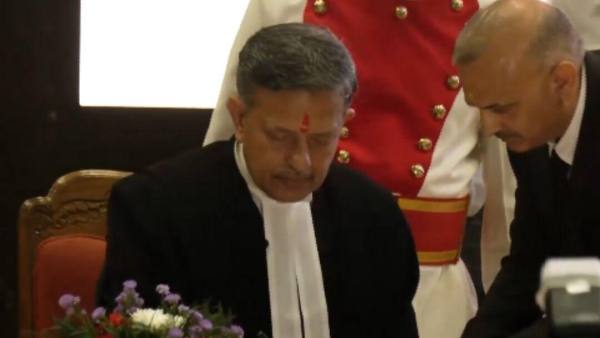
The issue was brought before a three-judge bench headed by Chief Justice of India Surya Kant. A lawyer appearing before the court said the notice had been issued at the police's request but was subsequently withdrawn.
The lawyer argued that issuing the notice amounted to an attempt to intimidate students and was contrary to the Supreme Court's September 1 order directing that no further action be taken against students in connection with the FIRs registered over the protests.
Chief Justice Surya Kant said the magistrate would be asked to explain why the notice had been issued despite the court's earlier directions.
The CJI questioned how an executive magistrate could issue such a notice when the Supreme Court had expressly directed that no punitive action be taken against the students.
“We are surprised how the magistrate can issue a notice when we have already ordered that no punitive action be taken against any student,” the Chief Justice said, stressing that the court's earlier order was clear.
Justices Joymalya Bagchi and V Mohan were also part of the three-member bench hearing the matter.
Officials had said on Tuesday that Akshat Tripathi, a student of Gautam Buddha University, had received a notice from the Greater Noida executive magistrate over his alleged participation in a CJP-led protest at Jantar Mantar.
The notice required Tripathi to furnish a personal bond of ₹5 lakh to maintain peace. The order was subsequently withdrawn.
The matter has now drawn the Supreme Court's attention because of the timing of the notice and the court's previous direction restraining punitive action against students involved in the cases.
On September 1, the Supreme Court invoked its special powers under Article 142 of the Constitution to halt further action on all FIRs connected with the protests.
The development came after the Centre urged the Supreme Court to exercise its extraordinary powers in relation to the FIRs.
The latest proceedings have therefore raised questions over how the notice was issued despite the court's explicit directions. The Supreme Court is now seeking an explanation from the magistrate on the circumstances that led to the notice being issued.