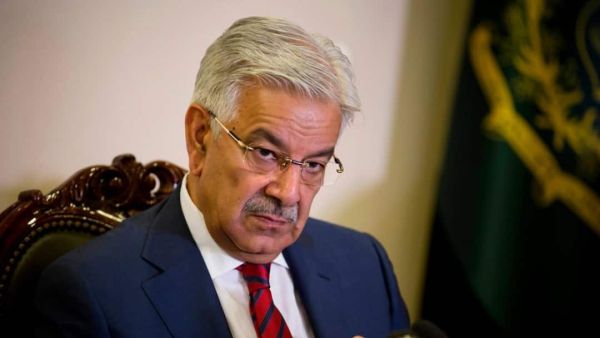
Pakistan Defence Minister Khawaja Asif has acknowledged that Islamabad is facing a delicate diplomatic challenge amid escalating tensions between the United States and Iran, describing Pakistan’s position as a “tightrope walk” because of its close ties with both Iran and the Gulf countries involved in the conflict.
Pakistan has sought to play a mediating role between Washington and Tehran in efforts to end the war in West Asia, but discussions so far have failed to result in a permanent settlement.
‘Brotherly Relations’ With Iran, Gulf Countries
Asif said Pakistan has “brotherly relations” with all sides and would have to carefully assess how far it could go in any further mediation efforts between the US and Iran.
Islamabad would also need to consider whether it could avoid taking certain steps that could further complicate its diplomatic position.
“For Pakistan, this becomes quite a test, how far we can go in this conflict, where we can exercise restraint, and whether we can even afford to stay away,” the minister said in an interview with Geo News.
“All these considerations, in my view, make it a tightrope walk for Pakistan,” he added.
Asif was speaking about Pakistan’s possible further role in efforts to engage both sides as tensions continue to simmer across the region.
Islamabad Trying To Maintain Communication With Both Sides
The Pakistani minister said Islamabad had been attempting to maintain communication with both the US and Iran, stressing that its relationships with all countries involved were important.
“The way we have tried to contact both sides, we have tried to call them,” he said.
Asif also underlined that Pakistan’s ties with the Gulf states involved in the conflict were as important to Islamabad as its relationship with Iran.
“We have brotherly relations with all the Gulf countries involved in this conflict, as well as with Iran on the other side. These relations are very dear to us,” Asif said.
Pakistan Seeks To Preserve Diplomatic Space
The minister indicated that Islamabad would seek to preserve as much diplomatic space as possible and, where feasible, avoid actions that could further narrow its room for manoeuvre.
“For Pakistan, this becomes a kind of special situation. We have to see how far we can go and whether we can avoid (taking certain steps) if possible,” he said.
Asif also said Pakistan should continue to hope for a diplomatic resolution to the crisis.
“And we should keep hoping that some way forward will emerge,” he added.
‘We Do Not Necessarily Have To Respond’ To Every Action
Asked about the possibility of further action or Pakistan’s response to developments involving its partners, Asif said Islamabad did not necessarily have to respond to every action in an identical manner.