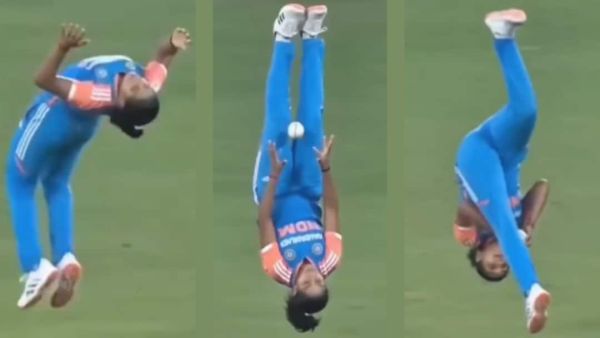
A viral video showing an Indian women's cricketer pulling off an extraordinary somersault catch has taken social media by storm. The clip appears to show the player sprinting before completing a somersault while taking the ball, with some users claiming the player is Harmanpreet Kaur.
However, the video is not genuine. It is an AI-generated clip that has been circulated across social media, highlighting the growing challenge of distinguishing authentic sports footage from digitally manipulated content.
The footage has been shared widely, with at least one social media account identifying the player as Harmanpreet Kaur. The catch shown in the clip is highly unusual and has attracted attention largely because of how difficult the sequence would be to execute in a real match.
#viralvídeo
— Prof.Sarita Sidh (@profsaritasidh) September 10, 2026
I am confirmed. You have not seen such a catch in your life ☺️ pic.twitter.com/CeRSd1NLtO
While several users appear to have shared the video for entertainment, AI-generated sports content can also mislead viewers when fabricated footage is presented as genuine.
The incident is another example of how rapidly artificial intelligence tools are making manipulated videos more convincing and easier to circulate.
पूरी जिन्दगी में आपने ऐसा कैच न देखा होगा न देख सकेंगे ! pic.twitter.com/CtuMpzxr52
— Dr Monika Singh (@Dr_MonikaSingh_) September 10, 2026
Was this ‘BackFlip’ necessary to have this catch? pic.twitter.com/El6L6GcThE
— ProfSK (@ProfSK5) September 9, 2026
What an incredible and breathtaking catch
— Gaurav K. Verma (@Tgauravverma) September 9, 2026
The player’s reaction time and remarkable balance on the field are truly commendable. With the ball travelling at tremendous speed, the player showed incredible agility and concentration, timed the dive perfectly, and grabbed the ball… pic.twitter.com/krZ1JcWEIC
Deepfakes use artificial intelligence to create or manipulate videos, images and audio so that people can appear to say or do things that never happened. Public figures and celebrities are particularly vulnerable because large amounts of their photographs and footage are available online.
Such content can be used to spread misinformation, damage reputations or violate a person's privacy. As the technology improves, identifying manipulated media without careful verification is becoming increasingly difficult.
There is no foolproof way to prevent personal content from being misused, but several precautions can reduce the risk.
Avoid posting unnecessary personal photographs and videos publicly, and use stronger privacy settings on social media accounts. Strong, unique passwords and additional account-security measures can also make it harder for unauthorised users to access personal media.
Keeping reliable antivirus software on computers and other devices can provide another layer of protection against malware that could expose personal files.
Users should also be cautious when encountering footage that appears unusually perfect or unrealistic. Checking the original source before sharing can help prevent manipulated content from spreading further.
Watermarks can discourage some forms of unauthorised use, while accurate file metadata can help establish information about the ownership and creation of original media.