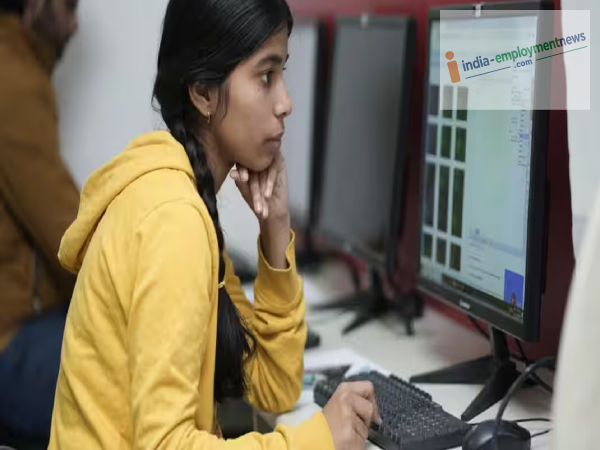
Until now, NEET-UG has been conducted in pen-and-paper mode, but preparations are underway to switch it to Computer-Based Test (CBT) mode. NTA Director General Abhishek Singh stated that the exam will soon be conducted in CBT mode.
The NTA is preparing to make a major change to the exam pattern of the medical entrance test, NEET-UG. Currently, NEET-UG is held using the pen-and-paper method with OMR sheets, but plans are in motion to transition it to a computer-based test. NTA Director General Abhishek Singh remarked that the exam will soon shift to CBT mode, noting that computer-based testing represents the future of examinations.
Statement from the NTA Director General
According to NTA Director General Abhishek Singh, NEET is the only major NTA examination that is still conducted using paper and OMR sheets. In contrast, exams such as JEE, UGC-NET, CUET, and NIFT are already being conducted in a computer-based format. He stated that work is underway to transition all NTA examinations to CBT mode in the future. However, to conduct a massive exam like NEET online, the NTA will need to significantly strengthen its network of exam centers and digital infrastructure.
Work Underway Led by Nandan Nilekani
A high-powered task force is working on the process of transitioning NEET to CBT mode. This task force is led by Infosys co-founder Nandan Nilekani. The group is focusing on aspects related to improving the examination system and making it more secure and student-centric. Approximately 20 lakh students appear for NEET annually; consequently, establishing a sufficient number of computer-based testing centers for such a large volume of candidates will be one of the biggest challenges in this transition.
Emphasis on Using Government Institutions as Exam Centers
A robust network of exam centers will be required to support the CBT system. To this end, the NTA is collaborating with the AICTE to designate government colleges and technical institutions as examination centers. The objective is to make the conduct of examinations more organized and secure. Computer-based tests eliminate the need for printing and physically distributing question papers, which is expected to help mitigate issues such as paper leaks and other irregularities. However, this also necessitates strengthening digital systems and cybersecurity measures.
Future Use of AI in Examinations
The NTA is also working on integrating AI into the examination system. The agency aims to detect fraud and irregularities by leveraging AI to monitor examination logistics, data, and analytics. The NTA is already utilizing Aadhaar-based verification and facial authentication for several examinations. According to Abhishek Singh, facial authentication systems for identity verification are currently being employed in almost all major examinations.
Plans to Expand Beyond India
The NTA Director General stated that the agency’s immediate priority is to strengthen its examination system and processes within India. Subsequently, the NTA aims to develop a digital examination system that can be adopted by other countries and international organizations.