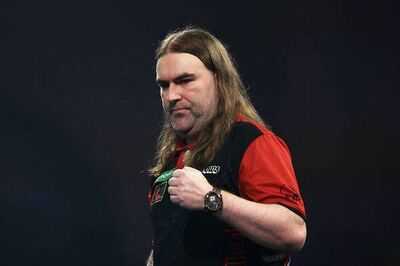
Paddy Power have blured its logo at the World Darts Championship to highlight the rare eye condition suffered by Ryan Searle. The 38-year-old booked his last-four spot to take on Luke Littler with a 5-2 victory over number five seed Jonny Clayton.
Searle’s run to the last four is made even more impressive by the fact he has a rare eyesight condition called Autosomal Dominant Optic Atrophy (ADOA). An eye condition which means he often cannot see where the dart lands.
ADOA is a rare genetic eye condition that is caused by the deterioration of the optic nerve and causes progressive and irreversible sight loss in both eyes. ADOA symptoms include blurred vision in both eyes and difficulty in recognising colours.
The former window cleaner, nicknamed ‘Heavy Metal’ due to his love of the music genre, has helped raise more than £15,000 for the Cure ADOA Foundation, and tournament sponsor Paddy Power have shown their support with a visual campaign they hope will help the 38-year-old’s cause.
The signature ‘180 boards’ held aloft by fans will all feature the brand’s name in blurred writing, along with tables on the stage, and their digital signage at Alexandra Palace will also be distorted to demonstrate how Searle’s vision can be impaired.
• Ryan Searle's eye condition explained as darts star takes on Luke Littler
• Emma Paton lifts lid on Luke Littler's true character away from the spotlight
Searle has raised more than £10,000 for the Cure ADOA Foundation, and Paddy Power have also pledged to match the £15,000 raised so far for ADOA.
Speaking about his condition, Searle revealed: “It’s a hereditary condition, so I’ve passed it to both of my children.
“My son doesn’t have it as bad as me, but my daughter has it really bad. When it gets to about six feet, she can see, but after that her vision gets really bad, so she’s registered as visually impaired.
“So, if I can raise a lot of awareness for that and try and find a cure for it, that means a lot to me.
“It’s only in the last 18 months that I realised what the diagnosis was for my vision. It’s been bad for as long as I can remember, but to have a diagnosis for it is really good.
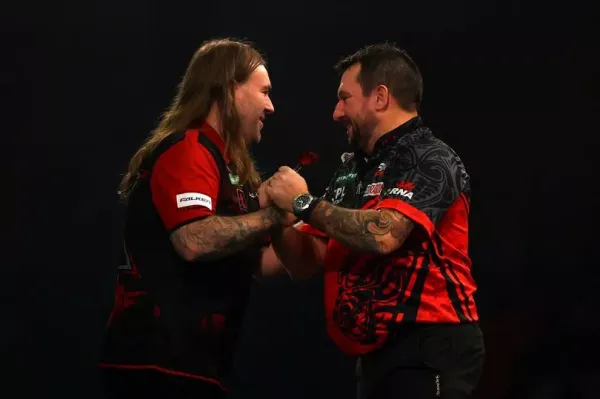
“There’s no cure for what I’ve got. I’m stuck with it. I wear contact lenses now, just try and take a bit of the blurriness away from my vision.
“But sometimes on stage, I’m asking the caller what I’ve scored, and sometimes I don’t, and it puts me in a bit of a difficult position.
“If I can inspire people who maybe can’t see as well as others to pick up the game and give it a go, then that means a lot to me.”