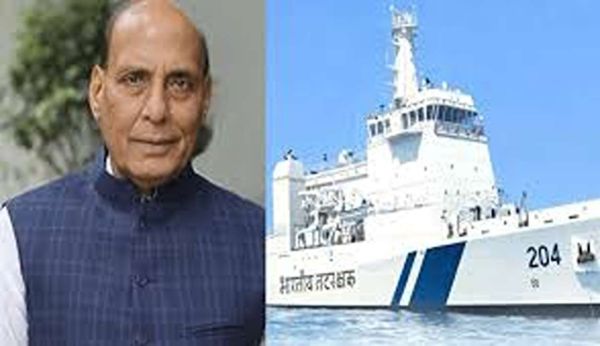
Rajnath Singh: On Monday, the Indian Coast Guard’s first in-built Pollution Control Vessel (PCV), Samudra Pratap, will be commissioned in Goa by Defense Minister Rajnath Singh.
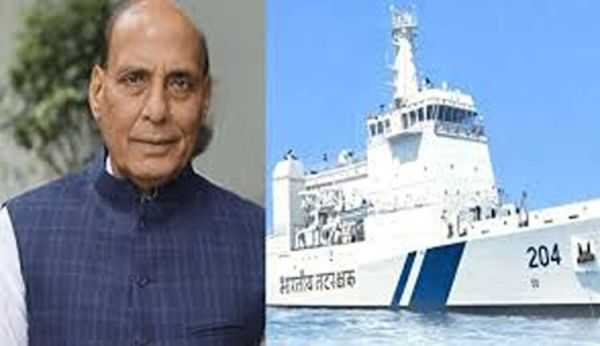
On January 5, Hon. Raksha Mantri Shri Rajnath Singh will commission the first of two Pollution Control Vessels, @IndiaCoastGuard Ship Samudra Pratap, at @goashipyardltd, #Goa, according to an official statement posted on ICG’s social media accounts.
“The 114.5 Mtr, 4,200 ton vessel, built by #GSL with over 60% indigenous content, has an endurance of 6,000 nm and a speed of over 22 knots, greatly improving the #ICG’s pollution response, firefighting, and maritime safety & security capabilities,” the ICG said.
Samudra Pratap was admitted by the ICG earlier on December 23 as part of Goa Shipyard Limited’s (GSL) 02 PCV project. According to a Ministry of Defense official, the introduction of this ship strengthened the government’s Aatmanirbhar Bharat and Made in India programs.
The Indian Coast Guard’s first locally designed and constructed pollution control vessel is called “Samudra Pratap.” Being the biggest vessel in the ICG fleet, it greatly expands the Coast Guard’s operating capabilities and reach.
A 30mm CRN-91 gun, two 12.7mm stabilized remote-controlled guns with integrated fire control systems, an indigenously developed Integrated Bridge System, an Integrated Platform Management System, an Automated Power Management System, and a high-capacity external firefighting system are among the cutting-edge features of this 114.5-meter-long, 16.5-meter-wide, 4,170-ton vessel.
The pollution control vessel is the first Coast Guard vessel with a FiFi-2 / FFV-2 designation certificate and Dynamic Positioning capabilities (DP-1).
Comprehensive pollution response activities inside the Exclusive Economic Zone and beyond are made possible by its sophisticated oil spill detection systems, which include an oil fingerprinting machine, a gyrostabilized standoff active chemical detector, and pollution control lab equipment.
It can perform very precise operations, separate oil from polluted water, analyze impurities, and recover pollutants from viscous oil.
According to a release, DIG V.K. Parmar, PD (MAT), ICG; Brajesh Kumar Upadhyay, Chairman and Managing Director, GSL; and other top officials from ICG and GSL attended the induction event last month.