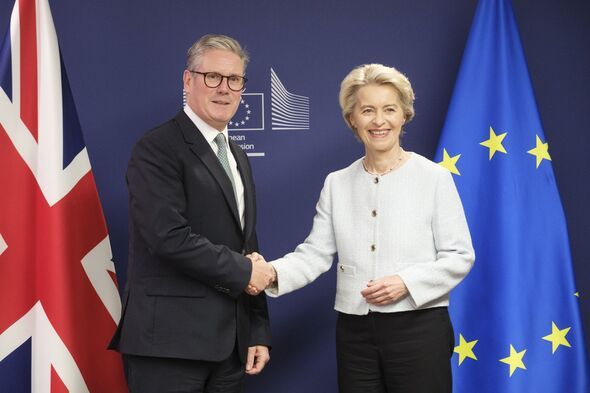
Sir Keir Starmer faces fresh fury over a plot to hand the EU new powers that could allow Brussels to alter UK law. Anger erupted after it was revealed he had ordered ministers to prepare new legislation as his controversial plans to unpick Brexit gathered pace.
It has also emerged that Britain faces handing huge sums to the EU for better access to the single market under Sir Keir's plans to "reset" relations with the EU. The PM is pushing for closer ties with the bloc under huge pressure from Europhile Labour MPs and ministers, arguing it can boost the economy. Brussels sources have been making clear the government will have to "pay to play" if Labour wants to remove more barriers.
Diplomats told the Financial Times that the bloc's "red lines" meant the UK would have to obey EU rules and contribute to its budget.
This could potentially run into hundreds of millions of pounds.
The Brexit Bill, which will be fiercely opposed by the Conservatives and Reform UK, is expected to be tabled in Parliament this spring.
It will effectively allow the EU to change British laws in areas such as food standards, animal welfare and pesticide use. And it will mark the first time since Britain left the EU that MPs have been asked to surrender their sovereign right to make laws in certain areas.
Instead, the UK will effectively be expected to comply with regulations from Brussels under a process known as dynamic alignment.
In contrast to when the UK was a member of the EU, the British Government will not have a vote on future laws passed by Brussels that could affect the UK.
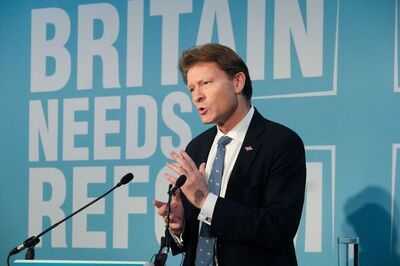
Reform UK deputy leader Richard Tice lashed out at the plans, accusing the Prime Minister of trying to reverse Brexit.
"This EU reset Bill is a blatant effort by Starmer's Remainers to overturn the democratic will of 17.4million people," he said.
"They want Britain back under the thumb of the EU rules, taxes and costs. Reform UK will highlight this Government's betrayal and make Brexit a success when we're in power."
A Labour source said: "We have decided we will align with some of the EU's rules, in the name of easing trade for British businesses and lowering bills for British households.
"The very nature of all international agreements is that they involve shared rules on certain areas.
"Free traders and conservatives have always wrestled with this concept, and the boldest have succeeded when they do not let ideology get in the way."
Ministers say the change in legal jurisdiction will matter little as, since Brexit, UK food manufacturers have largely followed new EU rules because they are supplying to both markets.
They argue the change will mean there is no need for expensive and time-consuming paperwork for farmers and food sellers who want to export their goods to the Continent.
But Richard Wheeler, 55, who runs a 200-acre dairy farm in Cutnall Green, Worcestershire, said: "UK farmers are willing to contend with a bit of paperwork because we're proud that we work to a higher standard than everyone else.
"What this really is is a precursor for allowing more food into the country that is of a lower quality and doesn't adhere to our regulations on things like pesticides.
"The first thing I thought when I heard this was: This is Starmer's next trick of incompetence.
"He's using the excuse that Brexit isn't working to take us back to the EU with no clear mandate from the electorate and no seat at the table, and expecting all UK businesses to toe the line regardless of all the unknowns."
Sir Keir has said he hopes to "go further" in his European reset, but has ruled out rejoining either the customs union or EU single market as "red lines" in his negotiations.
Speaking to the BBC on Sunday, he said he had already taken the "sovereign decision" to align with the EU more closely.
He told Laura Kuenssberg: "I think we should get closer, and if it's in our national interest to have even closer alignment with the single market, then we should consider that, we should go that far."
Before Christmas the government announced it is paying £570million to rejoin the Erasmus student exchange programme.
On an annual basis the sum is double what Boris Johnson rejected as too expensive in 2021.
It is equivalent to roughly a fifth of the entire EU funding envelope for Erasmus+, although the government insists a chunk of the money will go on travel for British youngsters.
Worryingly, Brussels has already signalled that a 30% "discount" will not be repeated, meaning the cost could hit £810million a year in future.
Students from Turkey will be eligible to come to the UK in 2027, as the country is an "associate" member of the scheme.
And Brussels has declared it wants to expand the arrangements to cover countries such as Egypt, Algeria and Morocco.