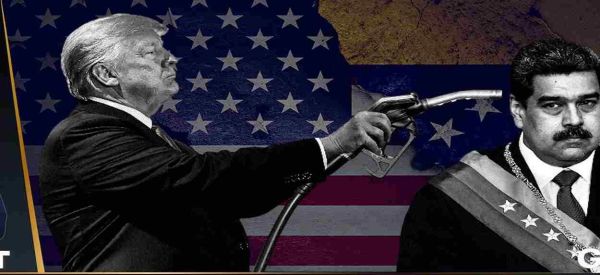
United States: The international political landscape has once again drawn global attention after strong remarks from the United States leadership regarding Venezuela and several other strategic regions. Recent statements have highlighted a continuation of aggressive foreign policy rhetoric, focusing on leadership change, access to natural resources, and broader geopolitical influence. These developments suggest that the United States is positioning itself for decisive action in regions it considers critical to its economic and strategic interests.
In a recent media interaction, Donald Trump issued a clear warning to Venezuela’s interim leadership. Addressing Delcy Rodriguez, who assumed power following the removal of Nicolas Maduro, the US President suggested that failure to align with American expectations could lead to severe consequences. According to Trump, the cost of non-cooperation could surpass even what Maduro faced during his ouster.
Rodriguez, who previously served as vice president, played a central role in managing Venezuela’s oil-based economy and supervising key intelligence operations. Her rise to interim leadership placed her at the center of intense international scrutiny, particularly from Washington.
Trump emphasized that the United States was prepared for further military or political action if cooperation was not forthcoming. While indicating that a second phase of intervention had been planned, he suggested it might not be necessary if the new leadership complied with US demands. Central to these demands was the organization of elections at what he described as an appropriate time, signaling a push toward a political transition favorable to US interests.
The remarks also reflected an underlying expectation that Venezuela’s new leadership would be open to negotiations, particularly in areas involving governance reforms and economic restructuring.
One of the most striking elements of the US President’s comments was the explicit emphasis on Venezuela’s natural wealth. He stated that the United States required full access to oil and other valuable resources within the country. Given Venezuela’s vast petroleum reserves, this statement underscored the economic motivations intertwined with political actions.
Trump defended the intervention by arguing that any form of rebuilding or regime transition would be preferable to the existing conditions in Venezuela. From his perspective, the country’s economic collapse and humanitarian crisis justified external involvement, portraying intervention as a necessary step toward stability.
Beyond Venezuela, the US President expanded his rhetoric to include other regions. He reiterated interest in Greenland, describing it as strategically essential, despite its status as part of Denmark, a NATO ally. This remark reinforced the administration’s view that strategic geography plays a crucial role in national security planning.
Trump also pointed to developments in the Caribbean, suggesting that Cuba was nearing a critical breaking point. According to him, the island nation’s reliance on subsidized Venezuelan oil made it vulnerable in the wake of leadership change in Caracas. He implied that no direct action might be required, as internal pressures could lead to significant shifts.
The tone of the statements grew sharper when addressing Colombia and Mexico. Trump criticized Colombia’s leadership, questioning its stability and hinting at potential operations if conditions worsened. His comments suggested dissatisfaction with the country’s internal governance and security situation.
Mexico was also warned to improve its cooperation with the United States. Trump stated that failure to do so could result in renewed military or political action in the region, using Venezuela as a reference point. These remarks highlighted a broader strategy of leveraging pressure to influence neighboring governments.
Collectively, these statements point to a period of heightened uncertainty in international relations. The emphasis on intervention, resource access, and leadership change reflects a continuation of assertive foreign policy doctrines. For global observers, the situation raises questions about sovereignty, international law, and the long-term impact of such strategies on regional stability.
As nations respond to these signals, diplomatic engagement and multilateral discussions are likely to intensify. The coming months may determine whether cooperation, confrontation, or compromise shapes the next chapter in relations between the United States and its global counterparts.