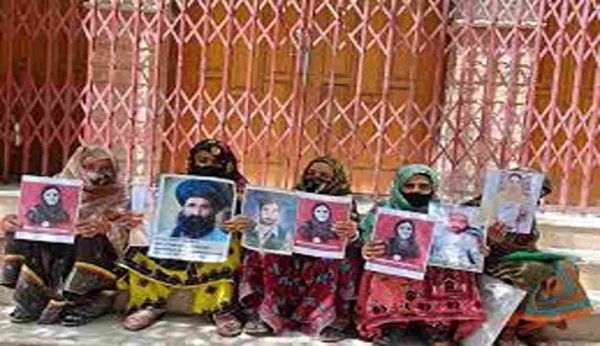
Quetta: The issue of enforced disappearances in Balochistan has once again come into focus following reports of multiple individuals allegedly taken into custody by security forces in Quetta. Human rights groups operating in the region continue to document such incidents, warning that the situation reflects a broader pattern of unresolved abuses, weak accountability, and growing distrust between local communities and the state.
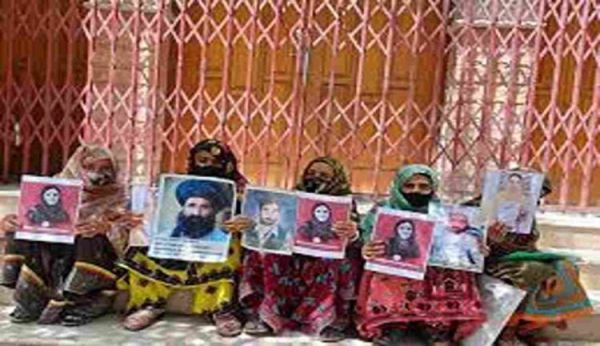
The Human Rights Department of the Baloch National Movement, known as Paank, reported three cases of enforced disappearances in Quetta on January 4. According to information shared on the social media platform X, these incidents occurred in the Killi Suhrab Khan area of the provincial capital. Paank stated that the individuals were taken from a location known as Qambrani House, allegedly by Pakistani security forces, without any legal warrants or formal explanation.
Among those reported missing is Naseeb Ullah, son of Shah Dad Khan. Paank identified him as a political worker associated with the National Party, a parliamentary political party active in Balochistan. His disappearance has raised concerns due to his political involvement and the recurring targeting of individuals linked to political activity in the region.
The same reports also mentioned Umer Baloch, a bachelor’s degree student, and his brother Dawood Baloch, who works as a mechanic. Both are residents of Killi Suhrab Khan and were reportedly taken during the same operation. Human rights observers note that the inclusion of students and working-class individuals among the disappeared highlights how the issue affects a wide cross-section of society, not limited to political activists alone.
Paank described these incidents as clear cases of enforced disappearance, a practice that violates international human rights standards. The organization called for an urgent and transparent investigation into the incidents and demanded accountability for those responsible. Rights groups argue that the absence of due process and the lack of information provided to families are defining features of enforced disappearances in the province.
In a series of consecutive public statements, Paank has continued to highlight similar cases from different parts of Balochistan. These reports suggest that enforced disappearances are not isolated events but part of an ongoing pattern that has persisted for years. Despite repeated appeals from civil society organizations, families of the missing often remain without answers regarding the whereabouts or legal status of their loved ones.
According to past reporting by Dawn, the Voice for Baloch Missing Persons has long documented cases of missing political activists, students, and ordinary residents. The group has organized protests, sit-ins, and rallies over several years to draw attention to the issue. Despite these sustained efforts, many families continue to wait for justice, with little progress reported in resolving individual cases.
Further insight into the situation has come from the Human Rights Commission of Pakistan. Following a fact-finding mission to Balochistan, the commission reported that enforced disappearances, along with other human rights violations, are contributing significantly to public alienation. According to the commission’s findings, these practices are also linked to increasing political instability, as communities lose trust in state institutions meant to protect them.
The continued prevalence of enforced disappearances points to deeper issues related to governance and accountability in the region. Analysts argue that when allegations are not investigated transparently, it weakens the rule of law and encourages a culture of impunity. Over time, this environment can exacerbate social tensions and undermine prospects for long-term peace and stability in Balochistan.
Despite mounting reports from human rights organizations and media outlets, Pakistani authorities have consistently denied involvement in enforced disappearances. Official responses often describe such claims as politically motivated or lacking verification. For families of the disappeared, these denials add to their suffering, as they struggle not only with the absence of their loved ones but also with the lack of official acknowledgment or legal recourse.
The gap between state narratives and the experiences of affected families has fueled ongoing mistrust between local populations and authorities. Human rights advocates emphasize that addressing enforced disappearances requires credible investigations, judicial oversight, and open dialogue with affected communities. Without meaningful steps toward accountability, the issue is likely to remain a major obstacle to peace, reconciliation, and democratic stability in Balochistan.