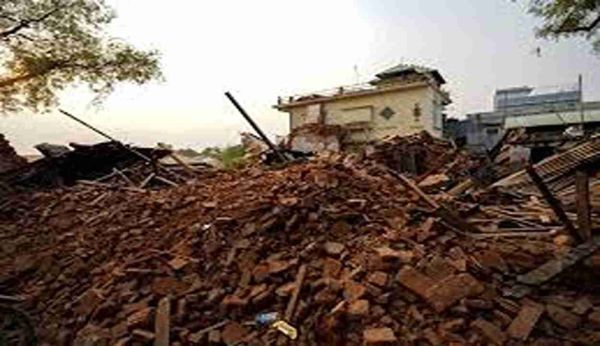
Bhutan: Early on Wednesday morning, the National Centre for Seismology (NCS) stated that an earthquake with a magnitude of 3.8 had hit Bhutan.
The NCS reports that at 03:17 AM IST, the earthquake struck at a depth of 10 kilometers.
In general, shallow earthquakes pose a greater risk than deep ones. This is due to the fact that seismic waves from shallow earthquakes may reach the surface more quickly, which causes more ground shaking, perhaps more structural damage, and more fatalities.
Like the rest of the globe, Bhutan has not been immune to the wrath of natural disasters and is vulnerable to a variety of them. According to the Asian Disaster Reduction Center, Bhutan is one of the world’s most seismically active regions and is situated in the young Himalayan Mountains.
Bhutan is located in the most active seismic zones, IV and V, according to the Indian Seismic Code. Given the location and the evidence from previous earthquakes, earthquakes are one of Bhutan’s most immediate threats. The inhabitants of Bhutan are also at danger from Glacier Lake Outburst Floods (GLOF), which are a consequence of global warming. Climate change has made seasonal high winds one of Bhutan’s risks, seriously damaging the country’s rural houses.
In Bhutan, windstorms in 2011 and 2013 severely damaged rural dwellings. According to the Asian Disaster Reduction Center, other dangers including landslides, flash floods, and forest/structural fires also spread across the nation and result in substantial property and human losses.