by Ismail Zakaria
Mount Rinjani is not easily conquered. Climbers must face challenging terrain and various risks. Yet, Rinjani remains a major draw, attracting tens of thousands of visitors every year to Indonesia’s second-highest volcano.
In mid-May 2025, at around 1:00 a.m. WITA, a group of climbers arrived at Bukit 3, approximately 5 kilometers from the Mount Rinjani National Park Office in Sembalun, East Lombok. After parking their vehicles at the trailhead, they double-checked their gear—from backpacks to headlamps—ensuring nothing was missed.
Before starting the long night trek, the group gathered to pray. "Let's pray for a smooth journey, a good time, and a safe return," said Idepp, who led the prayer for his teammates Gigih, Tyan, and Adrian.
At 1:10 a.m., the group from Mataram began their hike. The only sounds were the crunch of footsteps, the click of trekking poles, and the hum of night insects. Their headlamps provided the only light, essential for avoiding obstacles like cow dung, slippery patches, or steep drops.
It took about 50 minutes to reach Post I. The path consisted of alternating climbs and descents through thick shrubs and tall grass. Upon arrival, they took a quick water break. The post was empty, with no other climbers camping in the gazebos. Above, the sky was clear and filled with stars.
Baca juga: Sea Levels Rise in Lombok: Residential Areas Impacted by Coastal Erosion
From Post I, the flickering lights of Rinjani 100 Ultra marathon runners could be seen moving toward the summit. That weekend, over 1,000 runners from 46 countries participated in the trail-running event, making the Sembalun area exceptionally busy.
The group reached Post II at 2:25 a.m. Unlike Post I, this area was bright and crowded as it served as a water station for the race. On regular days, Post II is a common resting point for climbers, porters, and guides. Interestingly, Ojek (motorbike taxis) can now reach Post I and II, a service many climbers use during the day to save time.
The real challenge begins after Post II. The trail toward Pelawangan is an energy-draining incline with very few flat sections. After passing a suspension bridge and a "shadow" post, the group arrived at Post III at 3:20 a.m. Here, they ate a meal to prepare for the most dreaded section of the Sembalun route: Bukit Penyelesan or The Hill of Regret.
Bukit Penyelesan : Between Exhaustion and Morning Beauty
Bukit Penyelesan is notorious among Rinjani climbers. It is physically grueling and mentally taxing, often making hikers question their decision to climb, especially if they are not physically prepared.
The trail from Post III to Post IV is a mix of rocks and loose soil. The steep incline pushes heart rates to the limit and often causes muscle cramps. On that night, Idepp’s group had to share the narrow path with Rinjani 100 Ultra participants, often stepping aside to let the racers pass.
Exhausted, the group rested again at Post IV. While applying pain-relief cream, they chatted with other hikers, including a participant from Taiwan who decided to stop there to watch the sunrise.
As they continued toward Pelawangan, the temperature dropped significantly, requiring jackets and gloves. In these conditions, climbers must be wary of altitude sickness and hypothermia. The final stretch includes a section called Lendang Panas, an open ridge that is scorching hot during the day but offers a stunning vantage point at dawn.
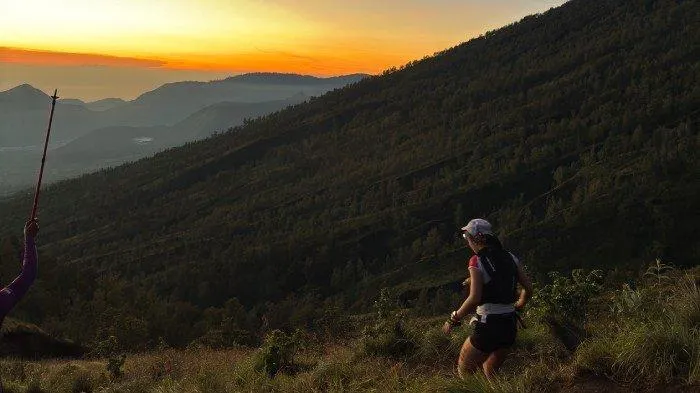
Around 6:00 a.m., the eastern horizon began to turn golden and orange. The vast landscape of forests and hills leading down to Sembalun village became visible. As the sun broke through the horizon, the group stood in awe. The light revealed the surrounding pine trees and the distant line of climbers heading toward the summit.
The reward was complete when they reached Pelawangan Sembalun. Not only because they could see the sunrise to the east, but the iconic Segara Anak Lake was also clearly visible to the west. "Like we did, you have to start climbing Rinjani (from Sembalun) at midnight to see the lake. By midday, it’s usually covered in fog," said Gigih.
After taking photos and eating, the group prepared to head back down at 9:00 a.m. They chose a "tektok" trip (a one-day hike without camping). "For me, it’s about enjoying the beauty, not just the challenge. Hiking at night is cooler, and you aren't intimidated by the sight of how far you still have to climb," Idepp explained.
The Beauty of Summit and Lurking Dangers
At 3,726 meters above sea level, Mount Rinjani is a top destination for local and international tourists. Climbers can enter through six official gates: Sembalun, Timbanuh, and Tete Batu in East Lombok; Senaru and Torean in North Lombok; and Aik Berik in Central Lombok.
Data from the National Park (TNGR) shows that by the end of December 2025, there were 73,348 visitors who climbed Rinjani. This is following a massive total of 80,107 visitors in 2024.
To climb, visitors must obtain a permit or Simaksi via the e-Rinjani app. The app requires climbers to register their entry/exit points and list any potential waste (trash) they are carrying. Upon arrival, hikers must check in with their ID and a health certificate. Trash is inspected both at the start and end of the hike; failure to bring back waste results in being blacklisted.
This strict "Zero Waste" policy is a priority. Forestry Minister Raja Juli Antoni emphasized in May that Rinjani must be known for its cleanliness as much as its beauty. Governor Lalu Muhammad Iqbal added that control is necessary so future generations can still enjoy the mountain.
While many reach the Pelawangan campsite, the trek to the actual summit is a different beast. It takes 6 to 8 hours round-trip from the campsite. The terrain is a dangerous mix of narrow ridges, deep volcanic ash, and loose gravel, often accompanied by freezing winds.
"At the 'Letter E' section, they say for every step up, you slide two steps down because of the steep, sandy terrain," said Rudi, a climber returning from the peak.
Despite the struggle, those who reach the top describe a mix of pride and awe. However, Idepp notes that the summit requires serious preparation. "I've climbed four times but haven't summited yet because I know my physical limits. I'll only do it when I’m fully prepared," he said.
Proper physical endurance and mental preparation, quality gear, and following the rules are the keys to a successful climb. The goal is not just to reach the top, but to return home safely.
Editor: Tyson Michael Burnett.