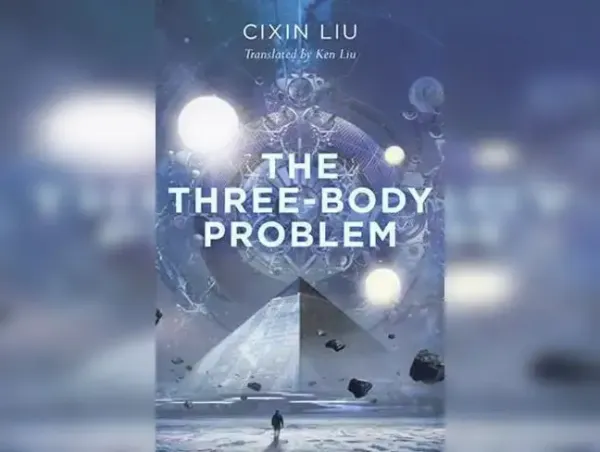
Book of the day: The Three-Body Problem, a science fiction novel by Chinese author Liu Cixin, has become a landmark work in global speculative fiction, fusing hard science, human drama and philosophical inquiry in a story that spans continents and cosmic timelines. First published in Chinese in 2008 and translated into English in 2014 by acclaimed author Ken Liu, the novel has since sparked international acclaim, won prestigious awards and inspired high-profile screen adaptations, making it a Book of the Day choice for readers exploring world literature and modern science fiction.
The alien world of Trisolaris, trapped in an unstable triple-star system, faces chaotic environmental extremes that repeatedly destroy its civilisation. The incoming signal sparks a plan by the Trisolarans to colonise Earth as an escape from their doomed planet. Meanwhile, back on Earth, human factions emerge, some welcoming the aliens as saviours of a corrupt world, and others determined to defend humanity against a far superior force.
Within this framework, the story interweaves scientific mystery, philosophical stakes and geopolitical unease, with Earth’s scientists and authorities struggling to understand the nature of the alien threat as well as the fractured human response it provokes.
In 2015, the English edition won the Hugo Award for Best Novel, marking the first time a translated work, and the first by an Asian author, had received the honour. The novel was also nominated for the Nebula Award and has been translated into more than two dozen languages.
American author and translator Ken Liu brought The Three-Body Problem to English-speaking audiences, adapting not only the language but cultural references through thoughtful footnotes and contextual clarity. His translation helped elevate the book’s philosophical and scientific depth without diluting its original complexity.
At the same time, the story explores human divisions: ideological, generational and cultural. Ye’s disillusionment with humanity and subsequent actions reflect broader tensions about hope and despair, trust and betrayal. These layers transform what could be a simple alien invasion plot into a profound philosophical inquiry.
Reviewers have likened its conceptual depth to classics by Arthur C. Clarke and Larry Niven, highlighting its blend of scientific speculation and narrative complexity.
The Netflix series moves the narrative into a contemporary setting with a diverse international cast, aiming to introduce the story to viewers unfamiliar with the books while retaining the philosophical and cosmic stakes that made the original novel impactful.
The Three-Body Problem: A Groundbreaking Tale of Contact and Conflict
Set against the backdrop of China’s Cultural Revolution, The Three-Body Problem begins with astrophysicist Ye Wenjie witnessing her father’s violent death during a struggle session, a formative trauma that shapes her worldview and sets the stage for the novel’s larger cosmic drama. At a secret military project known as Red Coast, Ye discovers a method of amplifying radio transmissions via the sun and sends a message into deep space. Years later, she receives an ominous reply from a distant star system inhabited by a civilisation in crisis.The alien world of Trisolaris, trapped in an unstable triple-star system, faces chaotic environmental extremes that repeatedly destroy its civilisation. The incoming signal sparks a plan by the Trisolarans to colonise Earth as an escape from their doomed planet. Meanwhile, back on Earth, human factions emerge, some welcoming the aliens as saviours of a corrupt world, and others determined to defend humanity against a far superior force.
Within this framework, the story interweaves scientific mystery, philosophical stakes and geopolitical unease, with Earth’s scientists and authorities struggling to understand the nature of the alien threat as well as the fractured human response it provokes.
The Three-Body Problem: Publication, Translation and Awards
Originally serialised in the Chinese science fiction magazine Science Fiction World in 2006, The Three-Body Problem was published as a standalone novel in 2008 and quickly became one of China’s best-selling science fiction works. The English translation by Ken Liu, published by Tor Books in 2014, brought the novel to an unprecedented international audience, helping to globalise Chinese science fiction in a way few works had before.In 2015, the English edition won the Hugo Award for Best Novel, marking the first time a translated work, and the first by an Asian author, had received the honour. The novel was also nominated for the Nebula Award and has been translated into more than two dozen languages.
The Three-Body Problem: Liu Cixin (Author) and Ken Liu (Translator)
Liu Cixin, born in 1963 in Beijing, worked for many years as a computer engineer while writing science fiction on the side. His career includes multiple works that have won China’s prestigious Galaxy Award and helped invigorate the nation’s science fiction scene. Liu’s blend of hard science, political context and imaginative ambition has earned him comparisons with Western giants of the genre.American author and translator Ken Liu brought The Three-Body Problem to English-speaking audiences, adapting not only the language but cultural references through thoughtful footnotes and contextual clarity. His translation helped elevate the book’s philosophical and scientific depth without diluting its original complexity.
The Three-Body Problem: Themes and Narrative Scope
What distinguishes The Three-Body Problem is its intellectual breadth and narrative ambition. The novel engages with deep questions about civilisational fragility, scientific progress, human nature and the ethics of contact with alien life, grounded in real physics concepts, including the titular three-body problem in orbital mechanics, an unsolved challenge that describes the unpredictable motion of bodies under mutual gravitational influence.At the same time, the story explores human divisions: ideological, generational and cultural. Ye’s disillusionment with humanity and subsequent actions reflect broader tensions about hope and despair, trust and betrayal. These layers transform what could be a simple alien invasion plot into a profound philosophical inquiry.
The Three-Body Problem: Critical Reception and Global Influence
Critical reception to The Three-Body Problem has been overwhelmingly positive. The New York Times noted the translation’s quality and the novel’s capacity to familiarise Western readers with a narrative deeply rooted in Chinese culture while addressing universal themes. Endorsements from figures such as former U.S. President Barack Obama, George R. R. Martin and Mark Zuckerberg further boosted its profile.Reviewers have likened its conceptual depth to classics by Arthur C. Clarke and Larry Niven, highlighting its blend of scientific speculation and narrative complexity.
The Three-Body Problem: Adaptations and Popular Culture
The influence of The Three-Body Problem extends beyond literature. A Chinese live-action adaptation titled Three-Body was released in 2023 and received critical acclaim locally. An English-language adaptation titled 3 Body Problem, produced by Netflix and led by Game of Thrones creators David Benioff and D.B. Weiss, premiered in March 2024 and quickly became a global talking point, topping streaming charts and prompting discussions about the challenges of translating complex science fiction to screen.The Netflix series moves the narrative into a contemporary setting with a diverse international cast, aiming to introduce the story to viewers unfamiliar with the books while retaining the philosophical and cosmic stakes that made the original novel impactful.