Long before Greenland appeared on European maps, a volatile Norseman named Erik Thorvaldsson set events in motion that would permanently link the island to Viking history. Born in Norway around 950 AD, Erik became known as Erik the Red, a name inspired not only by his fiery red hair and beard but also by a temperament that frequently landed him in trouble. His life was marked by conflict, and repeated acts of violence resulted in exile—first from Norway and later from Iceland.
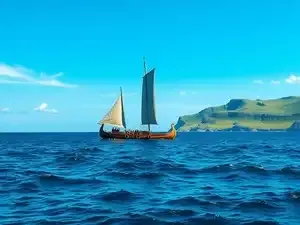
Forced to leave Iceland in 982 AD after being convicted of murder, Erik sailed into the unknown, heading west across the North Atlantic. His journey brought him to a vast, empty land shaped by towering cliffs, winding fjords, and pockets of land capable of supporting life. Though harsh and remote, the region held promise. Erik spent several years mapping the coastline and identifying areas where settlement might be possible. This land would eventually be known as Greenland.
A calculated name and the birth of a colony
When the time came to invite others to join him, Erik made a shrewd decision. He gave the land an inviting name—Greenland—believing that people would be more willing to relocate to a place that sounded fertile and hopeful rather than bleak and frozen. The strategy worked. While much of the island was unforgiving, the southern coast offered grazing land during the warmer months, making livestock farming feasible.
In 985 AD, Erik returned to Iceland to recruit settlers. His descriptions of opportunity and open land persuaded several families to take the risk. They set sail with animals, tools, and supplies, though the journey proved dangerous. Of the 25 ships that departed, only 14 survived the crossing, but those who arrived established the first permanent Norse communities in Greenland.
Two main settlements emerged in the south: one in the east near today’s Qaqortoq, and another farther west near present-day Nuuk. Erik established his home at Brattahlid (modern Qassiarsuk), which became the political and social heart of Viking Greenland.
Building a society at the edge of the world
Life in Greenland demanded resilience and adaptability. Settlers depended on a mixed economy—raising cattle and sheep, hunting seals and other animals, and trading prized resources such as walrus ivory and furs with Europe. Despite being geographically isolated, the colonies remained connected to Iceland and Norway through trade and communication.
At their height, these Norse communities supported several thousand people living on dispersed farms along the coastline. Their success in such an extreme environment lasted for centuries. Eventually, however, the settlements faded away, likely due to a combination of cooling temperatures, shrinking trade networks, and increasing isolation from Europe.
Greenland held a crucial position in the Viking world. It served as a stepping stone for exploration farther west and strengthened Norse presence across the Atlantic. Around the year 1000 AD, Erik’s son, Leif Eriksson, continued this westward push by reaching North America, long before later European expeditions.
The legacy of Erik the Red
Erik the Red remains a defining figure in Arctic exploration. He was not only a daring voyager but also the architect of Europe’s first long-term settlements in Greenland. His decisions—especially his bold branding of the land—shaped the course of Norse expansion.
Today, Greenland’s name itself reflects Erik’s influence, standing as a reminder of Viking ambition and the enduring impact one individual can have on the history and identity of an entire region.
Forced to leave Iceland in 982 AD after being convicted of murder, Erik sailed into the unknown, heading west across the North Atlantic. His journey brought him to a vast, empty land shaped by towering cliffs, winding fjords, and pockets of land capable of supporting life. Though harsh and remote, the region held promise. Erik spent several years mapping the coastline and identifying areas where settlement might be possible. This land would eventually be known as Greenland.
A calculated name and the birth of a colony
When the time came to invite others to join him, Erik made a shrewd decision. He gave the land an inviting name—Greenland—believing that people would be more willing to relocate to a place that sounded fertile and hopeful rather than bleak and frozen. The strategy worked. While much of the island was unforgiving, the southern coast offered grazing land during the warmer months, making livestock farming feasible.
In 985 AD, Erik returned to Iceland to recruit settlers. His descriptions of opportunity and open land persuaded several families to take the risk. They set sail with animals, tools, and supplies, though the journey proved dangerous. Of the 25 ships that departed, only 14 survived the crossing, but those who arrived established the first permanent Norse communities in Greenland.
Two main settlements emerged in the south: one in the east near today’s Qaqortoq, and another farther west near present-day Nuuk. Erik established his home at Brattahlid (modern Qassiarsuk), which became the political and social heart of Viking Greenland.
Building a society at the edge of the world
Life in Greenland demanded resilience and adaptability. Settlers depended on a mixed economy—raising cattle and sheep, hunting seals and other animals, and trading prized resources such as walrus ivory and furs with Europe. Despite being geographically isolated, the colonies remained connected to Iceland and Norway through trade and communication.
At their height, these Norse communities supported several thousand people living on dispersed farms along the coastline. Their success in such an extreme environment lasted for centuries. Eventually, however, the settlements faded away, likely due to a combination of cooling temperatures, shrinking trade networks, and increasing isolation from Europe.
Greenland held a crucial position in the Viking world. It served as a stepping stone for exploration farther west and strengthened Norse presence across the Atlantic. Around the year 1000 AD, Erik’s son, Leif Eriksson, continued this westward push by reaching North America, long before later European expeditions.
The legacy of Erik the Red
Erik the Red remains a defining figure in Arctic exploration. He was not only a daring voyager but also the architect of Europe’s first long-term settlements in Greenland. His decisions—especially his bold branding of the land—shaped the course of Norse expansion.
Today, Greenland’s name itself reflects Erik’s influence, standing as a reminder of Viking ambition and the enduring impact one individual can have on the history and identity of an entire region.