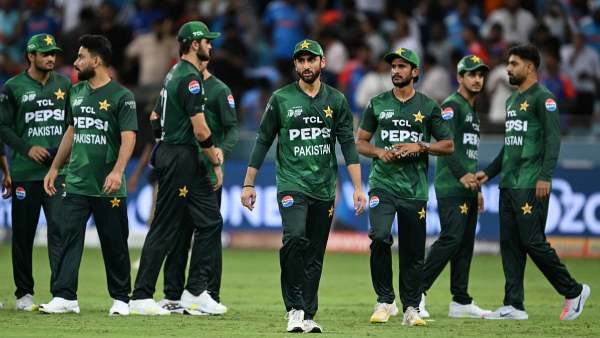
During the ICC Men’s T20 World Cup 2026 in India and Sri Lanka, Pakistan’s refusal to play India on February 15 in Colombo has sparked controversy. The PCB may invoke a force majeure clause to justify the boycott, a claim dismissed by the ICC and BCCI. The decision follows a Pakistani government directive and earlier disputes over tournament arrangements.
As the ICC Men’s T20 World Cup 2026 unfolds across India and Sri Lanka, a political and contractual storm has erupted over Pakistan’s refusal to play its scheduled group match against India on February 15 in Colombo. The Pakistan Cricket Board (PCB) is reportedly preparing to invoke a “force majeure” clause in its agreements with the International Cricket Council (ICC) and the Board of Control for Cricket in India (BCCI) in an attempt to justify the boycott, a move the BCCI and ICC consider a “weak argument” and legally unsound.
The controversy stems from a government directive in Islamabad that Pakistan’s team should not take the field against India, even though the side is otherwise participating in the tournament. Pakistan’s stance followed disagreements involving the ICC’s decision to replace Bangladesh with Scotland after the Bangladesh Cricket Board declined to play matches in India, citing security concerns, a move that infuriated Pakistan’s cricket leadership and government.
Under international sports law, force majeure excuses a party from fulfilling contractual obligations due to unforeseeable and uncontrollable events. However, the BCCI has publicly dismissed Pakistan’s potential force majeure claim as a weak basis for avoiding the India fixture, arguing that diplomatic or political tensions do not qualify under sporting force majeure provisions.
The ICC has also signaled strong disapproval of the boycott, warning that selective participation, i.e., playing some matches while refusing others, undermines the principles of fairness and competitive integrity that underpin the World Cup format. The governing body has urged PCB to reconsider and abide by its contractual commitments to play all scheduled games.
Pakistan PM Shehbaz Sharif Reaffirms Boycott Stance, Confirms PAK Team Will Not Play Against India At ICC T20 World Cup 2026
In a significant development just days before the ICC Men’s T20 World Cup 2026 gets underway, Pakistan Prime Minister Shehbaz Sharif has reiterated that his country will not play its scheduled group-stage match against India, maintaining a firm boycott stance that has stirred controversy within the global cricket community.
Speaking to his federal cabinet in Islamabad, Sharif confirmed that Pakistan’s senior men’s cricket team, while participating in the tournament overall, will not take the field against India in their Group A fixture set for February 15 in Colombo. The prime minister described the position as a “clear stand,” underscoring that the decision was made after careful consideration and was aimed at upholding what he described as ‘principles’, even though he paradoxically insisted that “politics should have no place in sports.”
Sharif also framed the boycott as an act of solidarity with Bangladesh, which was earlier removed from the tournament schedule and replaced by Scotland after the Bangladesh Cricket Board refused to play matches in India citing security concerns. Pakistan, he said, felt compelled to take a stand after perceiving what it sees as inconsistency in the International Cricket Council’s (ICC) handling of the issue.
The T20 World Cup, co-hosted by India and Sri Lanka from February 7 to March 8, features 20 teams in a tightly contested competition. India and Pakistan, two of the sport’s biggest rivals, were slated to renew their historic rivalry in one of the tournament’s most anticipated fixtures. The boycott, however, now puts that clash in jeopardy and marks a rare instance where geopolitical tensions have overtly intersected with the sport at a global ICC event.