TradeAgreement – India’s newly concluded Free Trade Agreement with the European Union is poised to reshape trade flows across multiple industries by significantly lowering tariff barriers and improving market access.
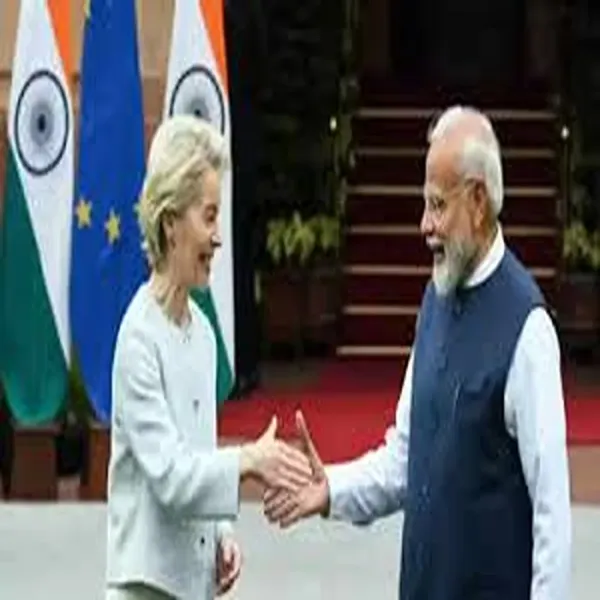
India and the European Union formally wrapped up negotiations for their long-pending Free Trade Agreement in January 2026, marking a major milestone in economic ties between the two partners. The agreement removes tariffs on more than 90 percent of goods traded between them, opening new opportunities for exporters and importers on both sides. As one of India’s largest trading partners, the EU’s market access is expected to offer considerable momentum to Indian industries seeking global expansion.
A detailed assessment by rating agency ICRA indicates that India will receive zero-duty access on 97 percent of the EU’s tariff lines, accounting for nearly the entire value of Indian exports to the bloc. In return, India will reduce or eliminate tariffs on 92 percent of its own tariff lines for European imports.
This extensive coverage signals one of the most comprehensive trade arrangements India has entered into in recent years. Trade analysts believe the agreement could strengthen supply chains, encourage cross-border investment, and deepen industrial cooperation.
Among the sectors likely to see immediate benefits is textiles and apparel. Indian garment exporters have long faced stiffer tariffs in the European market compared to competitors such as Bangladesh, Vietnam, and Turkey. With duties now removed, Indian manufacturers are expected to compete on equal footing.
Industry observers suggest that apparel and home textile producers may witness increased demand, potentially leading to fresh investments and job creation in labour-intensive clusters. Over time, the improved cost competitiveness could help Indian brands secure a stronger presence across European retail markets.
The pharmaceutical sector also stands to benefit considerably from the trade pact. The European Union accounts for roughly 12 percent of India’s pharmaceutical exports and nearly half of its pharma imports.
Elimination of EU import duties on Indian medicines is expected to improve price competitiveness in European markets. At the same time, reduced tariffs on European imports of bulk drugs, formulations, and medical devices could lower production costs for domestic manufacturers. Analysts note that this dual benefit may help streamline supply chains and reduce healthcare costs over the long term.
Organic chemicals, a major export category for India, are set to gain from improved access to European buyers. The EU currently absorbs about one-fourth of India’s organic chemical shipments. With tariff barriers lowered, Indian chemical producers may find it easier to compete with suppliers from countries such as China.
Engineering goods—including machinery, iron and steel products, and automotive components—are also expected to record stronger export performance. However, industry representatives caution that finished steel exports could continue to face hurdles due to the European Union’s Carbon Border Adjustment Mechanism, which is not fully addressed within the scope of the current agreement.
The agreement extends benefits to agricultural and processed food exports, including tea, coffee, spices, fruits, vegetables, and marine products. Marine shipments in particular are projected to gain from tariff reductions that, in some cases, reach up to 26 percent.
This could provide a boost to coastal economies, where fisheries and seafood processing units generate substantial employment. Policymakers believe that improved access to European markets may also encourage value addition in agricultural supply chains.
While expanding trade opportunities, negotiators have safeguarded certain sensitive sectors such as dairy, cereals, and poultry. These protections are intended to shield farmers and micro, small and medium enterprises from sudden competitive pressures. Labour-intensive industries including leather, footwear, furniture, and rubber products are expected to benefit from more favorable market access without undermining domestic stability.
Merchandise trade between India and the European Union has grown at an average annual rate of 7 percent over the past decade, reaching approximately USD 137 billion in recent years. India has maintained a trade surplus since 2020-21, underscoring the strategic importance of the partnership.
Experts suggest that with effective implementation, the Free Trade Agreement could further accelerate trade volumes, attract foreign investment, foster innovation, and create employment opportunities across diverse sectors of the Indian economy.