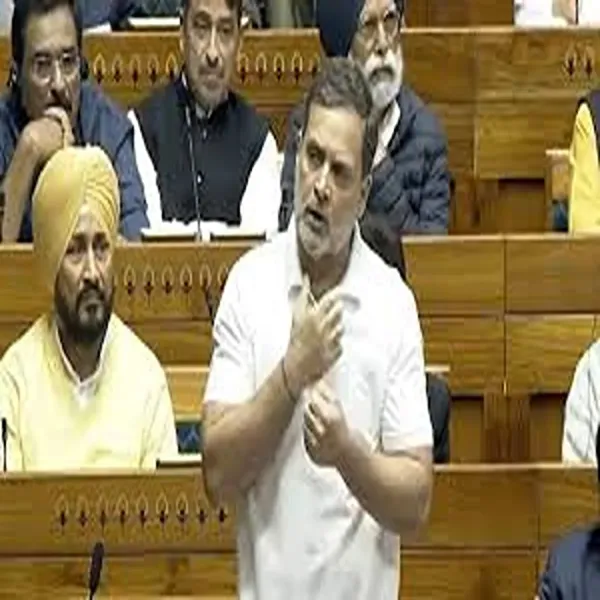
TradeDeal – On Wednesday, Rahul Gandhi, the Leader of the Opposition in the Lok Sabha, sharply criticized the BJP-led central government for its trade agreement with the United States, claiming that the deal compromises India’s economic interests and long-term sovereignty. His remarks came during a detailed discussion on the Union Budget 2026-27 in the Lower House of Parliament.
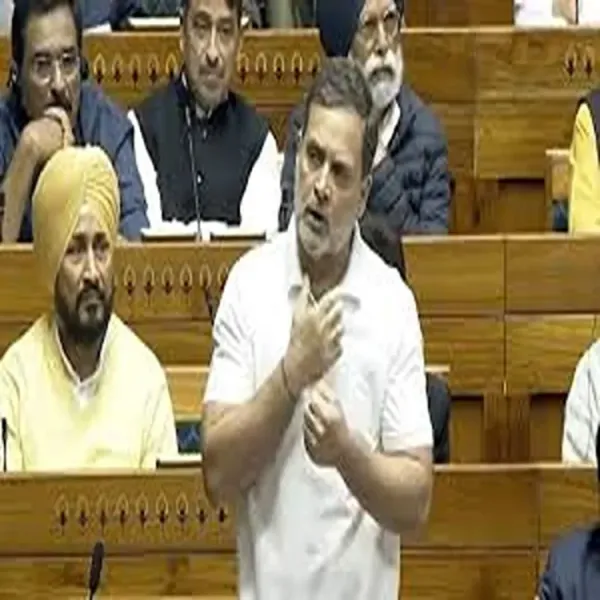
Speaking during the session, Gandhi accused Prime Minister Narendra Modi of yielding to external pressure while finalizing the agreement. He argued that the trade pact could have far-reaching consequences for India’s economic future and suggested that the government’s decisions were influenced by circumstances beyond domestic considerations.
According to Gandhi, the agreement does not merely reflect policy adjustments but represents a larger shift that could impact the livelihoods of millions. He stated that the implications extend beyond political debate and touch the economic security of India’s population.
A significant portion of Gandhi’s speech focused on the potential impact of the trade deal on Indian farmers. He claimed that opening Indian markets to American agricultural products would expose domestic farmers to intense competition from highly mechanised farms in the United States.
Gandhi described the situation as a difficult phase for the agricultural community, asserting that small and marginal farmers may struggle to compete if cheaper imports begin entering the Indian market in large quantities. He questioned whether sufficient safeguards had been built into the agreement to protect rural livelihoods.
The Congress leader also expressed concern about provisions related to energy trade. He argued that any restrictions or indirect controls over India’s oil import decisions could undermine the country’s energy security. Referring to global oil suppliers such as Russia and Iran, Gandhi suggested that external influence over purchasing decisions would limit India’s strategic flexibility.
He maintained that energy policy should remain under sovereign control and not be shaped by foreign pressure or conditional trade arrangements. Gandhi warned that such developments could expose India to economic risks in a volatile global market.
During his address, Gandhi also referred to the textile sector, claiming that domestic manufacturers are facing competitive disadvantages in global markets. He cited tariff-related concerns, arguing that uneven trade terms could harm Indian exporters.
Another key point in his speech involved digital trade and data governance. Gandhi stated that India’s data resources represent a critical economic asset. He alleged that the trade agreement allows greater data flow to the United States without adequate negotiation safeguards. According to him, issues such as data localisation, source code disclosure, and digital taxation require careful balancing to protect national interests.
He contended that negotiations should have ensured parity and equal footing in discussions with the United States, emphasizing that India’s economic strength lies in its people and its growing digital ecosystem.
The government firmly rejected the claims made by the opposition leader. Union Parliamentary Affairs Minister Kiren Rijiju responded in the House, stating that the accusations were unfounded. He described Gandhi’s remarks as misleading and announced that the ruling alliance would seek to have portions of the speech removed from official parliamentary records.
The exchange underscored sharp political divisions over the India-US trade agreement and its broader implications for sectors such as agriculture, energy, textiles, and digital commerce.
As debate over the Union Budget 2026-27 continues, the trade pact is expected to remain a focal point in Parliament. Both the government and opposition have signaled that they will continue to present contrasting interpretations of how the agreement may shape India’s economic trajectory in the years ahead.