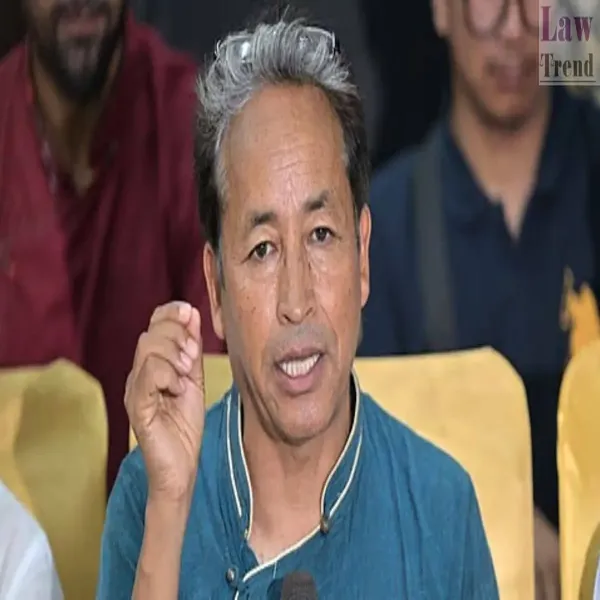
NationalSecurityAct – The Union government on Wednesday informed the Supreme Court that climate campaigner Sonam Wangchuk remains in stable health and does not require release on medical grounds. According to the Centre, Wangchuk has undergone repeated medical assessments since being taken into custody and there is no cause for concern regarding his condition.
Appearing before a bench of Justices Aravind Kumar and PB Varale, Solicitor General Tushar Mehta said Wangchuk had been examined 24 times during his detention. He described the activist as “fit and healthy,” noting that a minor digestive complaint was being treated and did not warrant alarm.
Mehta argued that the legal basis for Wangchuk’s detention remains valid and continues to justify his custody. He stated that granting release on health grounds would not be appropriate given the circumstances surrounding the detention order. The Centre, he added, had given due consideration to all aspects of the case.
During the hearing, Additional Solicitor General KM Nataraj contended that Wangchuk played a central role in mobilizing protests that later turned violent. Nataraj alleged that Wangchuk had drawn parallels with movements such as the unrest in Nepal and the Arab Spring, which, according to the government, could have influenced young demonstrators.
The bench, however, questioned this interpretation. The judges pointed out that portions of Wangchuk’s remarks appeared to reflect concern over youth sentiments rather than direct incitement. When asked to clarify where Wangchuk explicitly encouraged unrest, the government counsel responded that such intent could be inferred from the broader context of his statements.
The court observed that reading selective excerpts without the complete context might lead to misinterpretation. It emphasized the importance of examining full statements before attributing motive or intent.
The matter came before the apex court through a habeas corpus petition filed by Wangchuk’s wife, Gitanjali Angmo. She has challenged the legality of his detention under the National Security Act, 1980, arguing that the action was unjustified.
The National Security Act empowers both the central and state governments to detain individuals preventively if they are deemed to pose a threat to national security or public order. While the law allows detention for up to 12 months, authorities may revoke the order earlier if circumstances permit.
Angmo submitted that the violence reported in Leh on September 24 last year cannot be linked to Wangchuk’s statements or activities. She maintained that her husband had consistently advocated peaceful methods and had publicly condemned any outbreak of violence.
According to the petition, Wangchuk expressed deep distress over the events in Leh and warned that violent actions would undermine years of peaceful efforts in Ladakh. His social media posts, Angmo argued, made it clear that he did not support confrontational tactics and believed that non-violent engagement was the appropriate course.
The Supreme Court’s observations during the hearing suggest that it is closely examining both the factual and contextual aspects of the government’s claims. The bench indicated that inferences drawn from public statements must be carefully assessed to determine whether they justify preventive detention under the law.
The case highlights the continuing debate over the use of preventive detention laws in matters involving protests and public expression. As proceedings continue, the court is expected to weigh the government’s security concerns against the petitioner’s challenge to the legality and proportionality of the detention order.