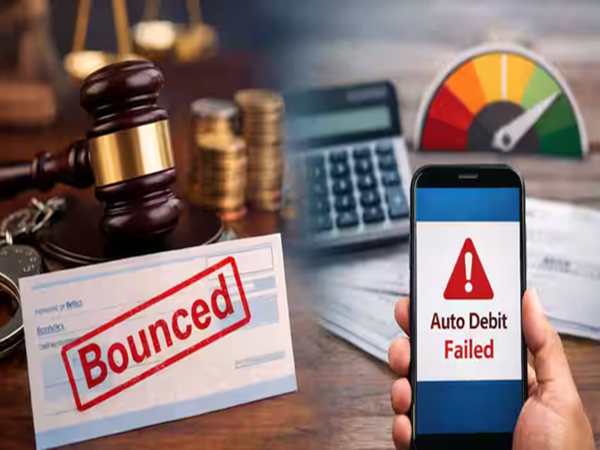
When a cheque is deposited in a bank and returned due to insufficient balance in the account, it is called a cheque bounce. This case falls directly under Section 138 of the Negotiable Instruments Act, 1881. According to this law:
A legal notice is sent when a cheque bounces.
If payment is not made within 15 days of the notice, the case can go to court.
If convicted, the punishment could be up to 2 years in prison or a fine (or both).
This means it's not just a banking error, but a criminal offense.
Auto-debit or NACH failure: Is the punishment the same?
Now the question is, will the same law apply if an EMI auto-debit (NACH mandate) fails? The simple answer is no. A criminal case under Section 138 is not filed against you if the auto-debit fails, because the law explicitly refers to a cheque, not a digital mandate. But that doesn't mean the case is trivial.
Credit Score Drops, Problems Increase
When your EMI or credit card bill is not paid, the lender reports it as 'Days Past Due' (DPD).
Keep in mind:
A single EMI failure can cause your credit score to drop by 50–70 points.
Repeated failures make loan approval more difficult.
Interest rates may be higher in the future.
CIBIL doesn't directly track your savings account, but banks or NBFCs immediately report loan and credit card defaults.
Cheque Bounce vs. Auto Debit Failure: Understand the Difference
Aadhaar Cheque Bounce Auto Debit/Mandate Failure
Legal Action Yes (Section 138) No
Imprisonment Provision Yes (up to 2 years) No
Bank Penalty Yes Yes
Impact on Credit Score Yes Yes
Risk of Court Case Not Possible
The chart clearly shows that legal risk exists only in check bouncing, but financial loss exists in both.
Repeated mistakes can lead to long penalties.
A single mistake can be managed. However, repeated cheque bounces or EMI failures can hamper your financial life. Banks may consider you a "high-risk" customer. This could lead to a ban on new credit cards or personal loans, and big dreams like a home loan could be hampered.
What to do before a payment fails?
If you suspect a low account balance and a payment failure, a simple step can save you from a major disaster:
Inform your lender or bank in advance
Set a new payment date
Check your auto-debit limit
Check if your daily transaction limit has been exceeded
In many cases, banks offer time to avoid penalties or default reports.
Take these precautions with auto-debit
The auto-debit feature is as convenient as it is sensitive, so check these aspects:
Is your auto-debit limit less than your EMI?
Are there multiple transactions scheduled on the same day?
Does the account have a 'clear balance'?
If the daily debit limit is exceeded, EMI will not be deducted even if there is money in the account.
What is the real lesson?
Cheque bouncing is a legal offense and can reach court.
Auto debit failure is not a crime, but it does result in financial losses such as penalties, a lowered credit score, and an impact on future loans. So, don't make the mistake of considering this a 'minor mistake'.
Disclaimer: This content has been sourced and edited from Zee Business. While we have made modifications for clarity and presentation, the original content belongs to its respective authors and website. We do not claim ownership of the content.