2
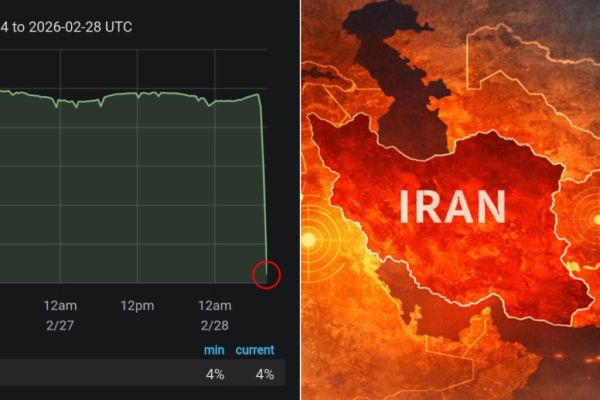
On the morning of 28 February 2026, Internet connectivity in Iran suddenly dropped by 96%, leaving it at only 4% of normal levels. This situation arose when the flow of data in and out of the country almost came to a standstill.
Internet governance and cybersecurity watchdog NetBlocks reported that a large-scale Internet shutdown began in Iran at 07:00 UTC on February 28. NetBlocks clarified that Iran is currently experiencing an almost complete internet blackout. The move comes in the context of ongoing military activities between the US and Israel, and is similar to the strategies adopted during last year’s Israel war.
The biggest advantage of an Internet blackout is that it weakens a country’s capabilities without requiring massive resource or military intervention. Communications systems, media broadcasts, banking networks, logistics, and government policy all depend on digital infrastructure. Interrupting the flow of information hinders decision making, making it an important strategy in war situations.
According to the report, the attack was a complex electronic operation compared to a typical cyber attack. This used DDoS attacks, where hackers send traffic from thousands of infected computers to a server at once, causing the server to slow down or crash. Additionally, attempts to breach critical infrastructure networks such as energy and aviation systems were also involved. There are also possibilities of using electronic warfare techniques to intercept GPS and communications signals.
There is currently no information available regarding availability and pricing for this item.
Share your reaction or leave a quick response — we’d love to hear what you think!