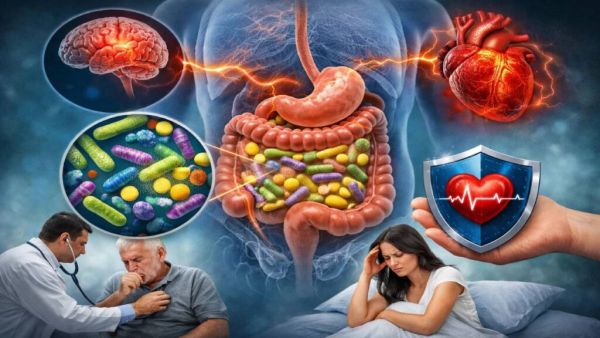
Gut Bacteria Role in Overall Health: Health experts often say that if stomach If healthy everything is healthy. But to keep the stomach healthy, not only good food is important, but also the bacteria present in the stomach which play an important role in digesting your food. If the quantity of these bacteria starts decreasing then the person starts becoming more ill and many types of serious diseases start affecting him. It is said that there are as many bacteria present in our body as there are cells.
We talked to Dr.Shrey (Senior Consultant- Internal Medicine, Sharda Hospital) about the problems to gut bacteria. He told that what are gut bacteria i.e. microbiota and how do they help in keeping you healthy, and if there is a deficiency of them in the body then what diseases start affecting you.
The group of bacteria, viruses, fungi and archaea found in our intestines which help in digesting our food and many other things is called macrobiota. Although microbiota are found in different parts of the body, their largest number is in the intestines.
The Human Microbiome Project started by the National Institutes of Health and many subsequent studies have made it clear that the microbiota found in the intestines play an important role in digestion, immunity, obesity, hormonal balance and even mental health. Important bacterial groups present in the intestines include Firmicutes and Bacteroidetes. Their balanced presence is considered a sign of a healthy microbiome.
Intestinal bacteria help break down complex carbohydrates, fiber and resistant starch, which cannot be completely digested by the enzymes found in the human body. In this process, short-chain fatty acids are formed, such as butyrate, acetate and propionate. If understood in simple language, it helps in providing energy to the colon part of our large intestine and also helps in reducing the swelling in it.
It has been observed in many studies that people who have low levels of these bacteria in the stomach often have an increased risk of diseases like intestinal inflammation. Along with this, these bacteria also work to produce Vitamin K and B-vitamins.
What diseases can be caused by the lack of these bacteria?
Immunity week
A large part of the human immune system is to the intestines. The inner layer of the intestines and the microbiota present there together form a protective shield. It has been seen in many researches that the development of microbiota in childhood is important in the training of the immune system. This is why the method of birth, breastfeeding, use of antibiotics and wrong eating habits affect the structure of the microbiome.
effect on brain
Research on the gut-brain axis in the last decade has made it clear that there is two-way communication between the gut and the brain. This communication happens through the nervous system, especially the vagus nerve, hormones and immune signals. Due to its deficiency, there are chances of problems like depression, anxiety and insomnia. Correct level of serotonin in the body also depends on these bacteria. Serotonin is also called feel good hormone which helps in inducing sleep.
Obesity and Diabetes
Many types of research have also been done on the role of microbiome in metabolic diseases like obesity and type 2 diabetes. Due to its deficiency the body moves towards obesity. Microbiota prevents insulin resistance from occurring, due to which the chances of diabetes are reduced. However, lifestyle, genetics and diet are one of the most important causes of diabetes and obesity.
inflammation in the intestines
Inflammatory bowel disease, including Crohn’s disease and ulcerative colitis. This often happens due to unstable levels of microbiome in the body. Apart from this, it has also been seen in some studies that long-term changes in macrobiome can also cause colon cancer.
effect on heart
Deficiency of these bacteria leads to constant stomach upset, due to which food is not digested properly and there are more chances of gaining excess fat on the body. In such a situation, it can also become a reason for plaque accumulation in the heart veins. Due to which the wall may get blocked and may even lead to heart attack.
Effect on skin, hair and eyes
Due to the deficiency of these macrobiota, when the nutrients are not absorbed properly, it will have adverse effects on the skin, hair and eyes. The vitamins and minerals found in food are digested in the small intestine, where microbiota is present. When their levels are low, these micronutrients will not be digested properly and problems like hair fall, poor eyesight, skin cracking and night blindness will arise.
The training of the immune system is affected and the risk of infection increases.
 effect on brain
Risk of depression, anxiety and sleep problems.
Insulin resistance may increase, increasing metabolic risk.
Risk of Crohn’s disease, ulcerative colitis.
Digestive disorders lead to fat gain and plaque accumulation in the arteries.
Decreased absorption of nutrients, hair fall and skin problems.
Antibiotic medicines rid the body of diseases, but due to them the gut bacteria present in the stomach start decreasing. Repeated use of antibiotics disturbs the balance of gut bacteria, due to which problems like stomach ache, vomiting, gas and diarrhea occur. Along with this, packed items available outside and excessively sweet and fried items also work to reduce the level of microbiota.
How to increase the level of these bacteria?
Include probiotic supplements and foods in your diet. Prebiotics are fibers that serve as food for good bacteria. Probiotics are live bacteria that, when given in adequate amounts, can improve microbiota levels. Curd, fermented food and high fiber diet helps in increasing the level of microbiome. Fruits can be a better example of this, especially apples, which contain pectin fiber which is very beneficial for the stomach.