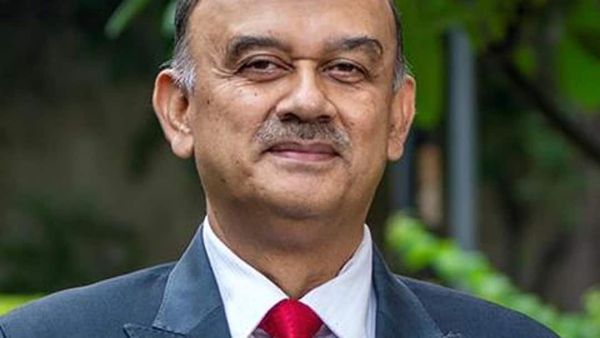
In a move that sent HDFC Bank’s stock tumbling and raised urgent questions about corporate governance in India's largest private lender, Atanu Chakraborty has resigned as part-time Chairman and Independent Director.The 1985-batch retired IAS officer stepped down with immediate effect on Wednesday, March 18, 2026, citing a profound misalignment between the bank’s internal "happenings and practices" and his personal ethics. As the RBI moves swiftly to appoint veteran Keki Mistry as interim chairman to steady the ship, investors are left asking: who exactly is the man whose departure wiped over ₹61,000 crore in market value in a single week?
Atanu Chakraborty is not just a former banker; he is one of India’s most seasoned career bureaucrats. A retired officer of the Gujarat cadre, his 35-year journey through the Indian Administrative Service (IAS) saw him handle the nation's most complex financial levers.
Union Ministry of Finance: Chakraborty served in high-pressure roles as Secretary, Department of Economic Affairs (DEA) and Secretary, DIPAM. He was instrumental in managing India’s fiscal policy, the Union Budget formulation, and the strategic disinvestment of state-owned enterprises.
Global Representation: He represented India as an alternate Governor on the Board of the World Bank and served as a member of the Central Board of Directors of the RBI.
Infrastructure & Energy Maven: Before his tenure at the Ministry of Finance, he was the Director General of Hydrocarbons and held CEO/MD positions at major state entities like the Gujarat State Petroleum Corporation (GSPC) and Gujarat Maritime Board.
A native of Gujarat, Chakraborty’s approach to governance is backed by a robust technical and financial pedigree:
B.Tech: Electronics and Communication Engineering from NIT Kurukshetra.
Post-Graduate Diploma: Business Finance from ICFAI, Hyderabad.
MBA: From the University of Hull, UK.
Appointed as Chairman of HDFC Bank in May 2021, Chakraborty presided over the bank’s historic $40 billion merger with HDFC Ltd. In his resignation letter, he described the period as "momentous," creating a global financial conglomerate that is now India’s second-largest bank.
However, his exit note was pointedly candid. He observed that certain practices over the last two years were "not in congruence with my personal values and ethics." While he praised the "energy and verve" of the bank's junior and middle management, his critique of the top-level "ideologies" has left the market searching for answers.
With Keki Mistry taking over as interim chairman for a three-month period, the focus shifts to whether Chakraborty’s resignation signals isolated friction or deeper post-merger integration issues. For now, the "retired bureaucrat" has chosen to let his resignation letter serve as his final word on a career defined by public service and, ultimately, personal principle.