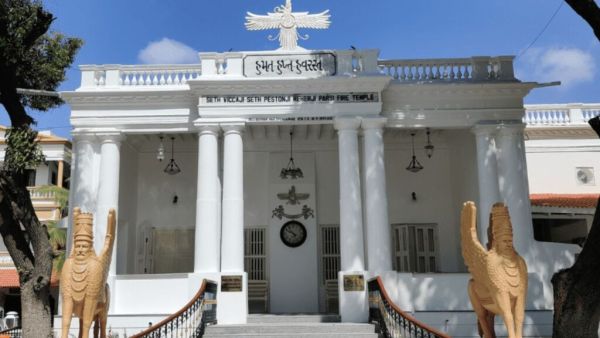
The temples of the Parsi community, who came to India after saving their lives from Iran, are considered one of the most mysterious and sacred religious places in the world, where a ‘sacred fire’ has been burning without extinguishing for centuries. These temples are called ‘Agiyari’ or ‘Aatish Behram’ and their biggest specialty is that here not any idol but actual fire is worshipped. ‘Iranshah Atish Behram’ built in Udvada, Gujarat is the most special Parsi temple in India because it is believed that the fire burning here is the same which the Parsi people had brought with them from Iran in the form of a spark about 1300 years ago.
The history of the Parsi community is not limited to Gujarat only, but their heritage is very old in South India also. The Seth Vikaji–Seth Pestonji Meherji Temple, located on Mahatma Gandhi Road, Secunderabad, is the oldest Parsi temple in South India, built in 1847.
Just opposite to this is the city’s youngest temple, Khan Bahadur Edulji Sohrabji Chenai Anjuman Dar-e-Mehar, which completed its 100 years in the year 2020. Bai Manekji Nasarwanji Chenoy Dar-e-Mehar, built in 1904 in the Abids area of Hyderabad, is the third main temple, which was built for the convenience of the Parsi people living there at that time.
The fire burning in these temples is not considered just an ordinary fire but the light of God. In ancient times, fire was collected from 16 different sources, including fire from lightning, to create the victorious fire present in the temple of Udvada. The temple’s Dastur i.e. priests serve this fire five times a day with special mantras and dry sandalwood is offered to it. This fire is never allowed to be extinguished as it is considered the living soul of Parsi culture.
The rules for entering a Parsi temple are very strict and the level of cleanliness here is very high. Only people of the Parsi community are allowed to enter the main part of the temple so that the spiritual energy and purity of the place is maintained. Before going inside, devotees wash their hands and face and are required to cover their heads with a cap or handkerchief. There is no noise inside the temple and the devotees offer their prayers with a calm mind, facing the sacred fire.
Disclaimer: This article is based on religious beliefs. We do not confirm this.