Sun Pharmaceutical Industries, founded by billionaire Dilip Shanghvi, last week rolled out weight-loss pen injections under the brands Noveltreat and Sematrinity, according to Forbes.
|
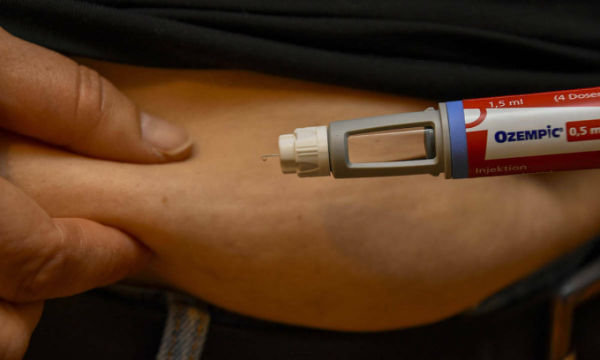
A person gets ready for an injection of Ozempic medicine. Photo by IMAGO via Reuters |
Noveltreat is priced at about INR3,600 (US$38.3) per month for the lowest dose, while Sematrinity costs INR3,000 monthly, less than half the price of Ozempic and Wegovy, which are well-known weight-control medicines made by Denmark-based company Novo Nordisk.
“With the launch of Noveltreat and Sematrinity, our endeavour is to provide a high-quality, affordable therapy to a wider patient community in India,” said Kirti Ganorkar, managing director of Sun Pharmaceutical, in a statement.
Dr. Reddy’s Laboratories, owned by billionaires Satish Reddy and G. V. Prasad, has also introduced Obeda, an injection for managing type 2 diabetes, priced at INR4,200 per month.
Alongside Obeda, the company plans to develop an integrated care ecosystem, including metabolic centres aimed at improving treatment for diabetes and metabolic conditions.
Obeda reinforces the company’s vision of “ensuring advanced diabetes treatments are not only available but affordable,” said Erez Israeli, CEO of Dr. Reddy’s, in a statement.
Torrent Pharmaceuticals, controlled by billionaire brothers Sudhir Mehta and Samir Mehta, has launched both injectable and oral weight-loss drug versions under the brands Sembolic and Semalix, priced at INR3,999 per month.
CEO Amal Kelshikar said, “Our entry into the GLP-1 therapy segment reflects Torrent’s commitment to expanding treatment options available to healthcare professionals managing complex metabolic conditions at affordable prices.”
GLP-1 is a hormone that regulates blood sugar levels and reduces appetite, which helps control weight and type 2 diabetes.
A 2023 study by the Indian Council of Medical Research found that more than 100 million people in India have diabetes, while the World Health Organization estimates that around 8% of the population is obese.
These three firms are among at least eight major drugmakers that have introduced semaglutide copies, according to Mumbai-based research firm Nuvama Wealth Management.
“The market has already turned competitive on day-1,” said Shrikant Akolkar, a research analyst at Nuvama, in a statement. The firm estimates that up to 40 companies could eventually enter the segment.
A price war is expected. Analysts project an intense price competition that could slash the cost of some weight-loss drugs in India by up to 90%, with potential spillover effects in other markets, according to CNN.
New York-based investment bank Jefferies described the development as a “magic pill moment” for India, forecasting that the market could expand to $1 billion.
Echoing its role in driving down the cost of HIV treatments and expanding access globally in previous decades,
India, often referred as the “pharmacy of the world” for driving down the cost of HIV treatments and other medicines, is now emerging as a key low-cost supplier in the world’s battle against obesity.
The surge in launches has prompted closer oversight from regulators.
“With the recent introduction of multiple generic variants of weight-loss drugs in the Indian market, concerns have emerged regarding their on-demand availability through retail pharmacies, online platforms, wholesalers, and wellness clinics,” India’s Ministry of Health said in a statement earlier this week.
“These drugs, when used without proper medical supervision, may lead to serious adverse effects and health risks.”
The ministry has also imposed restrictions on how such drugs can be marketed, banning “surrogate advertisements and any form of indirect promotion that could mislead consumers or encourage off-label usage.”
Some doctors have raised concerns that patients might treat these weight-loss drugs as “magic pills” and eventually be dependent on them for the rest of their lives.
Mumbai-based diabetologist Rahul Baxi said that he had once refused to give weight-loss drugs to a 23-year-old man who worried about the 10 kilograms he had gained, the BBC reported.
“Stop [using the drugs] and the weight comes back. Keep going, and without exercise you’ll start losing muscle instead. These medicines aren’t a substitute for a proper diet or lifestyle change,” he told him.