Troubled by rising gas prices and the hassles associated with cylinders, people across the country are now rapidly shifting towards PNG—or Piped Natural Gas. Today, in many cities, gas is being delivered directly to home kitchens via pipelines, eliminating the need for cylinders entirely. While this system may appear simple on the surface, it is backed by a complex and sophisticated process that works to deliver the gas safely to your doorstep.
PNG is, in essence, a natural fuel composed primarily of methane gas. It is considered clean, low-polluting, and safer than traditional LPG. Consequently, its usage is no longer limited solely to cooking; it is now also being utilized for water heating and other domestic requirements.
The journey of this gas begins in natural reservoirs located deep beneath the Earth's surface. It is extracted through drilling operations; however, in its initial state, it is not entirely pure. Subsequently, it is transported to processing plants, where harmful impurities—such as carbon dioxide and sulfur—are removed. Once purified, the gas becomes ready for consumption.
Following purification, the gas is transported across various states and cities via high-pressure pipelines. These pipelines are laid underground and are subjected to continuous monitoring to ensure that any potential issues are detected and addressed immediately.
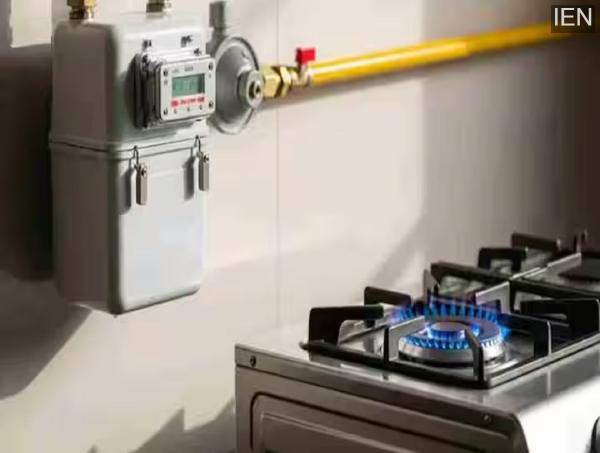
Upon reaching a city, the gas is fed into a City Gas Distribution (CGD) network. Here, its pressure is regulated (reduced), and it is then distributed to various localities and individual households through a network of smaller pipes. Each household is provided with a dedicated connection equipped with a gas meter. This meter precisely records the volume of gas consumed, and the billing is generated accordingly.
Inside the home, the gas travels through a slender pipe, delivering it directly to the stove. There is a valve located near the stove which, when closed, immediately cuts off the gas supply. Interestingly, natural gas itself is odorless; therefore, for safety purposes, a special chemical is added to it so that any leakage can be detected immediately.
From a safety perspective, the entire system is monitored at multiple levels. The pipelines are equipped with automatic valves and pressure control systems that activate instantly in the event of any malfunction. Even if a leak does occur, the gas disperses rapidly into the air, thereby minimizing the associated risk.
This is precisely why PNG is emerging today as a convenient, safe, and economical option. It eliminates the worry of running out of gas cylinders as well as the hassle of repeated bookings, making people's lives far easier than ever before.