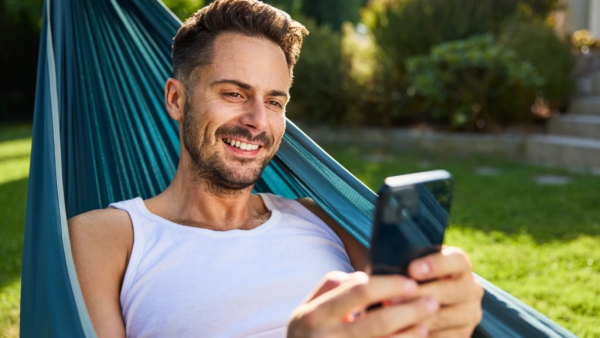
It’s easy to make snap judgments about people who aren’t that active on social media. Mostly, it’s to assume that their lack of posting means their lives are boring. Psychology strongly disagrees.
We’ve been conditioned to see social media as a place where people are only happy if they’re posting every moment. However, the experts say that people who don’t feel compelled to share the details of their lives on social media aren’t living a boring life. They’re just smarter than everyone else because they don’t buy into comparison culture.
“You’ve probably noticed this. There are people on social media who barely post anything. No selfies, no birthday posts, no travel photos, even when they travel. Most people think they’re boring,” explained communication expert, Vibe Samurai, on TikTok, who specializes in “pattern-spotting” thinking.
He insisted that psychology actually says different about these individuals. He explained that they’re actually a lot smarter than their oversharing peers. That’s because they aren’t driven by comparison culture.
There’s a theory called social comparison theory, which explains that these people don’t measure their value by comparing themselves to others. They aren’t looking around and wondering if they’re doing better than others. Psychology finds that from an evolutionary perspective, posting online is usually a way of signaling attention. It’s about showing people that they have certain resources and are living a certain lifestyle. It’s keeping up with the Joneses in the modern world.
: A Teen Sued Her Parents For Posting Pictures Of Her On Facebook Without Her Consent
Vibe Samurai wisely explained, “No matter what you post, there will always be someone on the internet with a better car, a bigger house, or a better-looking partner. And here’s what most people miss. The people who don’t post, they just stopped needing an audience.”
According to the National Institute of Mental Health (NIMH), nearly one in five U.S. adults is living with a mental illness, and the prevalence of mental health problems among youth is even more alarming. The use of social media has been identified as a contributing factor to the growing mental health crisis, especially among younger generations.
Prostock-studio | Shutterstock
While research has not necessarily shown that the use of social media has a relationship with poorer mental health in young people, health professionals have become wary of constant use.
The U.S. Department of Health and Human Services even called for social media companies to prioritize user well-being over revenue, after studies have demonstrated a negative impact on the mental health of young people.
: The Dead Internet Theory: If You’re Suddenly Repulsed By Social Media, This May Be Why
There already seems to be a trend of people posting less on social media, especially younger generations. New polling from the BBC found that nearly a third of all social media users post less than they did a year ago. And that trend is especially true for Gen Z.
In an essay for the New Yorker, writer Kyle Chayka suggested that society might be headed towards what he coined as “posting zero.” It’s a point where regular people feel it’s no longer worth sharing their lives online.
Chayka theorized that many people are posting less because of the current political climate. Showing what kind of breakfast you’re having in the morning isn’t really compelling when the world feels heavy.
It’s a good thing if more people see posting on social media as optional rather than essential to living. Time to start actually living that life rather than curating one.
: People Who Barely Use Their Phone Anymore Usually Have These 3 Reasons, Finds Survey
Nia Tipton is a staff writer with a bachelor’s degree in creative writing and journalism who covers news and lifestyle topics that focus on psychology, relationships, and the human experience.