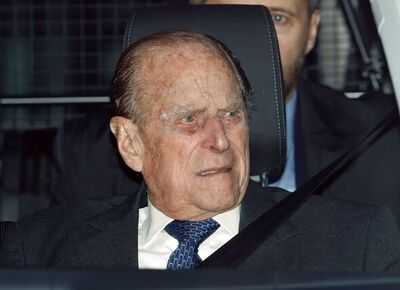
Prince Phillip lived with pancreatic cancer for eight years, according to revelations in a new book. Royal biographer Hugo Vickers makes the claim in his new book Queen Elizabeth II which is being serialised in The Mail on Sunday.
According to the writer, the former Duke of Edinburgh was diagnosed with inoperable cancer in June 2013 during an 11-day stay in hospital. He died in April 2021 at Windsor Castle, just two months shy of his 100th birthday. His cause of death was given as "old age" on his birth certificate.
He claims that in true Prince Phillip style, the Queen's husband, who was known for his humour and forthrightness, snuck away from nurses on his Zimmer frame on the night before his death in order to pour himself a beer in the sitting room. Vickers wrote: "The following morning, he got up, had a bath, said he did not feel well and quietly slipped away.
"By this point, he had lived with pancreatic cancer for nearly eight years - far longer than the usual survival time from diagnosis."
Sadly, Queen Elizabeth was not present at the time of his death and is understood to have remarked in the days after that "as so often in life, he left without saying goodbye".
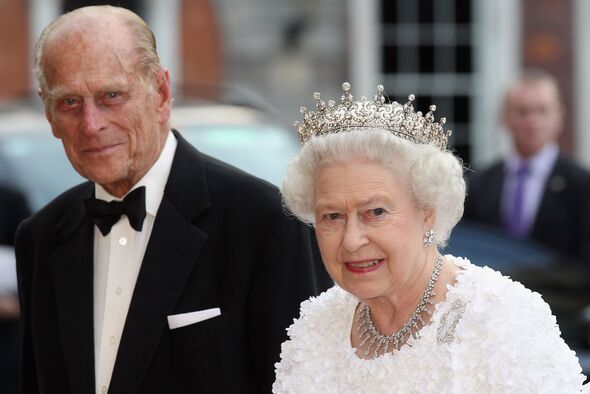
The pair had been married for 73 years at the time of his death.
Prince Philip was admitted to hospital in December 2011 with a blocked coronary artery, and later received treatment at the London Clinic in 2013.
Doctors discovered a shadow on his pancreas and carried out major exploratory surgery, cutting across his abdomen, the new book alleges. The diagnosis, according to Vickers, was inoperable pancreatic cancer.
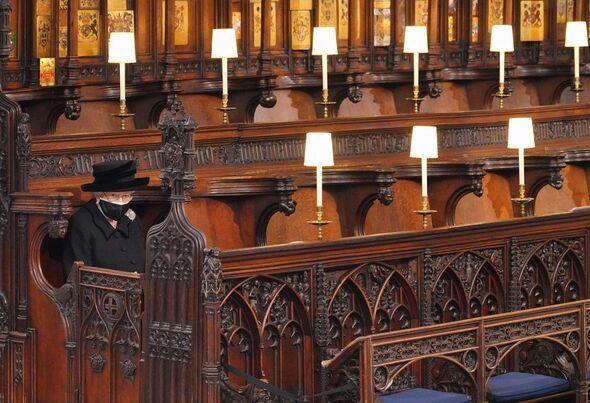
He spent two months recovering at Windsor Castle, experiencing a mix of good and bad days, at times simply sitting out in the sunshine, Vickers writes. There were fears he might never appear in public again, he added.
But, in characteristic fashion, the Duke apparently defied those expectations. On July 12, he travelled to Wood Farm on the Sandringham estate, and by August 12 had resumed royal duties, presenting medals to the Royal Society in Edinburgh. He later joined the Queen at Balmoral.
Four years later, he withdrew from royal duties.
Vickers also claims that by 2019, concerns over his health had become so serious that contingency plans were reportedly considered to delay the general election in the event of his death.
However, he is said to have rallied. "Someone said he was being public-spirited and making an effort to survive so as not to disrupt the election," Vickers wrote.