New Delhi: Beneath the vast Pacific Ocean lies a hidden world of immense geological power, where underwater volcanoes shape the seafloor and influence global events. Japan’s recent discovery of a supervolcano refilling with magma after millennia of silence has captured scientific attention, highlighting the restless nature of Earth’s interior. These submarine giants, often larger than their land-based counterparts, hold secrets to catastrophic eruptions that could alter climates and ecosystems. As researchers monitor this awakening, the event underscores the unpredictability of volcanic activity in the Ring of Fire.
This development raises questions about the timing and scale of future eruptions from such formidable structures. With advanced seismic imaging revealing fresh magma injections, experts draw parallels to other global calderas. The story of Japan’s Kikai Caldera serves as a reminder that even after thousands of years, these underwater behemoths can stir, demanding vigilance from scientists worldwide. Understanding their recharge cycles could improve predictions for supervolcano risks.
Japan’s Kikai Calder recharges after 7,300 years
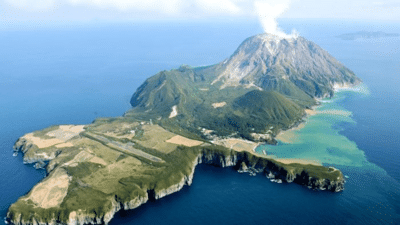
Researchers at Kobe University have confirmed that Japan’s Kikai Caldera, a massive underwater supervolcano south of Kyushu, is refilling its magma reservoir 7,300 years after the Kikai-Akahoya eruption—the largest of the Holocene epoch. Seismic refraction surveys detected a low-velocity anomaly at 2.5–6 km depth, indicating a 220-cubic-kilometre trapezoidal magma body directly beneath the caldera. Chemical analysis of rocks proves this is fresh melt injection, not remnants from the past cataclysm which ejected over 150 cubic kilometres of material and triggered tsunamis reaching southern Kyushu.
A new lava dome has formed at the caldera’s centre over the last 3,900 years, signalling ongoing activity along the Ryukyu Arc where the Philippine Sea Plate subducts. This recharge mirrors processes at Yellowstone and Toba, offering insights into supervolcano cycles. Located in the Ring of Fire, Kikai’s awakening heightens monitoring efforts to assess eruption risks, potentially including pumice rafts or seismic swarms. The study, published in Communications Earth & Environment, emphasises the reservoir’s direct link to the ancient VEI 7 event.
Top 5 World’s Underwater Volcanoe
1. Tamu Massif (Pacific Ocean)
The world’s largest known underwater volcano, this shield volcano spans 650 km wide and rises 4 km from the seafloor, 1,500 km east of Japan. Formed 145 million years ago, its vast lava flows rival Mars’s Olympus Mons in scale.
2. Kikai Caldera (Japan)
A 19-km-wide supervolcano caldera hosting the Holocene’s biggest eruption 7,300 years ago. Now refilling with 220 km³ magma at 2.5–6 km depth, it poses risks of massive tsunamis and ash fallout across the region.
3. Axial Seamount (off Oregon, USA)
The most active submarine volcano in the northeast Pacific, erupting three times since 1998 at 1,500 m depth. Closely monitored for inflation and earthquakes, it influences seafloor spreading at the Juan de Fuca Ridge.
4. Havre Seamount (Kermadec Arc, New Zealand)
Site of the largest recorded underwater eruption in 2012, producing vast pumice rafts that drifted across the Pacific. At 900 m depth, it expelled material rivaling Mount St. Helens, reshaping marine habitats.
5. West Mata (Tonga Trench)
One of the deepest active volcanoes at over 1,200 m, known for explosive eruptions ejecting sulfur plumes and molten splashes. Its violent activity highlights extreme pressure effects in the Pacific Ring of Fire.
This resurgence at Kikai Caldera reveals the dynamic threats from underwater volcanoes, urging enhanced global surveillance to mitigate potential disasters.