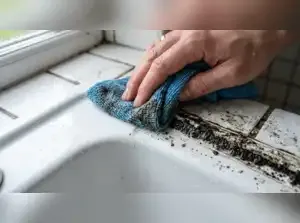
A bathroom sealant that peels easily could be thought of as an issue of minor importance, but it's actually the result of an relationship between microbes, moisture and the degradation of materials. The problem is prevalent across all homes, from the humid coastal areas in the United States to compact apartments located in Europe as well as Asia. The results of scientific research show that this problem isn't an accident, it is the result of weather conditions and physical restrictions.
Why Mould Thrives on Bathroom Sealants
Bathrooms are the perfect environment that encourages the growth of mould because of the constant humidity as well as warmth and organic waste. Sealants made of silicone, which are widely utilized on bathtubs, sinks and showers, can make microclimates that favor an increase in the number of fungi. The insulating properties they possess allow them to remain slightly cooler than their surroundings which encourages condensation.
A research study from 2019 entitled "Decontamination of mould-affected Environments" conducted by the Institute of Environmental Science and Research (ESR) in New Zealand highlighted that bathroom silicone joints are often prone to developing mold that is black when humidity goes over 70 70%. Researchers at Porirua observed that soap scum as well as other deposits that are trapped in sealants supply nutrients which increase the growth of fungal species. This explains why mould usually is first seen along sealing lines instead of tiles.
How Mould Causes Sealant to Flake
The reason that mouldy sealant peels off with such ease lies in the way that fungi develop. The mould doesn't just sit on the surface, it gets deep into sealant. Spores form mycelium-like network that expands beneath the surface and weaken the substance in the interior.
The report of 2018 entitled "Microbial Development on Construction sealants" by the National Institute of Standards and Technology (NIST) located in the United States demonstrated that common moulds such as Aspergillus Niger produce enzymes to degrade the silicone polymers. Enzymatic activity results in the appearance of a crumbly, fragile layer that makes the mould look easy to clean away and a deeper contaminant remains.
In the same way, a research study scheduled for 2020 "Biofilm formation of sanitation Sealants" by the Fraunhofer Institute for Building Physics in Germany discovered that the growth of fungal organisms could alter the sealant's polymer structure. Researchers from Holzkirchen discovered a decrease in strength by 60 to 70%, that's why damaged sealant flakes fall off instead of being intact.
The Role of Moisture and Material Degradation
Sealants are exposed constantly to the cycles of drying and wetting most notably in bathrooms. In time, this can lead to tiny cracks which allow the spores and water to get more deeply into the materials.
The research conducted in 2021 at the university of Portsmouth's School of Civil Engineering in the United Kingdom, titled "Fungal resistance of sealants in Extremely Humid Environments" found that standard silicone sealants loose up to 40 percent of their adhesion force in the course of repeated humidity cycles. The loss of adhesion transforms the sealant into what the researchers called an "biofilm highway" permitting fungi to move much more readily.
The findings prove that peeling of moldy sealants is not only a matter of surface it is a structural issue that is caused by environmental stress and Microbial activity.
Health and Structural Implications
The presence of mouldy spores is not just an issue for cosmetics It can also pose significant risk to health. It is known that the United States Environmental Protection Agency has found a link between indoor exposure to allergies, respiratory problems as well as asthma. Certain species, like Stachybotrys chartarum releases mycotoxins which can be airborne after being disturbed, raising the danger of breathing in.
The WHO's 2023 report on dampness in the indoor environment exposes the fact that mold exposure can lead to respiratory ailments for a large proportion of households living in urban areas around the world.
The structural damage caused by a degraded sealant could let water seep through the tiles and other fixtures. These hidden water leaks can cause damage to floors, walls and substructures. Often, it goes under the radar until expensive repairs are needed.
Scientific Approaches to Prevention
The research consistently proves that prevention is superior to repeated cleaning. The control of humidity is the main element. The research conducted by the ventilation experts from the United Kingdom demonstrate that proper circulation of air, especially with extractor fan, can decrease humidity of bathrooms by as much as 50%, thereby limiting mold growth.
The material choice has a significant impact on. The 2022 study entitled "Antifungal additives in Silicone Sealants" conducted by TNO in the Netherlands discovered that sealants containing antifungal ingredients like zinc pyrithione could extend the product's life by as much as 30 percent. They prevent the germination of spores and prevent mould from growing it's own within the materials.
Cleansing methods are equally important. Although bleach can get rid of visible mould however, it is not able to get deep enough to remove the fungal network that is embedded. Studies conducted by ESR shows that slightly acidic and abrasive cleaners like baking soda-based products can be more effective in breaking down biofilms and slowing the regrowth of fungi.
A Global Perspective on a Common Problem
Over a variety of climates and nations The underlying reasons for the flaky, mouldy sealant are constant: humidity, low ventilation and insufficient materials. Studies across the globe show the lifespan of sealants can decrease significantly, ranging from 20 to 30 years under ideal conditions, and less than 5 years in moist areas.
Experts say that what seems to be a simple problem could be a alarm signal. If sealant is beginning to peel the flake signifies that microbial degrading is already affecting its structure.
Conclusion
Bathroom sealant mold that is flaky not just dirt that could be cleaned away. It is the result of the complex interactions between the fungi and weak substances. The results of research conducted at institutions in New Zealand, the United States as well as Germany, the United Kingdom, Germany, and the Netherlands proves that controlling moisture as well as the correct selection of materials as well as proactive maintenance are vital for preventing this problem.
Knowing the scientific basis of the issue transforms the issue from an annoying nuisance to a manageable issue. If they take the proper strategy, homeowners are able to not only get rid of the mould, but also avoid its return and ensure a healthier healthy, more hygienic, and robust bathroom.
Image Credit - Gemini
Why Mould Thrives on Bathroom Sealants
Bathrooms are the perfect environment that encourages the growth of mould because of the constant humidity as well as warmth and organic waste. Sealants made of silicone, which are widely utilized on bathtubs, sinks and showers, can make microclimates that favor an increase in the number of fungi. The insulating properties they possess allow them to remain slightly cooler than their surroundings which encourages condensation.
A research study from 2019 entitled "Decontamination of mould-affected Environments" conducted by the Institute of Environmental Science and Research (ESR) in New Zealand highlighted that bathroom silicone joints are often prone to developing mold that is black when humidity goes over 70 70%. Researchers at Porirua observed that soap scum as well as other deposits that are trapped in sealants supply nutrients which increase the growth of fungal species. This explains why mould usually is first seen along sealing lines instead of tiles.
How Mould Causes Sealant to Flake
The reason that mouldy sealant peels off with such ease lies in the way that fungi develop. The mould doesn't just sit on the surface, it gets deep into sealant. Spores form mycelium-like network that expands beneath the surface and weaken the substance in the interior.
The report of 2018 entitled "Microbial Development on Construction sealants" by the National Institute of Standards and Technology (NIST) located in the United States demonstrated that common moulds such as Aspergillus Niger produce enzymes to degrade the silicone polymers. Enzymatic activity results in the appearance of a crumbly, fragile layer that makes the mould look easy to clean away and a deeper contaminant remains.
In the same way, a research study scheduled for 2020 "Biofilm formation of sanitation Sealants" by the Fraunhofer Institute for Building Physics in Germany discovered that the growth of fungal organisms could alter the sealant's polymer structure. Researchers from Holzkirchen discovered a decrease in strength by 60 to 70%, that's why damaged sealant flakes fall off instead of being intact.
The Role of Moisture and Material Degradation
Sealants are exposed constantly to the cycles of drying and wetting most notably in bathrooms. In time, this can lead to tiny cracks which allow the spores and water to get more deeply into the materials.
The research conducted in 2021 at the university of Portsmouth's School of Civil Engineering in the United Kingdom, titled "Fungal resistance of sealants in Extremely Humid Environments" found that standard silicone sealants loose up to 40 percent of their adhesion force in the course of repeated humidity cycles. The loss of adhesion transforms the sealant into what the researchers called an "biofilm highway" permitting fungi to move much more readily.
The findings prove that peeling of moldy sealants is not only a matter of surface it is a structural issue that is caused by environmental stress and Microbial activity.
Health and Structural Implications
The presence of mouldy spores is not just an issue for cosmetics It can also pose significant risk to health. It is known that the United States Environmental Protection Agency has found a link between indoor exposure to allergies, respiratory problems as well as asthma. Certain species, like Stachybotrys chartarum releases mycotoxins which can be airborne after being disturbed, raising the danger of breathing in.
The WHO's 2023 report on dampness in the indoor environment exposes the fact that mold exposure can lead to respiratory ailments for a large proportion of households living in urban areas around the world.
The structural damage caused by a degraded sealant could let water seep through the tiles and other fixtures. These hidden water leaks can cause damage to floors, walls and substructures. Often, it goes under the radar until expensive repairs are needed.
Scientific Approaches to Prevention
The research consistently proves that prevention is superior to repeated cleaning. The control of humidity is the main element. The research conducted by the ventilation experts from the United Kingdom demonstrate that proper circulation of air, especially with extractor fan, can decrease humidity of bathrooms by as much as 50%, thereby limiting mold growth.
The material choice has a significant impact on. The 2022 study entitled "Antifungal additives in Silicone Sealants" conducted by TNO in the Netherlands discovered that sealants containing antifungal ingredients like zinc pyrithione could extend the product's life by as much as 30 percent. They prevent the germination of spores and prevent mould from growing it's own within the materials.
Cleansing methods are equally important. Although bleach can get rid of visible mould however, it is not able to get deep enough to remove the fungal network that is embedded. Studies conducted by ESR shows that slightly acidic and abrasive cleaners like baking soda-based products can be more effective in breaking down biofilms and slowing the regrowth of fungi.
A Global Perspective on a Common Problem
Over a variety of climates and nations The underlying reasons for the flaky, mouldy sealant are constant: humidity, low ventilation and insufficient materials. Studies across the globe show the lifespan of sealants can decrease significantly, ranging from 20 to 30 years under ideal conditions, and less than 5 years in moist areas.
Experts say that what seems to be a simple problem could be a alarm signal. If sealant is beginning to peel the flake signifies that microbial degrading is already affecting its structure.
Conclusion
Bathroom sealant mold that is flaky not just dirt that could be cleaned away. It is the result of the complex interactions between the fungi and weak substances. The results of research conducted at institutions in New Zealand, the United States as well as Germany, the United Kingdom, Germany, and the Netherlands proves that controlling moisture as well as the correct selection of materials as well as proactive maintenance are vital for preventing this problem.
Knowing the scientific basis of the issue transforms the issue from an annoying nuisance to a manageable issue. If they take the proper strategy, homeowners are able to not only get rid of the mould, but also avoid its return and ensure a healthier healthy, more hygienic, and robust bathroom.