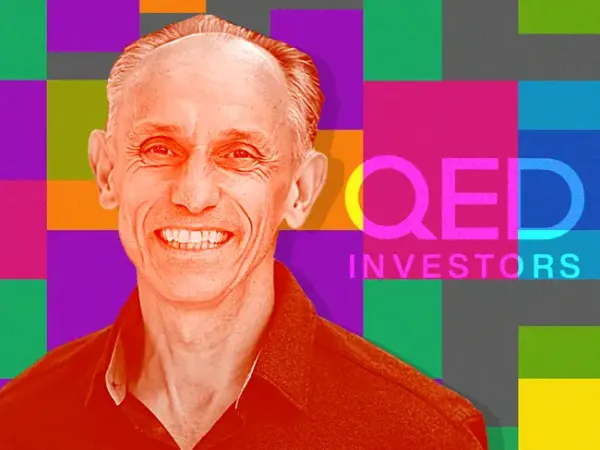
Global fintech investor and Capital One founder Nigel Morris expects lending companies to turn cautious in the coming months as inflationary pressures rise amid geopolitical tensions, even as he remains bullish on India’s long-term fintech opportunity.
“The primary impact will be that lending businesses will tighten across the board,” Morris, cofounder and managing partner of QED Investors, told ET during an interaction, adding that several portfolio companies have already begun tightening underwriting standards.
Tighter credit conditions, combined with potential AI-led job disruption, could increase credit stress, he said. “To the extent that we see AI creating more job disruption, it will create more charge-offs because unemployment will go up,” he said, adding that inflationary trends globally could delay interest rate cuts.
QED is among the world’s largest fintech-focused venture firms, having backed Nubank, SoFi, Credit Karma and Klarna. In 2023, the firm raised $925 million across two funds: a $650 million early-stage fund and a $275 million growth fund. Its India portfolio includes Jupiter, OneCard, Upswing and Efficient Capital Labs.
Having entered India around 2020, the fund's original investment thesis for the country has strengthened over the past six years, backed by improving public market exits, greater founder maturity and rising income growth among the top consumer cohort. The fund, which has deployed more than $220 million in India, plans to invest $250–300 million over the next two fund cycles spanning five to six years, ET reported earlier.
“When people throw around 1.4 billion (population), that's not the addressable market. It's a piece of that. Investing in India requires patience,” Morris said.
Geopolitical tensions, including the Israel-Iran conflict, have elevated inflation risks through higher oil prices, currency volatility and market uncertainty. According to CreditSights, a prolonged Middle East conflict could raise credit costs and tighten liquidity for lenders in India, which imports nearly 90% of its crude, about half from the region.
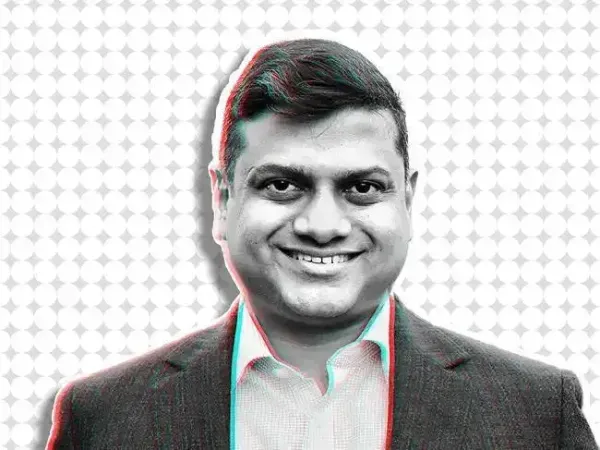 Sandeep Patil, head of Asia Pacific, QED
QED’s strategy has evolved towards larger Series A and Series B investments, typically writing $10–15 million cheques instead of smaller seed rounds. This has resulted in fewer but more concentrated bets across India, Southeast Asia and Asia-Pacific markets. Sandeep Patil, head of Asia Pacific at QED, said recent activity has largely focused on follow-on investments. Key themes include AI-led fintech applications, cross-border payments and remittances, wealthtech, embedded finance platforms and verticalised lending models with proprietary data advantages.
While public market valuations have moderated, private market pricing has yet to fully adjust. “There is chatter about correction, but we haven’t seen it fully reflected in private markets yet,” Patil said.
Regulatory impact on fintech
QED’s India portfolio has faced tighter regulatory scrutiny in recent years. FPL Technologies, which operates the OneCard credit card platform, was impacted after the Reserve Bank of India asked partner banks to pause issuance of co-branded cards amid concerns around data sharing. Jupiter has faced onboarding constraints linked to partner bank restrictions. Leo1 (formerly Financepeer) scaled back certain business lines and shut its first loss default guarantee model amid broader edtech sector pressures. Refyne continued to scale, reporting revenue of about Rs 89 crore in FY25, according to Tracxn, even as regulatory oversight across lending segments increased.
Morris said regulatory tightening has made the environment more challenging for early-stage fintechs, but will strengthen the ecosystem over time. “The Indian regulator has been quite intentional about their direction…in a more permissive environment, fintechs tend to get ahead of regulators. Over the last few years, regulators have taken a more assertive stance,” he said.
AI's impact on jobs
Despite macro uncertainty, Morris remains bullish on fintech growth globally. The segment currently accounts for about 4% of global financial services revenue but is growing at more than 20%, outpacing incumbents expanding at mid-single digits. “If you run that delta over the next ten years, fintech moves into double-digit penetration,” he said.
Morris struck a cautious tone on artificial intelligence, calling its impact on jobs significant in the near term. "The population that's doing manual repetitive tasks is going to shrink dramatically,” he said, pointing to early signs such as companies slowing hiring and not replacing attrition. “I think we're going to see waves of layoffs occurring. I'm a little nervous about the US economy, even before the war that started a month ago. Unemployment is creeping up,” he added.
He cited examples across sectors, from call centres and tax preparation to investment banking, where AI is rapidly replacing entry-level work. “With Claude and the other tools, we're seeing 70–90% of code being written by machines,” he said, adding that financial modelling and research tasks are also being increasingly automated.
Traditional financial institutions, both in India and globally, are still navigating how to adopt AI, Morris said. While openness to experimentation has increased, especially over the past year, a significant debate remains whether to build capabilities in-house or partner externally.
“The large banks were wrestling with whether AI is real or not, whether regulators will allow its use, and where regulatory sensitivities may lie. The more advanced institutions are realising that this is changing so fast that trying to do it yourself, even if you are one of those large, sophisticated incumbents, means that you could fall behind,” Morris said.
“The primary impact will be that lending businesses will tighten across the board,” Morris, cofounder and managing partner of QED Investors, told ET during an interaction, adding that several portfolio companies have already begun tightening underwriting standards.
Tighter credit conditions, combined with potential AI-led job disruption, could increase credit stress, he said. “To the extent that we see AI creating more job disruption, it will create more charge-offs because unemployment will go up,” he said, adding that inflationary trends globally could delay interest rate cuts.
QED is among the world’s largest fintech-focused venture firms, having backed Nubank, SoFi, Credit Karma and Klarna. In 2023, the firm raised $925 million across two funds: a $650 million early-stage fund and a $275 million growth fund. Its India portfolio includes Jupiter, OneCard, Upswing and Efficient Capital Labs.
Having entered India around 2020, the fund's original investment thesis for the country has strengthened over the past six years, backed by improving public market exits, greater founder maturity and rising income growth among the top consumer cohort. The fund, which has deployed more than $220 million in India, plans to invest $250–300 million over the next two fund cycles spanning five to six years, ET reported earlier.
“When people throw around 1.4 billion (population), that's not the addressable market. It's a piece of that. Investing in India requires patience,” Morris said.
Geopolitical tensions, including the Israel-Iran conflict, have elevated inflation risks through higher oil prices, currency volatility and market uncertainty. According to CreditSights, a prolonged Middle East conflict could raise credit costs and tighten liquidity for lenders in India, which imports nearly 90% of its crude, about half from the region.
QED’s strategy has evolved towards larger Series A and Series B investments, typically writing $10–15 million cheques instead of smaller seed rounds. This has resulted in fewer but more concentrated bets across India, Southeast Asia and Asia-Pacific markets. Sandeep Patil, head of Asia Pacific at QED, said recent activity has largely focused on follow-on investments. Key themes include AI-led fintech applications, cross-border payments and remittances, wealthtech, embedded finance platforms and verticalised lending models with proprietary data advantages.
While public market valuations have moderated, private market pricing has yet to fully adjust. “There is chatter about correction, but we haven’t seen it fully reflected in private markets yet,” Patil said.
Regulatory impact on fintech
QED’s India portfolio has faced tighter regulatory scrutiny in recent years. FPL Technologies, which operates the OneCard credit card platform, was impacted after the Reserve Bank of India asked partner banks to pause issuance of co-branded cards amid concerns around data sharing. Jupiter has faced onboarding constraints linked to partner bank restrictions. Leo1 (formerly Financepeer) scaled back certain business lines and shut its first loss default guarantee model amid broader edtech sector pressures. Refyne continued to scale, reporting revenue of about Rs 89 crore in FY25, according to Tracxn, even as regulatory oversight across lending segments increased.
Morris said regulatory tightening has made the environment more challenging for early-stage fintechs, but will strengthen the ecosystem over time. “The Indian regulator has been quite intentional about their direction…in a more permissive environment, fintechs tend to get ahead of regulators. Over the last few years, regulators have taken a more assertive stance,” he said.
AI's impact on jobs
Despite macro uncertainty, Morris remains bullish on fintech growth globally. The segment currently accounts for about 4% of global financial services revenue but is growing at more than 20%, outpacing incumbents expanding at mid-single digits. “If you run that delta over the next ten years, fintech moves into double-digit penetration,” he said.
Morris struck a cautious tone on artificial intelligence, calling its impact on jobs significant in the near term. "The population that's doing manual repetitive tasks is going to shrink dramatically,” he said, pointing to early signs such as companies slowing hiring and not replacing attrition. “I think we're going to see waves of layoffs occurring. I'm a little nervous about the US economy, even before the war that started a month ago. Unemployment is creeping up,” he added.
He cited examples across sectors, from call centres and tax preparation to investment banking, where AI is rapidly replacing entry-level work. “With Claude and the other tools, we're seeing 70–90% of code being written by machines,” he said, adding that financial modelling and research tasks are also being increasingly automated.
Traditional financial institutions, both in India and globally, are still navigating how to adopt AI, Morris said. While openness to experimentation has increased, especially over the past year, a significant debate remains whether to build capabilities in-house or partner externally.
“The large banks were wrestling with whether AI is real or not, whether regulators will allow its use, and where regulatory sensitivities may lie. The more advanced institutions are realising that this is changing so fast that trying to do it yourself, even if you are one of those large, sophisticated incumbents, means that you could fall behind,” Morris said.