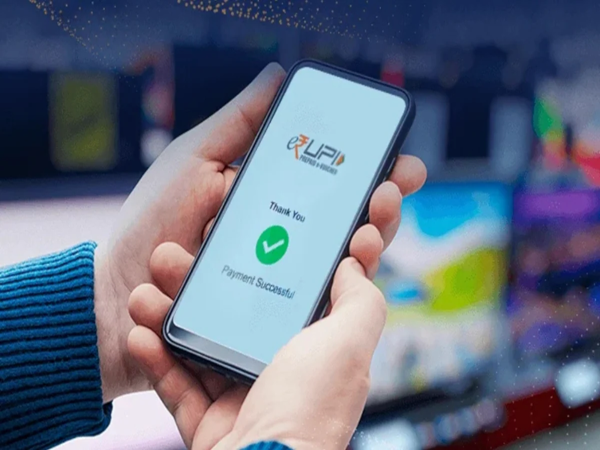
UPI payments have become immensely popular—not just in India, but across the entire world. Many countries are now adopting this Indian-developed technology. However, mistakes can still occur during UPI transactions. These are the kinds of errors that often go unnoticed until they have already happened—specifically, transferring money to the wrong recipient. This could be due to an incorrect UPI ID, a typing error, or simply selecting the wrong name from your contact list. By the time you realize the error, the money has already been transferred. Since UPI is designed to operate instantly and irreversibly, there is no "Undo" button available. Consequently, the steps you take immediately after such an incident become crucial. So, what should you do in such a situation to recover your money? Let's try to understand this in detail.
**Opt for the Simplest Approach**
Before filing formal complaints or getting entangled in bureaucratic procedures, it is best to try the simplest option first. If you have the details of the recipient, contact them directly and explain what has happened. Surprisingly, many cases are resolved at this very stage—especially when it is clearly an unintentional error. However, if you receive no response or if the recipient refuses to return the money, you will need to pursue the matter more seriously.
**Inform Your Bank as Soon as Possible**
The moment you realize your mistake, your immediate next step should be to inform your bank. Do not overthink the situation, nor wait to see what happens next. Use your UPI app or contact your bank's customer support immediately to register a complaint. Most apps feature a "Report Issue" option. Utilizing this ensures that a formal record of the transaction is created from your end—a record that could prove useful to you later. You can also file a complaint through the BHIM app or the NPCI portal. While this may seem like an extra step, it ensures that your case moves through the entire system rather than remaining stuck within a single channel.
**If No Resolution Is Found, Escalate the Matter**
If you do not observe any progress, the next step is to escalate the matter internally within the bank. Every bank has a Grievance Redressal Mechanism, typically managed by a Nodal Officer or a senior team. You may feel as though you are merely repeating yourself; however, this step is crucial. It serves as proof that you have followed the entire protocol, and should you need to take your complaint further, this step lends significant weight to your grievance.
**If Necessary, File a Complaint Outside the Bank**
If the bank remains unable to resolve the issue, you have another formal avenue available to you. You can contact the RBI Ombudsman under the 'Integrated Ombudsman Scheme' by filing a complaint through the 'Complaint Management System.' View this as an independent escalation process, wherein an external entity—outside the bank's direct purview—reviews your case.
**Be Clear About the Limitations**
Even if you meticulously follow every step, there is no guarantee that you will recover your money. If the recipient of the funds flatly refuses to return them—and provided there is no element of fraud or system error involved—the bank cannot unilaterally reverse the transaction. At that juncture, the matter ceases to be a banking-related issue and transforms into a legal dispute.
Prevention is better than a cure.
In the case of UPI, exercising caution is far more important than attempting to recover lost funds. Spending a few extra seconds—whether to double-check the UPI ID, verify the name displayed on the screen, or send a small test amount before transferring a large sum—can save you from a great deal of trouble later on. This is because, once the money has been transferred, recovering it is significantly more difficult than sending it in the first place.
Disclaimer: This content has been sourced and edited from TV9. While we have made modifications for clarity and presentation, the original content belongs to its respective authors and website. We do not claim ownership of the content.