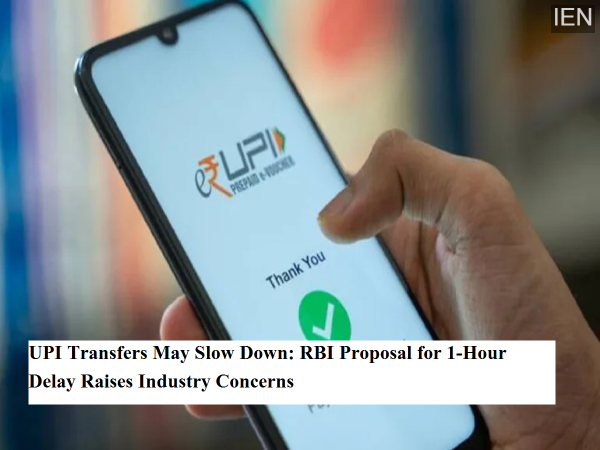
India’s fast and seamless digital payment ecosystem may soon witness a significant change. A new proposal by the Reserve Bank of India (RBI) to introduce a delay in certain UPI transactions has sparked concern across banks and fintech companies.
Under the proposed rule, if a user sends more than ₹10,000 to a new recipient via Unified Payments Interface (UPI), the transaction may take up to one hour to be completed. The move is aimed at curbing fraud, but industry experts fear it could undermine the core strength of instant digital payments.
Currently, UPI transactions are processed within seconds, making it one of the fastest and most widely used payment systems in India. However, the RBI is considering introducing a cooling-off period for first-time transactions above ₹10,000.
This means:
The primary goal behind this move is to prevent fraud, especially in cases where users are tricked into transferring large amounts to unknown individuals.
Banking and fintech stakeholders have raised serious concerns about the potential impact of this proposal. Many believe that slowing down transactions—even for security reasons—could weaken the appeal of UPI.
A senior banking official reportedly noted that instead of slowing the system, regulators should focus on stricter action against fraudsters. According to industry insiders, introducing delays might create inconvenience even for genuine users and transactions.
To balance security with convenience, the RBI has proposed certain exemptions:
These provisions aim to ensure that regular and trusted transactions remain unaffected.
The Unified Payments Interface has become the backbone of digital payments in India, especially for peer-to-peer (P2P) transfers. Its biggest advantage lies in speed and simplicity—users can send money instantly with just a few taps.
Compared to traditional systems like NEFT or IMPS, which may involve processing time or additional steps, UPI’s real-time nature has driven its widespread adoption.
However, if delays are introduced—even selectively—it could impact user experience. Experts warn that any compromise on speed might reduce user trust and potentially push some users back toward cash transactions.
The proposed change reflects a broader challenge faced by regulators worldwide—how to balance convenience with security. While instant payments are efficient, they also leave little room to reverse fraudulent transactions.
By introducing a short delay for high-value transfers to new recipients, the RBI aims to give users a window to reconsider or cancel suspicious payments. At the same time, it is trying to ensure that everyday transactions remain smooth.
While the proposal is still under review, it has already triggered a debate within the financial ecosystem. On one hand, it could strengthen fraud prevention mechanisms; on the other, it risks slowing down one of India’s most successful digital innovations.
For now, UPI users can continue enjoying instant transactions. But if the proposal is implemented, it could mark a shift in how digital payments are processed—placing greater emphasis on safety over speed.
As discussions continue, all eyes are on the RBI’s final decision, which could redefine the future of digital payments in India.