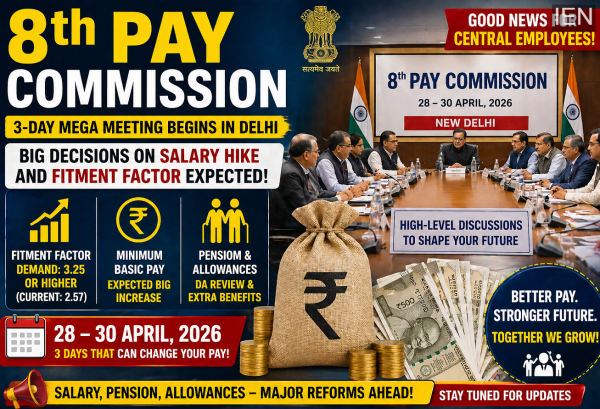
A crucial development for millions of central government employees and pensioners is underway as the 8th Pay Commission begins its three-day high-level meeting in New Delhi. The discussions, scheduled from April 28 to April 30, 2026, are expected to shape the future of salaries, pensions, and allowances for government staff.
According to official communication, this meeting could play a decisive role in finalizing key recommendations—especially on the much-debated fitment factor and minimum basic pay.
The ongoing meeting is being attended by representatives of various employee unions and staff associations, making it a critical platform for discussions and negotiations.
The primary focus areas include:
These decisions will directly impact the take-home salaries and retirement benefits of lakhs of central government employees.
One of the most significant demands raised by employee unions is the increase in the fitment factor—the multiplier used to calculate revised salaries and pensions.
If the government agrees to this demand, it could lead to a substantial jump in salaries, especially for lower and mid-level employees.
Another key issue under discussion is the revision of minimum basic pay. If the fitment factor is increased, the base salary is expected to rise significantly.
Employee unions argue that the current pay structure no longer reflects modern living costs and inflation levels. A revised structure could bring relief and improve overall financial stability for employees.
Apart from salaries, the meeting is also expected to address:
These changes could benefit both serving employees and pensioners.
The central government had approved the formation of the on November 3, 2025. The commission has been given 18 months to submit its final report.
Since then, it has been engaging with stakeholders across the country to gather feedback. The current Delhi meeting is particularly important as it may help finalize a common memorandum incorporating key demands and recommendations.
After this phase:
Based on current discussions and union expectations, employees could see an overall salary increase of 20% to 30% if the recommendations are accepted.
However, the final decision will depend on multiple factors, including fiscal considerations and government approval.
Experts believe that if discussions progress smoothly, the draft recommendations could be finalized soon. This raises the possibility of a new salary structure being implemented within the next few months, although no official timeline has been confirmed.
The three-day meeting of the in marks a significant step toward revising the pay structure of central government employees.
While final decisions are yet to be announced, the ongoing discussions have raised expectations of a meaningful salary hike and improved benefits. For now, all eyes remain on the outcomes of this high-stakes meeting that could redefine compensation across the government sector.
Disclaimer: This article is for informational purposes only. Final decisions will depend on official government announcements and approvals.