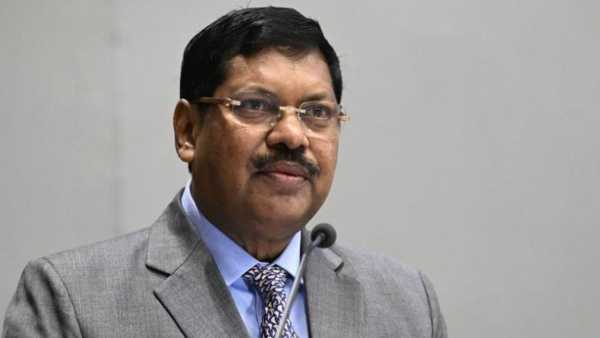
Former Chief Justice of India (CJI) BR Gavai on Saturday said that constitutional democracy is not based around any one center of power and the Constitution, not Parliament, is supreme in the country. In the 19th Sujatha Jayewardena Memorial Lecture organized by the University of Colombo, Justice Gavai said that the conflict between Parliament and the judiciary has led to the development of constitutional safeguards and principles to manage such conflicts.
The former judge said that the Constitution is supreme, not the Parliament (legislature), the executive (government) and the judiciary. He stressed that all three derive their rights from the Constitution and all three are bound by it.
He said that constitutional democracy is not based around any one center of power. This is not a system in which any one institution exercises unlimited authority. Rather, it is a well-planned system in which power is distributed and limits are set.
Justice Gavai said, Parliament is not supreme in any sense in the Indian constitutional system. Nor is any other institution supreme. The Constitution recognizes only its supremacy. All institutions derive their authority from it and are bound by its limitations.
Referring to Dr. Bhimrao Ambedkar's speech given in the Constituent Assembly, Gavai said that every institution has its own area of work. He clarified that every institution is supreme in its field, but only to the extent permitted by the Constitution. The former Chief Justice said that relations between Parliament and the judiciary are not always confrontational. He said that sometimes this is collaborative, where judicial innovation exposes constitutional shortcomings and Parliament responds by institutionalizing those principles within the democratic framework.