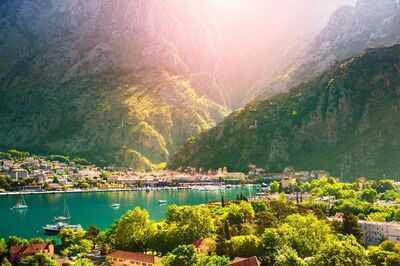
Set between steep limestone mountains and a calm, fjord-like bay, one of the Adriatic's most striking coastal towns just got easier to reach from the UK.
From this summer, British Airways will launch direct flights from London Heathrow to Tivat, Montenegro, which is just 15 minutes from the beautiful town of Kotor. In around three hours, you could step off the plane into average June temperatures of 18C to 28C, ideal for exploring the old town, coastline and surrounding mountains. Plus, easyJet already flies to Tivat from London, Manchester, Birmingham and Bristol, so it's not only good news for Londoners.
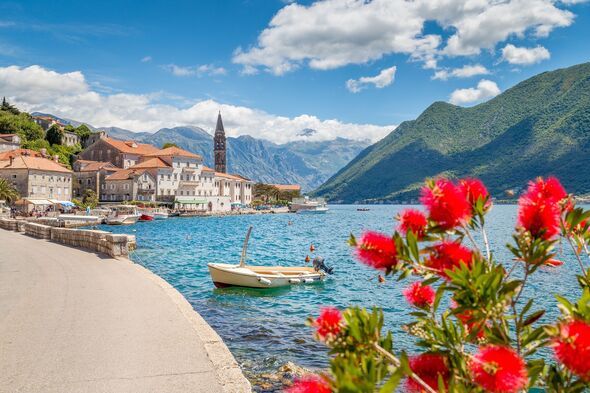
The centrepiece is Kotor's UNESCO-listed old town, a compact maze of stone streets, churches and squares dating back to the Middle Ages.
The town walls of Kotor are one of the town's defining features, climbing steeply from the Old Town for about 4.5km, zigzagging up to the San Giovanni Fortress high above.
The walls were a serious defensive system, built up between the 9th and 19th centuries to protect the town from invaders. Today, visitors can walk up to the fortress. The full climb is about 1,350 steps, and while the route is steep, the views over the Bay of Kotor are the payoff, with red rooftops below and mountains dropping straight into the water.
The bay itself is a major draw. It's a natural harbour in northern Montenegro, surrounded by steep grey mountains that give it that fjord-like feel.
One visitor said on TripAdvisor it was "easily one of the most stunning places in Montenegro" while a second said the bay was a "spectacular scene".
They continued: "The natural beauty is stunning, with Mediterranean landscapes, mountains, cliffs in contrast with the historic buildings at its shores."
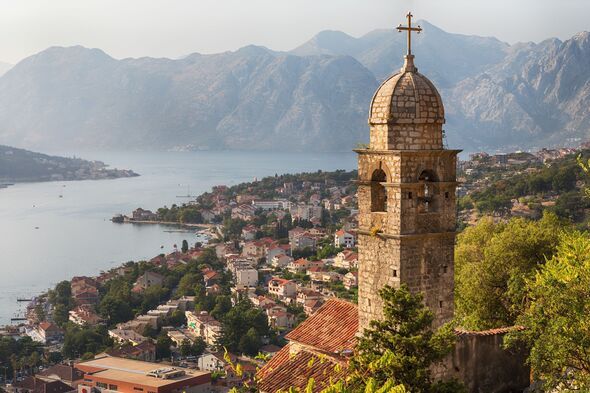
Known as one of Europe's most unusual coastal landscapes, the jade water is surrounded by villages and pebbled beaches dotted along the shoreline.
Kotor also has history beyond the scenery. In the Middle Ages, it was a major artistic and trading centre, known for its masonry and iconography.
A large number of the monuments, including four Romanesque churches and the town walls, were seriously damaged by an earthquake in 1979, but the town has been restored, largely with the help of UNESCO.
Food is simple but strong. Expect a mix of Mediterranean and Balkan flavours, with fresh seafood and grilled meats dominating menus across the old town and waterfront.