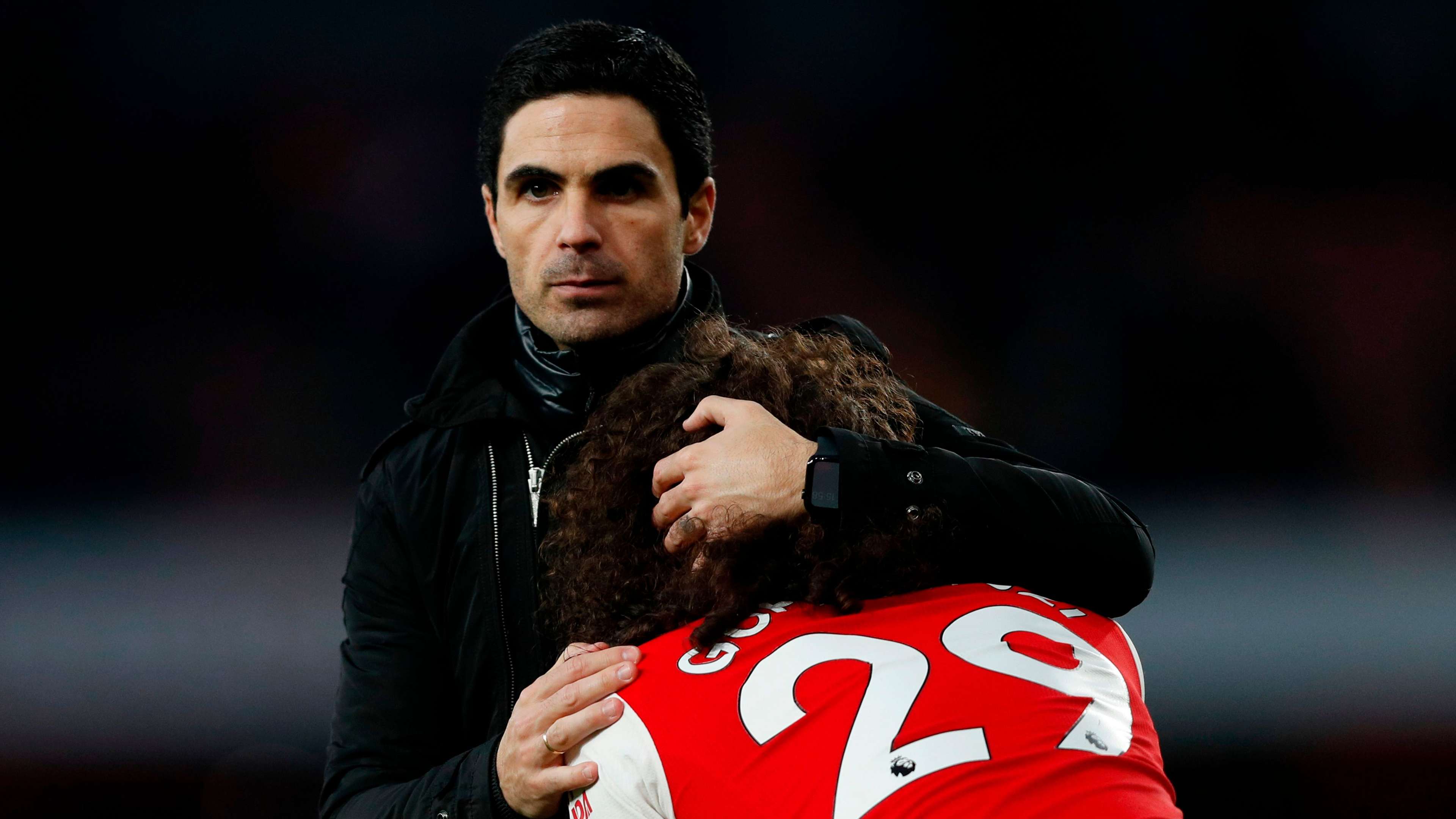
Exactly a year ago, Gary Neville remarked that Mikel Arteta’s greatest achievement at Arsenal wasn’t his FA Cup triumph in 2020, but the fact that he was still in the job despite going five seasons without landing a major trophy. “We thought those days were gone when managers were given such patience,” the former Manchester United defender said on Sky Sports.
In that context, a large share of Arsenal’s Premier League glory must be attributed to the club itself. Even after multiple seasons of heartbreak and near misses, the board continued to trust and financially back Arteta, particularly in the transfer market. That faith, along with significant investment of time and money, has finally been rewarded — confirmed by Manchester City’s defeat at Bournemouth on Tuesday.
Indeed, the club was right to “trust the process.” Arteta had promised he would “get it right” and only needed “a little bit of time.” Though the journey took longer than he initially imagined, the Spaniard has proven true to his word. Arsenal’s end to a 22-year title drought is not merely a victory for the club’s patience but also a testament to Arteta’s persistence and tactical adaptability.
‘Rebuild everything’
As Arteta has often noted, Arsenal were in disarray when he took charge. Discontent had turned into apathy by the end of Unai Emery’s ill-fated tenure, following the frustration that built up during the latter years of Arsène Wenger’s 22-year reign.
It’s easy to argue that if Emery had been afforded the same level of support as Arteta, he might have achieved comparable success. His later work with Villarreal and Aston Villa has reaffirmed his place among the top coaches in modern football.
However, Emery had lost the fanbase long before his dismissal on November 29, 2019. Even the interim appointment of the much-loved former winger Freddie Ljungberg couldn’t lift the gloom around the club — a scene Arteta vividly recalls from his final visit to the Emirates as a Manchester City assistant coach just five days before taking over as Arsenal’s permanent manager.
“That image, that feeling of the stadium, the crowd (with) 50 per cent of the stadium empty really got into me,” he recalled. “I said, ‘With this, there is no project. This is not going to work.’”
“Unfortunately, it got worse very quickly because then Covid hit and then instead of 50% we had zero. So, you make the job even harder. After that we had to rebuild everything.”
‘Beautiful to watch’
Few could deny that Arteta did an excellent job laying the foundation for a future title-winning side. But lingering doubts persisted about whether he was the right man to turn contenders into champions.
Club legend Thierry Henry recently admitted on Sky, “I’ll be honest, at one point I was questioning all this ‘Trust the process’ talk. I wanted to know, ‘Where are we going?’”
Even this season, there were concerns that Arsenal might again finish second — especially after their home defeat to Bournemouth on April 11, when the players seemed burdened by the tension from the Emirates crowd.
But the fans responded when it mattered most. The electrifying atmosphere during the league clash with Fulham and the Champions League semi-final second leg against Atletico Madrid showcased how dramatically the mood had shifted since that 3-0 home loss to City back in December 2019.
“When it’s harder at the beginning,” Arteta said before Monday’s game against Burnley, “then it makes it better to see that transformation and that joy among the people. It’s something that is beautiful to watch.”
More Mourinho than Pep
Interestingly, Arsenal’s football hasn’t always been “beautiful to watch” this season — a topic that has sparked debate among pundits and fans alike.
As a disciple of Pep Guardiola, Arteta was expected to replicate his mentor’s attacking, possession-based style. For a while, especially after signing former Manchester City players Gabriel Jesus and Oleksandr Zinchenko in the summer of 2022, the Gunners did look like a “Manchester City-lite” version, as Jamie Carragher described it.
Yet over the past three seasons, and particularly this campaign, Arteta has evolved into a win-at-all-costs strategist, drawing more comparisons to Jose Mourinho than Guardiola. Arsenal have become masters at managing games — as adept at wasting time from set-pieces as they are at scoring from them. Goalkeeper David Raya often goes down to allow Arteta to deliver tactical instructions, and the team even appeared to exploit concussion protocols during a match against Wolves in January, underlining the Spaniard’s growing pragmatism.
‘Just do what they want’
This tactical gamesmanship hasn’t won Arsenal many friends. Brighton boss Fabian Hurzeler criticised Arteta’s methods after a 1-0 defeat at the Amex Stadium in March, saying, “I will never be that kind of manager who tries to win in that way.
“Of course, every team will manage and waste time, but there has to be a limit and that limit has to be set by the Premier League and the referees. At the moment, Arsenal just do what they want.
“Where will this go in the future? That’s my question. In one game you play 60 minutes net and then you play against Arsenal and it’s only 50. It’s 10 minutes of difference and this is what the supporters are paying for.
“If I would ask everyone in the room, ‘Did you really enjoy this football game?’ maybe one person raises his hand — and that’s only because he’s a big Arsenal fan.”
‘Certainly respect it’
Even Henry, the face of Arsenal’s ‘Invincibles’, admitted he doesn’t particularly enjoy Arteta’s style from a coaching standpoint. But as a lifelong Gunner, he made it clear that the only thing that mattered was seeing his former club finally win again.
“For a very long time, we’ve been accused of being boys, of not being able to keep a lead, of getting bullied,” Henry said on Sky. “The question was, ‘Can you win ugly?’ Well, now that’s exactly what this team is doing — and mastering it. And now that you are doing it, other people are not happy with it.
“So, I don’t have to like it, but I certainly respect it. That’s the most important thing. After 22 years, no matter how we’re going to do it, I’m going to respect it.”
Found a way to win
Henry also pointed out that Arteta’s pragmatic shift is not a betrayal of any supposed ‘Arsenal Way’, given that Wenger’s free-flowing teams were the polar opposite of George Graham’s defensively rigid 1-0 specialists. Both eras are equally cherished by supporters for delivering success, albeit through contrasting philosophies.
While neutrals may dub this team “Set Piece FC,” Arsenal will be remembered as the side that ended one of English football’s longest title droughts. They did so by standing firm behind a coach often mocked for his unorthodox motivational methods, who nonetheless led a squad many doubted after their defeat at the Etihad just last month.
Arteta has shown himself to be ahead of his time — building a disciplined, defensively strong, physically committed and relentlessly determined unit willing to do whatever it takes to win. In that sense, Arsenal are the perfect champions for the 2025-26 Premier League season, embodying the gritty, competitive essence of modern English football.
The process may not have been glamorous, but it has unquestionably been successful. As Henry aptly summed it up on Sky, “We asked Mikel to find a way. And he did.” For that alone, Mikel Arteta deserves full respect.