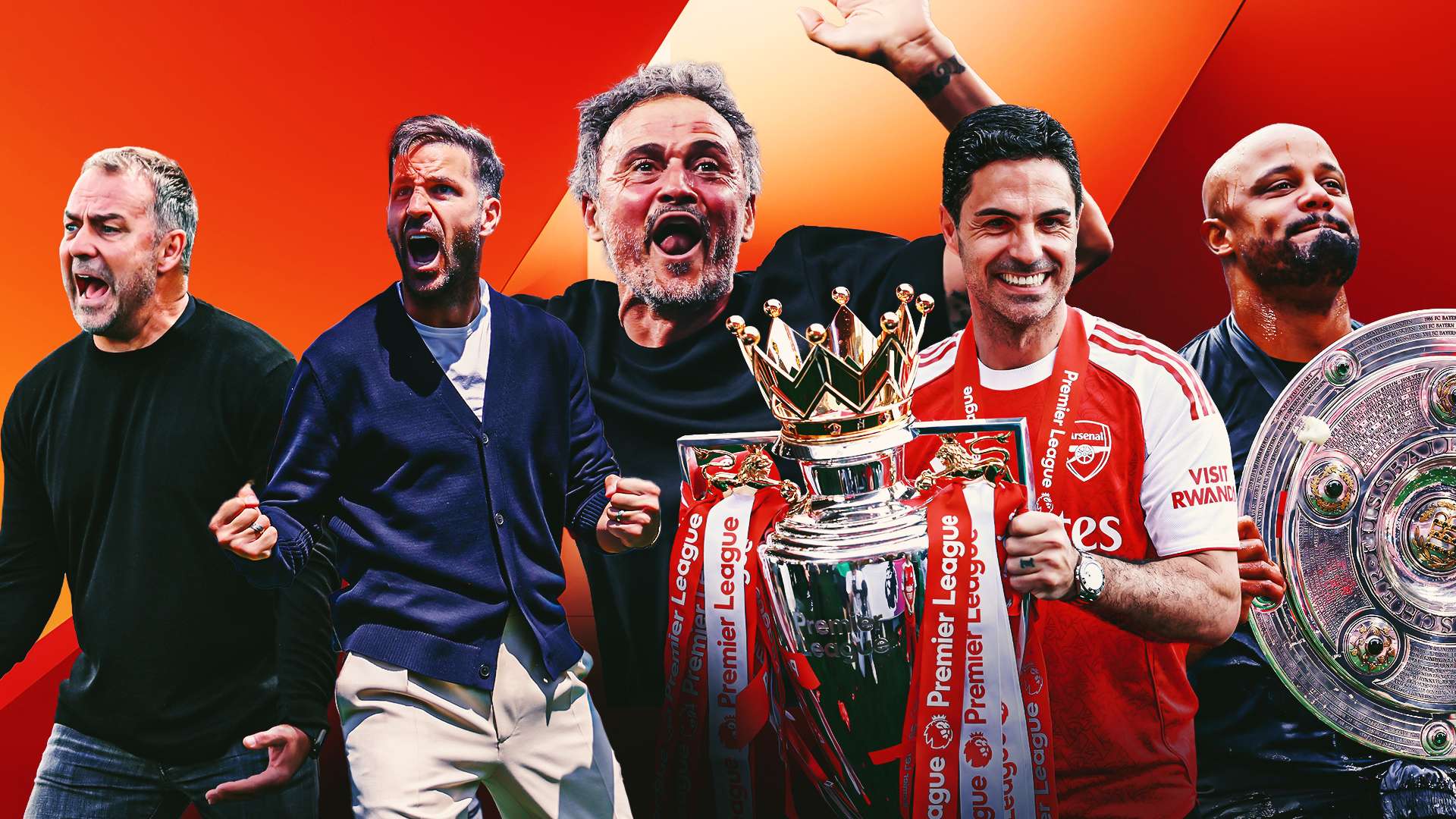
The 2025–26 European football season has drawn to a close, and much like the previous campaign, it ended with Paris Saint-Germain once again lifting the European Cup after winning the Champions League final. Their narrow victory over Arsenal in Budapest was a far tighter contest than the dominant win against Inter in Munich a year earlier, yet it brought equal delight to PSG and their supporters as the French champions completed a domestic and continental double, having already secured Ligue 1.
Arsenal, meanwhile, broke their long wait to finally claim the Premier League title, while Bayern Munich, Inter and Barcelona also celebrated success in their respective leagues. PSG’s triumph denied an all-English clean sweep of European competitions after Aston Villa and Crystal Palace captured the Europa League and Conference League titles respectively.
Each of these clubs’ managers enjoyed exceptional seasons, but they were not the only ones to achieve remarkable success stories. From unexpected title runs to fairytale finishes, the 2025–26 campaign had many standout coaches. Here is FootballCo’s list of the top 20 managers of the season:
20. Keith Andrews (Brentford)
Brentford were widely tipped for relegation before the season began, with new boss Keith Andrews taking over from Thomas Frank while dealing with the departures of captain Christian Norgaard and star forwards Bryan Mbeumo and Yoane Wissa, who together had scored 39 goals the previous year.
Yet Andrews’ side defied expectations, finishing ninth in the Premier League — matching their best-ever finish under Frank. Their only regret will be missing out on European qualification by goal difference after managing just two wins in their last 13 matches.
19. Peter Bosz (PSV)
Few teams across Europe were as dominant as PSV Eindhoven, who successfully defended their Eredivisie crown under Peter Bosz, finishing a remarkable 19 points ahead of Feyenoord. PSV netted 101 goals in 34 league games, far surpassing NEC Nijmegen’s 77.
Bosz’s third straight title earned him a two-year extension, though he will be eager for a stronger Champions League campaign next season after failing to reach the knockout stage despite notable wins against Napoli and Liverpool.
18. Regis Le Bris (Sunderland)
Sunderland spent heavily for a newly promoted side last summer, yet few expected them to stay clear of relegation in their first Premier League season since 2017. Regis Le Bris not only kept them safe but led the Black Cats to a sensational seventh-place finish, securing Europa League qualification.
Le Bris’ team played without fear and had effectively secured safety by midseason. Despite a rough spell in early spring, they finished strong with victories over Everton and Chelsea, sparking euphoric celebrations at the Stadium of Light. Oh, and they beat Newcastle home and away — a dream season for Sunderland fans.
17. Dick Schreuder (NEC Nijmegen)
NEC Nijmegen have qualified for European competition only three times in their history, but Dick Schreuder’s leadership saw them finish third in the Eredivisie, earning a Champions League qualifying berth. Returning to the Netherlands after a stint with Castellon in Spain, Schreuder kicked off with a 5–0 win over Excelsior Rotterdam and built momentum throughout the campaign. NEC also reached the Dutch Cup final, losing out to AZ Alkmaar.
16. Derek McInnes (Hearts)
Hearts’ season ended in disappointment, but Derek McInnes deserves immense credit for nearly breaking the long-standing Celtic-Rangers stranglehold on Scottish football. Hearts came within minutes of winning the title before losing to Celtic on the final day. Supported by Tony Bloom’s Jamestown Analytics system, McInnes blended new recruits with existing talent superbly. Only a handful of questionable refereeing calls prevented what could have been a historic triumph.
15. Mauro Lustrinelli (FC Thun)
The title of Europe’s most surprising champions belongs to FC Thun of Switzerland. Relegated and nearly bankrupt in 2020, Thun have climbed back spectacularly under Mauro Lustrinelli. Appointed in 2022, his first club managerial job, he led Thun to promotion last season and then to their first-ever Swiss top-flight title in 2025–26 — the club’s first in 128 years. Though they faltered after securing the title early, Lustrinelli’s achievement was extraordinary, earning him the Union Berlin job in the Bundesliga.
14. Sebastian Hoeness (Stuttgart)
Taking charge when Stuttgart were bottom of the Bundesliga in April 2023, Sebastian Hoeness has transformed the club. This season, Stuttgart finished fourth, qualifying for the Champions League for the second time in three years, and reached another DFB-Pokal final, losing to Bayern Munich. Hoeness, just 44, has established himself as one of Europe’s brightest young coaches.
13. Pellegrino Matarazzo (Real Sociedad)
Real Sociedad were struggling near La Liga’s relegation zone when Pellegrino Matarazzo arrived in December. The American manager inspired a dramatic turnaround, losing just two of his first 15 games and leading the team to the Copa del Rey final. Sociedad defeated Atletico Madrid on penalties after a 2–2 draw, securing the club’s seventh major trophy. Despite a dip in form later, Matarazzo’s debut half-season in Spain was a resounding success.
12. Julian Schuster (Freiburg)
After finishing fifth in his debut season, Julian Schuster took Freiburg to their first-ever European final. They had never advanced past the last 16 of a continental competition but reached the Europa League final by eliminating Genk, Celta Vigo, and Braga. Though they lost to Aston Villa, Freiburg also reached the DFB-Pokal semi-finals and secured another European berth. At only 41, Schuster’s future looks bright.
11. Pep Guardiola (Manchester City)
While this was not a vintage Manchester City season — with 15 league draws and a Champions League exit in the Round of 16 — Pep Guardiola still managed a strong farewell campaign. Integrating new arrivals Rayan Cherki, Gigi Donnarumma, Antoine Semenyo and Marc Guehi, along with promising youngsters Jeremy Doku and Nico O’Reilly, Guardiola guided City to FA Cup and Carabao Cup success. He leaves a solid foundation for successor Enzo Maresca.
10. Pierre Sage (Lens)
Lens pushed PSG all the way in Ligue 1, forcing Luis Enrique to keep his stars on the pitch deep into the season. Pierre Sage’s tactical acumen made Lens genuine contenders, and though they narrowly missed out on the title, they claimed the Coupe de France for the first time in their history after beating Nice in May. It was a superb debut campaign for Sage.
9. Francesco Farioli (Porto)
After a painful collapse with Ajax last season, Francesco Farioli bounced back brilliantly with Porto. The 37-year-old guided the club to their first Liga Portugal title since 2022, clinching it with two matches to spare. Porto lost only twice all season, re-establishing Farioli’s reputation as one of Europe’s finest young tacticians.
8. Andoni Iraola (Bournemouth)
Despite losing key players — including Antoine Semenyo in January — Andoni Iraola rebuilt Bournemouth’s squad impressively. After a midseason slump, the Cherries went on an 18-match unbeaten run, finishing sixth and qualifying for European competition for the first time in their history. Iraola’s adaptability and tactical intelligence make him a highly sought-after coach, with Liverpool reportedly eyeing him as Arne Slot’s successor.
7. Cristian Chivu (Inter)
Tasked with following Simone Inzaghi, Cristian Chivu faced a major challenge at Inter. After a rough start, he led the Nerazzurri to a domestic double — winning Serie A by 11 points and claiming the Coppa Italia after a thrilling semi-final comeback against Como. Though their Champions League exit to Bodo/Glimt stung, Chivu’s achievements in his first full top-flight season were remarkable.
6. Hansi Flick (Barcelona)
Hansi Flick’s bold high-line tactics may divide opinion, but his results at Barcelona speak for themselves. Despite injuries to key players like Lamine Yamal, Raphinha, Pedri and Frenkie de Jong, Barca defended their La Liga title, finishing eight points clear of Real Madrid. With president Joan Laporta planning heavy investment this summer, Barcelona look set for another strong season under Flick’s leadership.
5. Cesc Fabregas (Como)
Former Spain and Arsenal star Cesc Fabregas is proving just as talented in the dugout as he was on the pitch. After guiding Como to mid-table safety last year, he masterminded an incredible fourth-place Serie A finish this season, securing Champions League qualification for the first time ever. Boasting Serie A’s best defence and a resurgent Nico Paz, Como’s rise under Fabregas has been nothing short of remarkable.
4. Unai Emery (Aston Villa)
Aston Villa endured a poor start, failing to score in their first five games, but Unai Emery revitalised his side once again. Villa surged into title contention around the new year before finishing fourth and returning to the Champions League. Emery also added yet another Europa League trophy to his growing collection, silencing any remaining critics.
3. Vincent Kompany (Bayern Munich)
After several coaches turned down Bayern Munich, Vincent Kompany’s appointment raised eyebrows. However, the Belgian quickly won over fans as his side played dazzling attacking football, scoring 122 goals and winning the Bundesliga by 16 points. Bayern also lifted the DFB-Pokal and reached the Champions League semi-finals. With Harry Kane, Michael Olise and Luis Diaz in peak form, Bayern look fearsome under Kompany.
2. Mikel Arteta (Arsenal)
After three consecutive runners-up finishes, Mikel Arteta finally led Arsenal to the Premier League title. Moving away from Pep Guardiola’s stylistic influence, Arteta built a more physically imposing side capable of sustaining success across the season. Arsenal lost only once in Europe — in the Champions League final via penalties to PSG — capping a superb campaign that solidified Arteta’s reputation as one of Europe’s elite managers.
1. Luis Enrique (Paris Saint-Germain)
Having achieved a treble last season, Luis Enrique confirmed his place among football’s greats by retaining both the Ligue 1 and Champions League titles. Though PSG suffered an early Coupe de France exit to Paris FC and faced pressure from Lens domestically, Enrique managed his squad expertly to ensure peak performance in Europe. PSG may not have been as free-flowing as last season, but their attack remained one of the world’s most lethal, sealing another glorious year for the club and their manager.