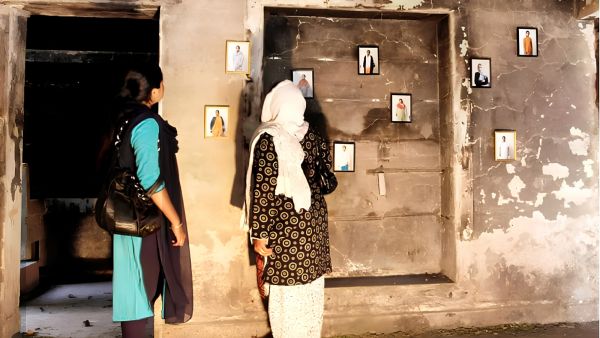
We learnt that in the afternoon of February 28, 2002, in Gulberg Society in Ahmedabad, a crowd armed with swords, iron rods and petrol bombs gathered outside a cluster of homes. Inside, Muslim families hid behind locked doors, listening to slogans calling for their deaths. Police units were stationed nearby. They did not intervene.
When the mob broke through the gates, men were dragged into the street and butchered. It seems houses were set ablaze with people still inside. Allegedly, former MP Ehsan Jafri repeatedly called the police and senior officials for protection. Help never came and by the end of the massacre, 69 people were dead.
Significantly, not a single officer had fired a shot to stop the killing. You see, somebody has to give the order to fire. Somebody has to function.

Decades earlier, after Rosa Parks defiantly sat in a white-reserved seat on a bus, and legislation to end segregation between whites and blacks followed, a group calling itself “The Freedom Riders” in 1961 set out to test whether constitutional guarantees meant anything when mobs ruled the streets of Anniston, Alabama. Their experiment failed.
Closer home, Muslims and Christians have spent decades conducting the same terrible experiment: testing whether Article 14, Article 21 and the promises of equal citizenship still function when the State either looks away or, some say, actively sides with the mob. Again, and again, citizens have watched institutions retreat at the precise moment they were needed most.
Again and again, the experiment failed. The institutions meant to protect the less powerful, the numerically weak, did not function.
In Gujarat, investigations dragged on for years. Witnesses turned hostile. Survivors were threatened. Many accused walked free. Some convictions came, but only after enormous delay and often with sentences that survivors regarded as wholly disproportionate to the crimes. The legal process itself became part of the punishment.
The Supreme Court eventually intervened in certain riot cases. Still, by then, evidence had decayed, memories had fractured and entire communities had already absorbed the lesson: justice for the oppressed citizen is often not a right, whatever the Constitutional ink may say. It flows at the mercy of the people in charge of the institutions of governance.
As and when the State chooses convenient inertia over accountable action, looking away in preference to proactive or even reactive intervention, accountability for nonfeasance be damned, the oppressed citizen pays the price. As does the image and reputation of the State.
And what is the State if not the bureaucrats, the police, the paramilitary forces, the magistrates and the District Collectors as the executive, the parliamentarians and the elected representatives as the legislature and constitutional and subordinate courts as the judiciary?
Every single one of them sworn by oath to uphold the Constitution and the law as a sacred trust. Each of them unfailingly failing to live up to that solemn oath. Each of them unfailingly betraying that sacred trust.
What happened at Gulbarg Society was not hidden. The smoke rising over Ahmedabad was visible to the world. The calls for help were recorded. The names of the dead were known. The police presence nearby was undisputed.
And yet, the machinery constitutionally entrusted with preserving life and liberty failed with devastating completeness. The state did not function. And that pattern, an experiment of the reverse kind, did not end in Gujarat. It stands repeated.
In Kandhamal in 2008, churches were burned, Christian families displaced and women assaulted while the justice system moved with glacial hesitation. In the Delhi violence of 2020, videos circulated of Muslim homes burning while police personnel stood nearby. In multiple states, bulldozers have demolished Muslim and Christian homes and places of worship, while urgent petitions seeking constitutional protection were deferred, technically dismissed or endlessly relisted.
Courts possessing extraordinary jurisdiction under Articles 32 and 226 – powers specifically designed for constitutional emergencies –often responded with procedural caution in the face of immediate human danger. Stated simply, the State did not function. Stated differently, a dysfunctional State surrendered rule of law to mob rule.
And this is where the crisis deepens beyond individual riots or demolitions. The minority fear today is not only of mobs. It is of mobs that operate with impunity born of almost certain institutional abandonment. That fear has been acknowledged even by retired judges of the higher judiciary themselves.
Former Delhi High Court judge Justice S Muralidhar, after demitting office, repeatedly warned that constitutional courts cannot remain passive spectators when civil liberties are under assault. He spoke publicly about the danger of courts failing to provide timely remedies, observing that delayed constitutional adjudication can itself become a form of injustice.
Former Supreme Court judge Justice Rohinton Fali Nariman similarly cautioned that the rule of law survives only when courts act independently and without fear, emphasising that constitutional morality means little if citizens lose faith that the judiciary will enforce it against executive excess.
Those interventions matter because they reveal something deeply unsettling: even reputed judges who once sat within the system have felt compelled, after retirement, to reassure citizens that the rule of law must prevail precisely because so many citizens increasingly feel they are watching it collapse in real time.
The constitutional promise was never merely that rights shall exist on paper. It was that courts would act when those rights were threatened. A Constitution is not self-executing ink. Its meaning depends entirely on whether institutions are willing to enforce it against power.
Institutions are manned by citizens. And unless those protective institutions are manned by stakeholders, ie, citizens from those oppressed, threatened minorities, there will never be proper enforcement, and opaque systems and Right to Information (RTI) stonewalling will never permit the transparency that an alarmingly dangerous situation careening out of control urgently demands.
The only person who truly functioned that day in Anniston, Alabama, during the attack on the Freedom Riders, was a 12-year-old girl carrying a bucket of water. She had no authority, no uniform, no constitutional office. She simply refused to stand by while human beings burned.
In India, that role is now too often performed by non-government organisations (NGO) and ordinary citizens instead of State institutions. A lawyer filing an urgent habeas petition at midnight. A journalist documenting demolished homes despite threats of prosecution. A priest sheltering displaced families. An imam opening mosque courtyards to survivors fleeing violence. A widow standing outside a courthouse for 20 years carrying a photograph of her dead husband.
These people have become substitutes for institutions that citizens increasingly fear may not act when it matters most.
And there is another bitter continuity. Those who ask the system to honour the Constitution often pay the highest price for doing so. Survivors of Gulbarg Society spent decades facing intimidation and exhaustion.
Activists documenting communal violence have been branded anti-national. Journalists have faced criminal prosecution. Human rights defenders have endured raids, arrests and endless investigations. Petitioners invoking constitutional rights are treated not as citizens seeking protection, but as adversaries embarrassing the State.
Meanwhile, many perpetrators of organised violence continue public lives untouched. Several rise to political office. It is not merely that atrocities occur, but that increasing numbers of citizens have begun to doubt whether the institutions created to stop them still possess either the will or the urgency to do so. For, the atrocities do not just occur, they are brazenly videographed and made viral, as if to thumb their noses at the system, at the bureaucrats, the police, the paramilitary forces, the magistrates and the District Collectors, the parliamentarians, elected representatives and judges in charge of constitutional and subordinate courts.
And none of them seems concerned at the erosion of their authority, the emasculation of the institutions, the legal rights of the victims being kicked around like so many footballs.
This is why post-retirement warnings from judges resonate so powerfully. Citizens are not merely asking courts to win abstract legal debates. They are asking for reassurance that constitutional governance still exists, that police cannot selectively disappear, that mobs cannot become sovereign, that emergency incarceration powers will not be allowed to become ordinary administration throwing protestors in jails, that constitutional courts will not retreat into “judicial restraint” while citizens lose homes, liberty or life itself.
The photographs from Gulbarg Society, Kandhamal and Delhi now circulate globally as the images of the burning Freedom Riders’ bus once did. Reports are commissioned but never implemented. Committees issue findings, which are routinely ignored. Courts pronounce principles. They sit in law reports.
Yet, each new episode revives the same haunting question: when the next crowd gathers outside someone’s home, will the law arrive before the bodies fall?
The insignificant figures in these events, the child with water, the widow with a petition, the frightened witness who still testifies, the retired judge reminding the country that constitutional morality requires courage, the NGOs risking selflessly: they are carrying burdens that should belong to the State itself.
The real constitutional tragedy is that all the carefully preserved façade of constitutional secular governance does is serve a clandestine purpose: to enable a nation to claim it is a secular constitutional democracy. The fodder for that is Dalits and minorities, the ever-present whipping boys.
There is, however, another danger looming. One that the “non-Brahmanical order” has not yet seen: when that “other” no longer suffices, or is unavailable, other categories will then be the substitute. The bloodthirst let loose has to have its dietary needs fulfilled. You cannot train attackers and leave them with no target to attack.
After today’s targets are exhausted, then what? As the Chinese saying goes, “When the neighbour’s property is on fire, your own house is threatened.”
The “safe” residents do not seem to have realised this yet. It is time they do. In the whipping of today’s vulnerable “others” hides a sinister future that is announcing itself, but only to those who can read between the lines, hear the unannounced threat sought to be drowned by the noise: today’s not-so-vulnerable “other” is tomorrow’s fodder. And the predators are coming.
Jai Hind.