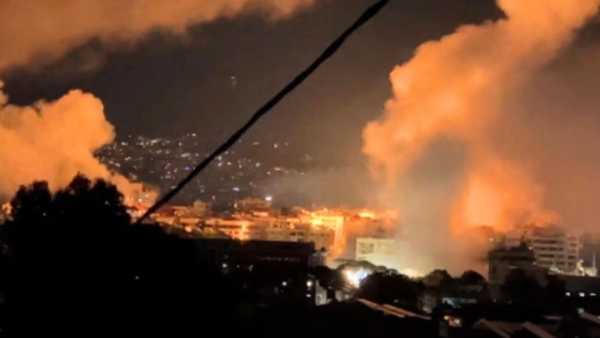
Israel said on Sunday that Iran had fired missiles at it, the first such attack by Iran since a fragile ceasefire took effect in early April. After this attack, efforts to mediate an agreement to end the war have become more complicated. Tehran warned of retaliation after Israel attacked Beirut's southern suburbs on Sunday.
Israel said the attack was in response to Iran-backed Hezbollah's shelling of northern Israel earlier in the day. The Israeli attack on Beirut came days after a ceasefire was agreed to in US-hosted talks between the governments of Lebanon and Israel. However, Hezbollah rejected this agreement. Lebanon's Health Ministry said two people were killed and 20 others were injured in the attack on one of its residential buildings.
The Israeli Army claimed that its air defense system successfully intercepted and destroyed all the missiles fired by Iran. At the same time, the Iranian army gave a stern warning to Israel and said that if it does not stop its attacks on Lebanon, it will have to face even more devastating attacks. Iran alleged that Israel had crossed all limits by targeting the southern suburbs of Beirut and intensifying attacks in South Lebanon.
Meanwhile, Iran's Islamic Revolutionary Guard Corps (IRGC) said it had accepted the ceasefire with the US on the condition that it would be applicable on all fronts. The IRGC indicated that the ongoing Israeli military action in Lebanon is contrary to this understanding. On the other hand, Israel's right-wing National Security Minister Itamar Ben-Gvir reacted sharply to Iran's attack and said that Tehran will have to burn.