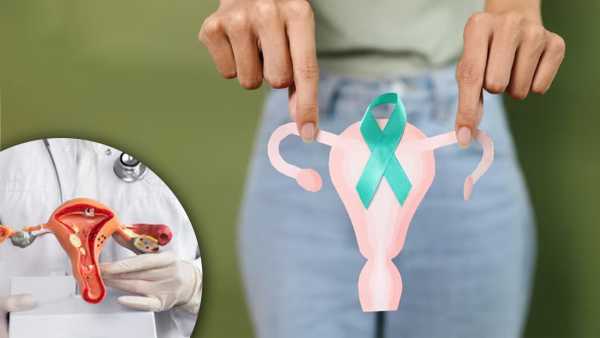
The risk of cervical cancer is continuously increasing in India. Experts say that the main reason for the spread of this dangerous disease is the lack of timely information about the disease. For information about cervical cancer, indigenous tests are proving to be more effective than expensive tests. The main cause of cervical cancer is persistent infection with human papillomavirus (HPV). Especially in the case of cHPV.
Dr. Neerja Bhatla, head of the National Cancer Institute (NCI) Jhajjar and former head of the obstetrics department of AIIMS New Delhi, says that the HPV test is the most accurate test, but it is very expensive. While VIA (Visual Inspection with Acetic Acid) test is cheap, its scope is not increasing. Therefore, there is a need for cheap PoC HPV test so that cervical cancer can be eliminated from the country by testing twice at 35 and 45 years.
Doctor Neerja says that Point-of-Care (PoC) testing – i.e. a test which is available on the spot and gives immediate results. There is no need to send the sample to the lab or wait for weeks. If cheap, easy and reliable PoC HPV test becomes available then testing can be done at ASHA Didi or PHC level only. This will increase the scope of coverage and the target of cervical cancer elimination can be achieved by 2030. A study is also being done regarding this.
He said that this study is one of the first studies to apply WHO's 'Target Product Profile' (TPP) and IARC criteria to evaluate HPV tests (low-valency HPV) developed in India. The first step was to propose the development of HPV tests that could detect the eight most common HPV types found in cervical cancer. These can be done in district and sub-district level facilities and require very little training and expertise.
Dr Neerja said, “These innovations were aimed at addressing the shortcomings of existing tests, as they were mostly developed in high-income countries and targeted multiple types of HPV, which increased cost and complexity. She further added, “This study shows that indigenous platforms can also achieve clinical validation, quality standards and accuracy equivalent to global gold-standard tests. “This will prove to be a game-changer for the prevention and early detection of cervical cancer in India.”
Regarding how big this problem is becoming in India, Dr. Neerja said that cervical cancer is still a major public health problem in the country. Every year about 1,27,000 new cases occur and out of these, 80,000 women die due to cervical cancer.
She says, women above 30 years of age should be examined every 3-5 years so that pre-cancerous stage or early cancer can be detected. The government's national program includes screening of breast, oral and cervical cancer. VIA i.e. Visual Inspection with Acetic Acid test is done for cervical. But despite this, the coverage of screening is very low, because most women are not able to get tested.
The World Health Organization (WHO) says that HPV testing is the best way to eliminate cervical cancer. If a good quality HPV test is used, then only 2 tests (at the age of 35 years and 45 years) are sufficient. The problem is that most HPV tests are very expensive. For this, big machines, labs and technology are required. These tests are not available in villages and last mile facilities.