A saree drape has unexpectedly sparked a cultural conversation in Bengal, with debates unfolding over what truly counts as “traditional” Bengali dressing. As photos of women wearing the aatpoure saree spread online, discussions soon shifted from admiration to questions of authenticity and heritage. Yet the argument has also revived an overlooked chapter of fashion history, one involving the Tagore family, colonial India and an unexpected Bengal-Gujarat connection. The saree style many Indians now wear without a second thought may not be as old, or as regionally rooted, as people often assume.
The neatly pleated saree seen across India today feels timeless, but its present form developed gradually. Long before structured draping became common, women in the subcontinent wore unstitched garments in different combinations depending on climate, customs and comfort.
Clothing often included separate draped pieces for the lower body, upper body and shoulders. In many regions, particularly in warmer climates, covering the upper torso was not considered essential. Blouses and petticoats, now seen as standard parts of saree dressing, became common much later. Changes in clothing began emerging alongside colonial influence, evolving social expectations and women’s increasing movement in public spaces.
A common misunderstanding is that Jnanadanandini Devi created the traditional Bengali aatpoure style. In reality, she is remembered for popularising a more structured saree arrangement known as the Brahmika drape. Introduced during the nineteenth century, this style offered practicality and a more formal appearance suited to social gatherings and public life. Jnanadanandini Devi, who was married to Satyendranath Tagore and belonged to the influential Tagore family, encountered different draping methods after moving to Bombay with her husband.
There, she noticed how women in western India wore sarees with the pallu brought around the body and placed over the shoulder. Compared to Bengali drapes of the time, the style allowed greater ease of movement.
Fashion historians often point to a significant turning point in Jnanadanandini Devi’s life. During the colonial period, traditional Bengali dressing reportedly did not always align with British expectations of formal public appearance. Instead of abandoning the saree, she adapted it.
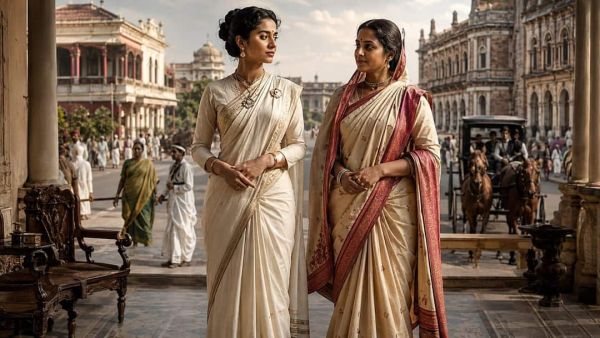
Drawing inspiration from western Indian draping methods, she refined the style by introducing front pleats, pairing sarees with blouses and petticoats, and placing the pallu over the left shoulder. Brooches were often used to secure the fabric neatly. The result was elegant, practical and easier to manage, particularly for women stepping into educational, social and professional spaces.
Over time, the Brahmika drape spread beyond elite Bengali circles and influenced what later became the commonly recognised saree silhouette across India. Today, whether in Kolkata, Delhi, Mumbai or Chennai, front pleats and a pallu draped over the left shoulder feel instantly familiar.
What many now consider entirely traditional quietly reflects a longer story of exchange, adaptation and regional influence. Fashion histories are rarely as simple as they seem. The saree remains deeply Indian and regionally diverse, but the way millions wear it today carries traces of one woman’s practical changes and an unexpected cultural connection between Bengal and western India.