After six days of exhilarating football, the first round of group stage matches at the World Cup has drawn to a close. Here’s our completely biased, unscientific and unapologetically subjective breakdown based on watching about 98% of the action — roughly 2,110 minutes of football.
While most fixtures delivered at least a few memorable moments, the matches listed below stood out as absolute blockbusters, providing over 45 minutes of top-quality play.
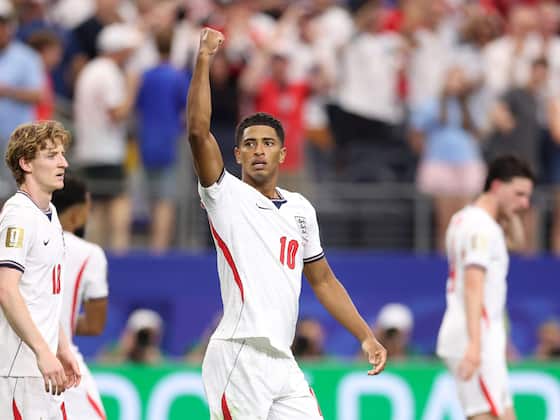
Not just because it happened recently, this clash was pure end-to-end brilliance. Two goals were disallowed for the narrowest of offsides inside the opening seven minutes. Then the Three Lions and Croatia exchanged two stunning goals before halftime. The intensity dipped slightly after the break, but England wasn’t done yet, adding two more goals to seal the win in emphatic fashion.
In the opening half, the United States produced nearly flawless football — 72% possession, 293 completed passes at 89%, 27 touches inside the opposition box, 7 shots with 4 on target, and 3 goals. The second half lacked the same spark, but Gio Reyna’s stoppage-time strike following a beautiful passing sequence ensured this encounter earned its place among the classics.
This is the only draw on the list, but it certainly deserves to be here. When a game ends 2-2 and both teams finish with an expected goals (xG) below 1 (Netherlands 0.78 / Japan 0.59), you know each goal was special. It was a match of two halves — the first was a tactical chess match, the second a burst of unrestrained energy. All four goals came in that second half frenzy.
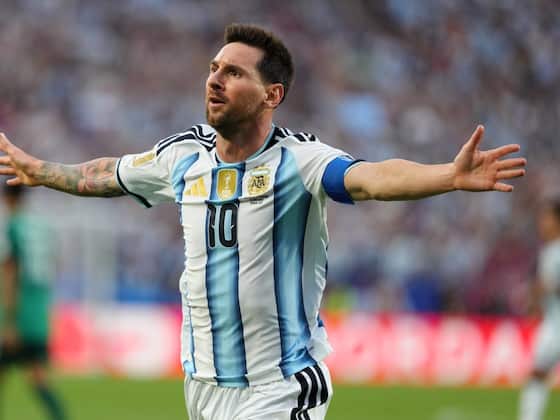
Seeing Lionel Messi notch his first World Cup hat-trick at 38 years old (he turns 39 next week), while also equalling Miroslav Klose’s all-time World Cup scoring record of 16 goals, was a moment of pure magic — easily worthy of inclusion here.
This match makes the list for the opposite reason — it simply didn’t meet expectations. My youngest insists it wasn’t that bad, but this is my column. Both teams fell short of their expected goals, and more importantly, failed to justify the pre-match hype. Billed as a knockout-round calibre clash between two top-ten FIFA-ranked sides, it turned out to be thoroughly underwhelming.
This is where a good result (for Mexico fans) differs from a good game. When there are more red cards (three) than goals (two), it raises eyebrows. South Africa managed a miserable 0.07 xG, and given that Mexico had a two-player advantage for much of the game, the margin should have been far greater than 2-0.
If you look up “squander” in a dictionary, you might find a picture of the Swiss national team. They had every chance to kill off the game but failed miserably. Their lone goal came from a penalty that appeared dubious — the player seemed offside, and FIFA declined to release supporting footage. To make matters worse, Qatar’s equaliser in the 94th minute came via an own goal. A real disappointment.
Nine of the 24 group fixtures (43%) ended in draws, but that doesn’t mean they lacked entertainment. One of them made our “best of” list above; here are a few other memorable stalemates.
Those who watched Spain versus Cape Verde know exactly why it’s here. In the final minutes, Spain threw everything forward in desperation, only to be denied repeatedly by 40-year-old goalkeeper Vozinha, who produced save after miraculous save. It wasn’t pretty football, but it was incredibly satisfying to witness.
Ignoring the geopolitical backdrop, this match was far more thrilling than anyone expected. New Zealand, the lowest-ranked team in the tournament (#85), faced Iran, whose 17 players hadn’t played domestic football since February due to the Persian Gulf conflict. Yet none of that mattered. A brace from young striker Elijah Just, assisted twice by veteran Chris Wood (a member of New Zealand’s 2010 World Cup squad), was matched by goals from Ramin Rezaeian and Mohammad Mohebi for Iran.
Across the 24 group-stage games, there were 75 goals scored, averaging 3.1 per match. Twelve of these — 16% — came in stoppage time. In total, 63 different players found the back of the net.
Along with Messi’s hat-trick, six players recorded braces: Kylian Mbappé (France), Kai Havertz (Germany), Elijah Just (New Zealand), Erling Haaland (Norway), Yasin Ayari (Sweden), and Folarin Balogun (USA).
Deniz Undav (Germany) and Alexander Isak (Sweden) each scored once and provided two assists.
Ayman Hussein (Iraq) had the unfortunate distinction of scoring both for his team and against them, courtesy of an own goal.