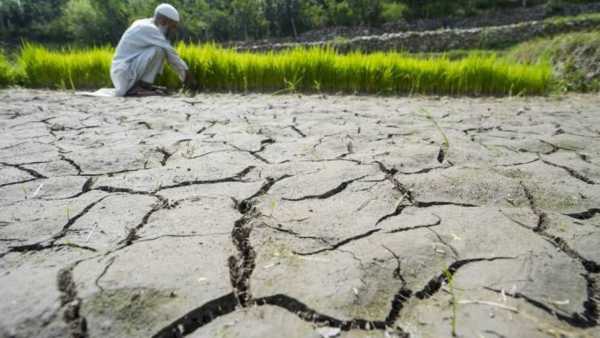
This monsoon season, due to the effect of El Nino, there has been a 42 percent reduction in rainfall in India till June 23. In view of this, the government has intensified emergency measures to save the Kharif crops. The government has identified 315 districts suffering from low rainfall and irrigation deficit and has directed the states to prepare district-wise action plans. Agriculture Minister Shivraj Singh Chauhan on Tuesday reviewed the country's preparations to deal with the weak monsoon. He stressed on saving water, crop diversification and scientific sowing to reduce the impact on agricultural production. Historically, El Nino weather patterns have been associated with below average rainfall and low production of kharif crops.
The government has set the target of grain production for the Kharif season of 2026 at about 176 million tonnes, which is equal to the production of last year's season. Despite less rainfall so far, till June 22, crops have been sown on 11.99 million hectares of land, which is slightly more than 11.79 million hectares a year ago. The minister said that soybean sowing is lagging behind. The Agriculture Ministry and the Indian Council of Agricultural Research (ICAR) have jointly identified low rainfall vulnerable districts using scientific data on rainfall patterns, irrigation facilities and local weather conditions.
Of the 315 identified districts, 111 have been kept in the 'high priority' category, where irrigation facilities are less than 25 percent. 76 districts fall in the 'medium priority' category, where irrigation facilities are between 25-50 percent. At the same time, 128 districts have been considered relatively less sensitive because there are better irrigation facilities available from reservoirs and other sources. Most of these districts are spread in Madhya Pradesh, Maharashtra, Gujarat, Uttar Pradesh, Rajasthan, Karnataka, Bihar, Jharkhand, Telangana, Andhra Pradesh and Odisha. To deal with possible rainfall deficit, ICAR has prepared district-level emergency plans. In these, a revised program of selection and sowing of alternative crops has been recommended to reduce income loss in rain-dependent areas.