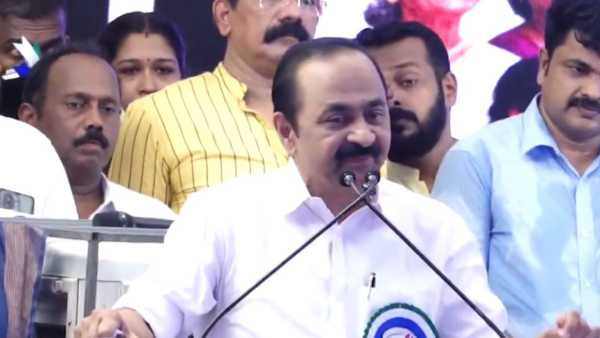
The Congress-led United Democratic Front (UDF) government in Kerala has landed in controversy over its liquor policy just a month after coming to power. Along with the opposition, many allies have also come under attack over Chief Minister VD Satheesan's decision to reduce the tax on low alcohol liquor. Not only this, the ruling coalition itself is facing severe criticism from some constituent parties and religious leaders.
This latest controversy is regarding a provision of the revised budget 026-27 presented by the UDF government, in which the sales tax on liquor containing up to 20% alcohol has been significantly reduced. Presenting the revised budget, Chief Minister Satheesan, who also holds the finance portfolio, announced that low alcohol liquor will be taxed at 120% and 175% depending on the alcohol content. Whereas currently, 251% tax is being imposed on all Indian-made foreign liquor (IMFL) in the state.
Now under the new provisions, products containing up to 20 percent alcohol have been classified as low-alcohol beverages. Most of the liquor currently sold in the state, including whiskey, rum and brandy, contains around 42% alcohol and attracts a hefty tax of 251%.
According to the budget documents, products containing 0.5% to 10% alcohol (v/v) will attract 120% sales tax, while products containing more than 10% and up to 20% (v/v) alcohol will attract 175% sales tax. Alcohol strength is measured as v/v (volume by volume), which represents the proportion of pure alcohol in the beverage. For example, a drink with 10% alcohol (v/v) contains 10 ml of pure alcohol in every 100 ml of the drink.
On tax reduction, the state government says that this decision is not a new policy initiative, but the changes started under the previous Left Democratic Front (LDF) government are being taken forward.
Excise Minister Liju also reiterated that the work of including products containing 0.5% to 20% alcohol as low alcohol beverages was started by the previous LDF government. Whereas in this revised budget it has been said that the purpose of the change in tax is to improve the tax structure applicable to this category of products. Excise Policy is an annual policy of Kerala which decides the rules related to production, sale, distribution and tax of liquor in the state.
Under the excise policy for 2022-23, the then LDF government had changed the rules on foreign liquor so that liquor (except beer and wine) containing 0.5% to 20% alcohol (by volume) could be classified as “low alcohol beverages”. The purpose of this change was to create a regulatory framework for the production and sale of such products, which also included beverages made from locally sourced fruits, grains and other agricultural products. Although this category was started at that time, no separate tax structure was decided for it.
It is believed that some constituent parties of the ruling coalition have been shocked by this amendment introduced by the Satheesan government. Excise Minister M. Liju said that the tax decision is an administrative decision of the government and whether such 'low alcohol beverages' should be sold in Kerala or not is a policy level decision on which the UDF has not yet discussed.
According to reports, Chief Minister Satheesan was appointed by former Kerala Pradesh Congress Committee (KPCC) president V.M. A letter with strong words from Sudheeran has also been received. Sudheeran, known for advocating prohibition during the Oommen Chandy government, said the tax cut announced by Satheesan promotes liquor and is against the Congress's election promise of tackling the problem of alcohol and drugs.
Among those angry with this decision are leaders of minority communities and the Indian Union Muslim League (IUML), the main ally of Congress in Kerala. IUML chief Panakkad Sadiq Ali Shihab Thangal, in an article published in the party's mouthpiece 'Chandrika', requested the government that the concerns related to tax cuts should be discussed and resolved soon.
Church leaders have also criticized the tax cut. The state committee of the Temperance Commission under the Kerala Catholic Bishops' Council described it as a revenue-raising move which could lead to youth getting addicted to alcohol. The committee also warned that if their concerns were not addressed, they would oppose this move of the government. Many church leaders also said that it is not correct to say that reducing the price of low-alcohol products will prevent youth from turning to more harmful drugs.
The opposition has also become aggressive on this issue. The opposition Communist Party of India (Marxist) has alleged that the purpose of the tax cut is to benefit a private liquor manufacturing company. Opposition leader and former Chief Minister Pinarayi Vijayan told the Assembly that a liquor company from Karnataka had demanded lower tax rates from the previous LDF government. He alleged that with this decision of the UDF government, the company will be able to earn huge profits.
Former state excise minister MB Rajesh also accused Chief Minister Satheesan of corruption. Amidst the criticism, the government has rejected that this step is a sign of any major policy change.