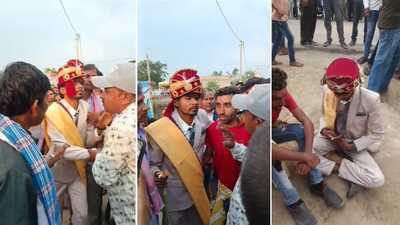
On the basis of the investigation report of the SIT, Ayodhya Police has registered an FIR against 8 named people along with other unknown people in the case of alleged embezzlement of the amount given as donations and offerings by the devotees in Shri Ram Janmabhoomi Temple. The names of Ramashankar Yadav (Tinnu Yadav), Anukalp Mishra, Avinash Shukla, Manish Yadav, Ramashankar Mishra, Subhash, Karunesh and Lavkush Mishra have been registered in the FIR.
This FIR has been registered under sections of theft, aiding theft, embezzlement, fraud, criminal conspiracy and criminal breach of trust by a government employee or institution employee. For this, sections 61, 306, 316, 173 and 317 of the Indian Justice Code (BNS) have been used. There are many sections in this, in which if the allegations are found true during the investigation, then the punishment can be up to life imprisonment.
Many times the police also register cases against unknown people in serious cases. In the Ram temple offering theft case, a case has been registered against 8 named people as well as one unknown person. The police register a case against an unknown person so that during the investigation, other possible accused can also be brought under the ambit of the law. For this, the police uses Section 173 of BNSS (earlier CrPC).
Many times, in criminal cases, the role of many other persons also comes to the fore. In such a situation, if the police has mentioned an unknown person under Section 173 in its FIR, then it becomes easier to make him an accused in that case. This is the reason why the police include an unknown accused in their FIR, so that the scope of investigation remains open and other possible accused can be named in the same case later. In such a situation, there is no need for the police to register any separate FIR.
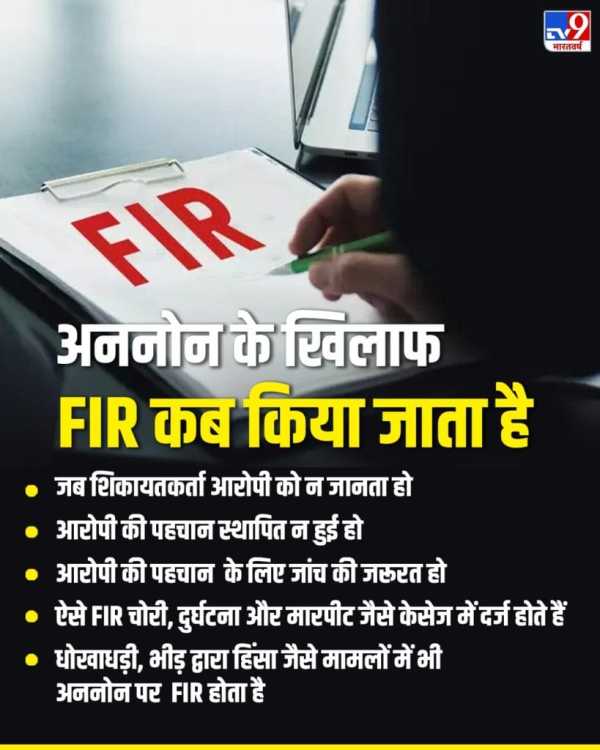
FIR against unknown people is mostly lodged in cases like theft, accident, assault by unknown people, fraud, mob violence etc. It is registered when a crime has been committed but the complainant does not know the accused or the identity of the culprit in the case is doubtful and has not been established. Apart from this, even if investigation is required to identify the accused, in such cases the police mentions the unknown in the FIR.
Many crimes are committed by strangers. In cases like theft, robbery, road accidents, online fraud, victims are not able to immediately identify the criminals. In such a case, the police register an FIR and do the work of collecting evidence and reaching out to the criminals. Once the identity of the criminal is established, they add the name of the arrested accused in the same FIR instead of the unknown one.
If an FIR required a known accused in every case, many crimes would not have been reported. It cannot refuse to register an FIR in cases of theft, robbery, road accidents, online fraud or such cases in which the identity of the culprit is not established. If the police refuses to do so, the complainant can complain against them to their senior officer or the magistrate.
In the case of theft of Ram temple offering, the police have also added section 61 of BNSS of criminal conspiracy. This clearly means that the investigating agencies are not considering this case limited to only 8 named accused. Police believe that during the investigation the threads of conspiracy may be linked to other people also.
In fact, in cases of criminal conspiracy, financial transactions, digital evidence, call detail records and mutual contacts of the accused often have to be thoroughly investigated. In the Ram Mandir case, the investigating agencies will have to investigate it more cautiously. In such a situation, if any other person's role in this case is exposed in future, then he can be made an accused in the same case without registering a new FIR.