'Project Brahmank' of Border Roads Organization (BRO) celebrated its 16th foundation day in Ranaghat, Arunachal Pradesh. This project has been carrying out road and bridge construction work in the border areas of Arunachal Pradesh for the last 15 years. Project Brahmank serves Siang, East Siang, West Siang, Upper Siang and Shi-Yomi districts of Arunachal Pradesh as well as parts of Dhemaji district of Assam.
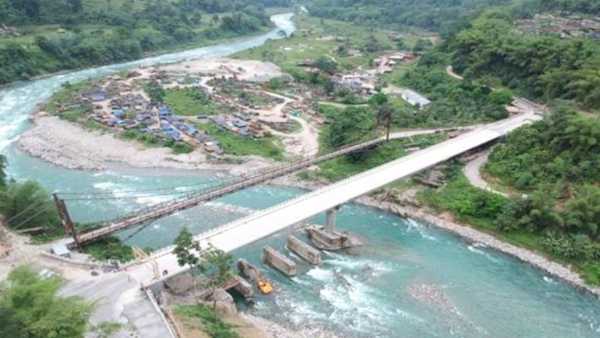
This project is responsible for the construction and maintenance of 811 km long roads and about 86 bridges. These include small bridges to large steel and arch bridges.
During the financial year 2025-26, Project Brahmank completed the construction of 13 new bridges in Siang and Siom valleys. The total length of these bridges is 390 meters. Apart from this, blacktopping of 61 kilometers of roads was also done. The project has also developed helipads for better connectivity and strategic strengthening in the area. This has facilitated the movement of the army and local people. On the occasion of Foundation Day, programs like military conference, interaction with soldiers and mass banquet were organised.
Project Brahmank, established on 29 June 2011, has played an important role in strengthening road connectivity in the border areas despite difficult hilly terrain, heavy rainfall and limited resources. Due to this, even remote villages have got better road facilities.
As part of the 16th Raising Day celebrations, social and welfare activities were organized at the Headquarters and various locations of the Task Force. To make the occasion memorable and promote camaraderie among the personnel, programs like Sainik Sammelan, dialogue among soldiers and big dinner/mess were also organised.
The project, which started on June 29, 2011 at Ranaghat in East Siang district of Arunachal Pradesh, became fully operational on December 3, 2011. Despite difficult conditions such as rugged terrain, frequent rains, poor connectivity and limited infrastructure, the project is playing a vital role in providing strategic and operational connectivity to the armed forces as well as bringing remote villages into the national mainstream.