The 2026 World Cup has now entered its knockout phase, where every match carries immense pressure. Referees will face just as much scrutiny as the players striving to push their nations through each successive round.
During the group stage, a few suspensions occurred — all involving players who were shown red cards in earlier fixtures.
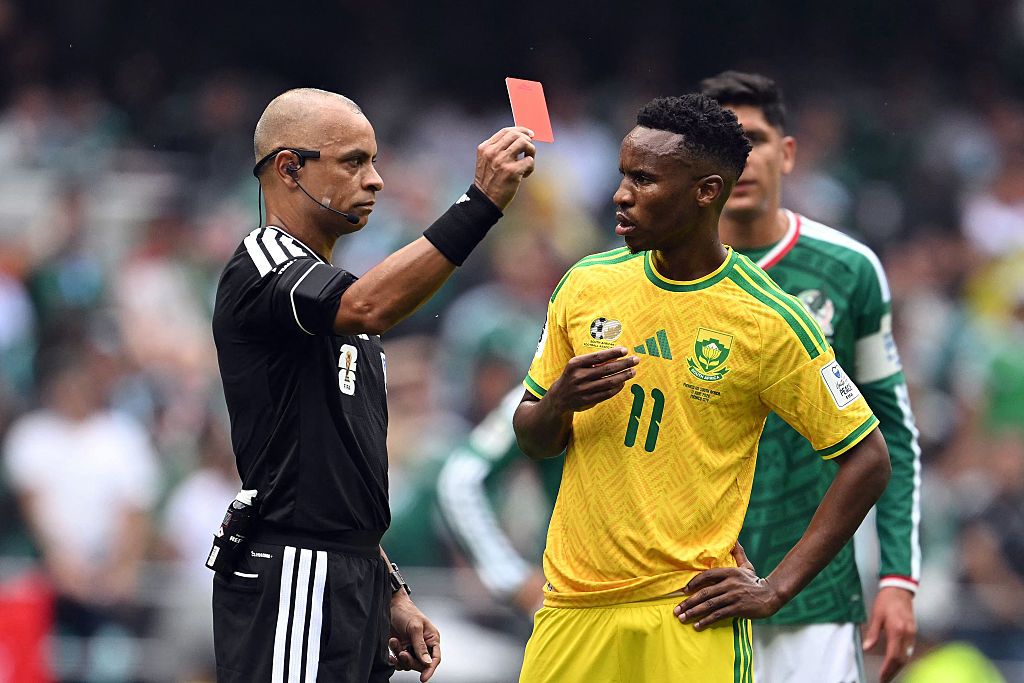
According to World Cup regulations, any red card automatically results in an immediate one-match suspension, regardless of whether it is a straight red or the outcome of two yellow cards in the same game.
More serious offences can attract longer bans. For example, Qatar’s Assim Madibo, whose team has since been eliminated, received a five-match suspension following a challenge that injured Canada’s Ismael Kone during their second group match.
That incident effectively ended Madibo’s tournament, and the suspension would have continued to apply unless Qatar had advanced to the final. Typically, adjustments to suspension rules at major tournaments are implemented to prevent players from facing overly harsh penalties in the most crucial matches.
Another way a player can incur a one-match suspension is by receiving two yellow cards in two separate games. This, too, results in a one-match ban.
The approach to suspensions for red and yellow cards remains consistent in the knockout rounds. As in the group stage, a red card or the accumulation of two yellow cards will result in a one-match suspension for the following round.
However, over time, adjustments have been made to ensure players do not miss pivotal, career-defining matches due to yellow cards collected across a tournament that now spans up to seven matches before the final.
One of the most memorable examples of the old system came in 1990, when England’s midfielder Paul Gascoigne received a yellow card in the semi-final against West Germany. He realised instantly that if England reached the final, he would be suspended. Although England did not progress, Gazza’s emotional reaction became one of football’s most iconic images.
That scenario is no longer possible. Yellow cards are cleared between the quarter-finals and semi-finals, meaning the only way a player can miss the final through suspension is by being sent off in the semi-final.
With the expansion of the World Cup to 48 teams and the addition of an extra knockout round to accommodate the new format, the tournament now includes two separate amnesties.
The first yellow card amnesty was applied at the conclusion of the group stage.
For instance, Brazil’s midfielder Casemiro, who was booked in their opening Group C clash against Morocco, would not face a suspension in the round of 16 due to his subsequent yellow card against Japan during the first half of their round of 32 encounter.