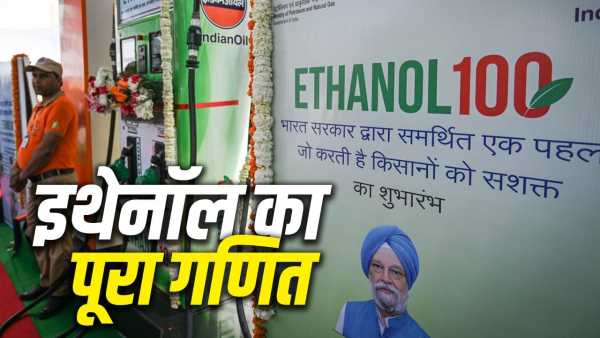
Petrol in India is no longer just petrol. Today, crores of vehicles across the country are running on fuel in which ethanol has been mixed. The government claims that this will reduce dependence on crude oil imports, increase farmers' income and also benefit the environment. This is the reason why ethanol blending has been increased rapidly in the last few years. Now about 3.6 crore consumers in the country are using petrol mixed with ethanol and its annual consumption has reached 1500 crore litres.
At the same time, as rapidly as the use of ethanol has increased, questions related to it have also come to light. Crores of vehicles are now running on E20 i.e. petrol mixed with 20 percent ethanol, so it becomes important to know the answers to these questions. The common questions being raised among people are – Is ethanol really a better alternative to petrol? Is it safe for every vehicle? And can ethanol completely replace petrol in the future? Come, let us understand the answers to all these questions in simple language.
answer:
First of all let us understand what is ethanol? In simple language, ethanol is a type of alcohol (ethyl alcohol) and it is a biofuel, which is prepared from sugarcane juice, molasses, corn and other agricultural products. It is an easily burning fuel, hence it is mixed with petrol and used in vehicles. Ethanol mixed petrol has been being used in many countries of the world for years and now India is also moving rapidly in this direction.
answer:
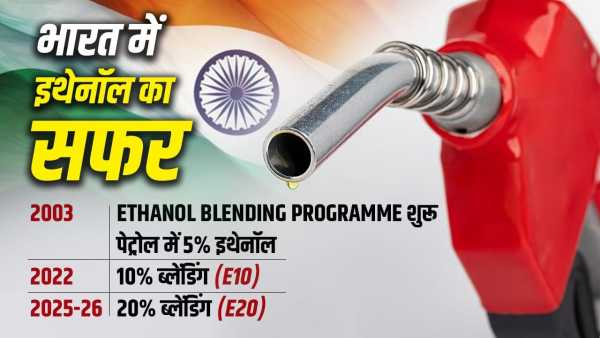
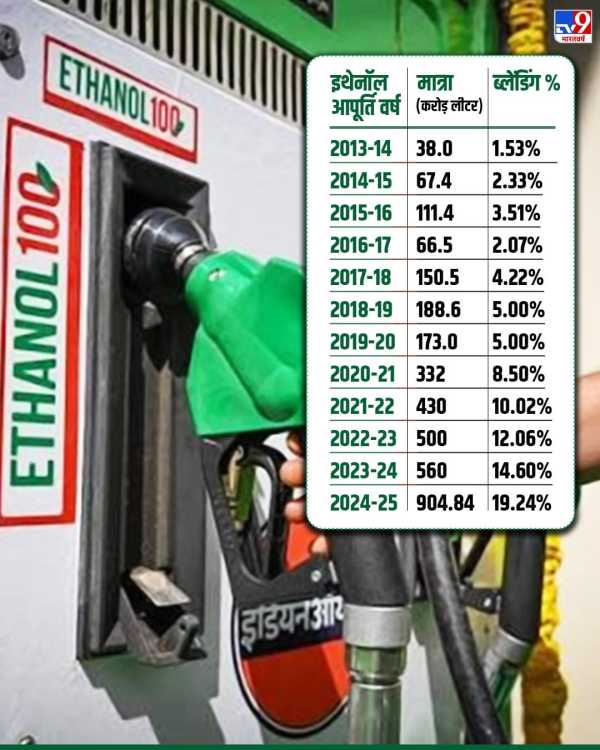
India started Ethanol Blending Program (EBP) in 2003. Initially 5% ethanol was mixed in petrol. After this it was increased to 10% and now 20% ethanol mixed petrol (E20) is being promoted in the country. The government believes that this will reduce dependence on buying oil from abroad, save foreign exchange and farmers will also benefit by increasing the demand for agricultural products like sugarcane and maize. This is the reason why ethanol is being considered an important part of India's energy security. In 2013-14, 38 crore liters of ethanol was supplied, which increased to 173 crore liters in 2019-20. With this, ethanol blending in petrol increased from 1.53% to 5%.
journey of ethanol
answer:
According to government and industry data, about 3.6 crore people in the country are using ethanol mixed petrol. At the same time, the consumption of ethanol will reach approximately 1500 crore liters in 2024-25. The government says that this has reduced the need to buy crude oil from abroad, thereby saving foreign exchange and also reducing dependence on oil imports.
answer:
Many benefits of ethanol are said to be there. The biggest advantage is that it reduces petrol consumption and reduces dependence on crude oil imports. Second, sugarcane and maize producing farmers get a source of additional income. Third, ethanol is considered a relatively clean fuel because its use can reduce carbon emissions. Apart from this, being a fuel produced within the country, it also strengthens energy security.
answer:
Under normal circumstances, ethanol mixed petrol is considered safe and has been in use for a long time in many countries of the world. However, ethanol is a highly flammable substance. Its fire can sometimes behave differently from ordinary petrol fire and may require special measures to control it. Despite this, experts believe that it is safe for common consumers when used as per prescribed standards.
answer:
Most of the new generation vehicles are being designed keeping E20 petrol in mind. The government and automobile companies have also developed E20-ready engines. But, excessive ethanol mixture in old vehicles may cause some technical problems. Ethanol attracts moisture more and can affect some old engine parts, rubber pipes or fuel systems. Apart from this, in some cases a slight decrease in mileage can also be seen, which cannot be said to be completely correct. However, automobile companies say that E20-compliant vehicles will not have such problems. But, it has been said by the government that no report has come forward that there is any harm from ethanol.
answer:
At present the answer is 'no'. Ethanol can become a complement to petrol, but it is not easy to become a complete substitute for it. India's fuel needs are huge and it is not considered possible to meet them with agriculture-based ethanol alone. Therefore, it is believed that in the coming years, only a mixed model of petrol, ethanol, electric vehicles, green hydrogen and other alternative fuels will be seen.
How much did the supply of ethanol increase?
answer:
No, such a claim was made on social media, but it is wrong. Sugarcane juice is not mixed directly into petrol. First, ethanol is prepared through industrial process (fermentation and distillation) from agricultural products like sugarcane juice, molasses, corn and broken rice. After this, it is mixed in petrol only after the quality check is completed.
answer:
In fact, many viral videos have surfaced on social media, in which such a claim was made by showing ants near a petrol tank. But the claim that ants are found near ethanol is completely wrong. According to BPCL, fuel-grade ethanol does not contain sugar. Apart from this, substances are also added to it which keep insects away. Therefore, the claim of ants being found on petrol mixed with ethanol is not scientifically correct.
answer:
According to some auto experts, the effect of E20 (20% ethanol mixed) petrol may be seen on some vehicles manufactured before 2023. Mileage in such vehicles may decrease by 3 to 7 percent. Additionally, ethanol can affect old rubber pipes, seals and plastic parts. Ethanol also draws moisture from the air, which can increase the risk of water accumulation and rusting in the fuel tank. Therefore, if your car is old, then definitely check the advice of the vehicle manufacturer before using E20 petrol.