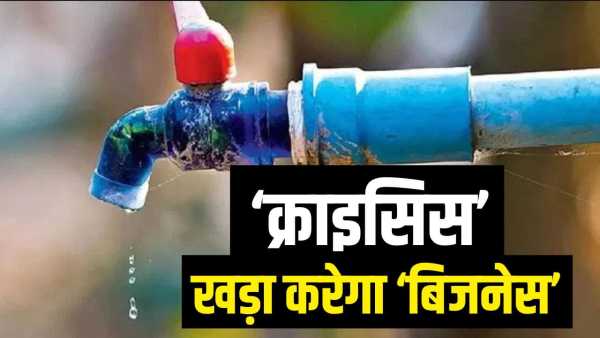
The water crisis in India is becoming deeper, but even in this crisis, a big business worth lakhs of crores of rupees is hidden. Which can make a big contribution in boosting the country's economy in the coming days. According to a report by Prabhudas Lilladher, India's increasing water scarcity and the need for investment of about Rs 20 lakh crore in the next decade are creating long-term growth opportunities for water infrastructure companies. The sector is expected to get support from good order book, strong earnings potential and continued government spending. The brokerage said that India is home to about 18 percent of the world's population, but has only 4 percent of the world's freshwater resources. Therefore, water security is an urgent priority regardless of economic or political fluctuations.
According to the report, by 2030 the demand for water may be almost double the available supply. For this, an investment of more than Rs 20 lakh crore will be required in the next decade in drinking water supply, sewage treatment, wastewater recycling, desalination, storage and distribution infrastructure. It is expected that India's water and wastewater treatment technology market will grow from about $3 billion in FY 2025 to $5.2 billion by FY 2031, which means its compound annual growth rate (CAGR) will be about 10 percent. Expenditure on industrial water and wastewater infrastructure is also expected to increase by approximately 8 percent annually by 2030. The reason for this is the strict discharge rules, Zero Liquid Discharge (ZLD) rules and increasing water consumption in industries.
Government programs play an important role in increasing demand. The Jal Jeevan Mission has an annual budget of around Rs 67,000 crore, while the Jal Shakti Ministry has been allocated around Rs 99,500 crore for FY 2026. The budget of the AMRUT 2.0 urban water scheme is around Rs 2.99 lakh crore, while Rs 22,500 crore has been allocated for sewage treatment and river rejuvenation under Namami Gange Phase II. The brokerage has considered sewage treatment as one of the biggest opportunities in this sector. India produces about 72,000 million liters (MLD) of sewage every day, but the treatment capacity is only around 27,000 MLD. This means that approximately 70 percent of sewage remains untreated, which shows a major deficiency in infrastructure.
According to the report, sustained public investment, tightening environmental regulations, rapid urbanization and increasing demand for water in industry establish water infrastructure as a long-term investment theme, providing growth opportunities for companies in this sector for many years.