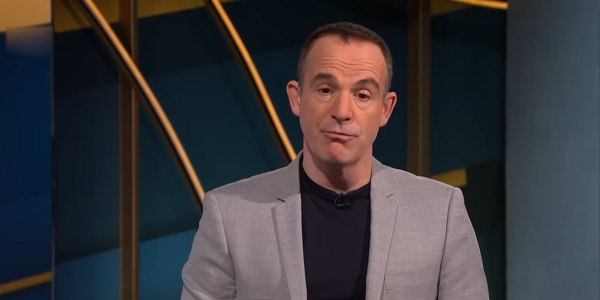
Personal finance guru Martin Lewis gave a listener to his podcast bad news about a potential tax break which can raise a married couple's personal tax allowance to £13,830. The lowest level of personal tax threshold has been frozen since 2021 at £12.570.
But for couples where one is a non-taxpayer, and the other pays the basic 20% rate - earning under £50,570 - they can make a shift to give themselves a bit more money - and also potentially get a back payment of more than £1,000 if they didn't claim it the previous 4 years.
On his newBBC Radio 5 podcast this week, a listener, Darren wrote in to see if he could get the rate He said: "I am a high rate taxpayer we have 2 children aged 15 and 13. For the last 13 years my wife has been the full time carer for our severely disabled youngest son. My wife claims carer's allowance and we claim disability living allowance on behalf of our son. We do not claim child benefit. If we were to claim the married person's tax benefit would I or my wife be required to complete an annual tax self-assessment? I'm quite worried about having to start doing this as I'm notoriously bad at this kind of admin and would be worried that I might fail to submit a return one year and receive a fine, especially as our son's care needs are high and we don't really get much free time to fill out taxing tax returns."
Martin said: "Really interesting -let me deal with the second issue first, the marriage tax allowance. I'm afraid it isn't going to be an issue for you. You cannot claim married tax allowance. The marriage tax allowance is for non taxpayers, which is your wife, married to a basic rate taxpayer which isn't you. You're a high rate taxpayer. If you go over the high-rate tax threshold even by a pound, you can no longer do the marriage tax allowance. Which is why it would be worth increasing your pension by £1 in that situation so that you would no longer be a high rate taxpayer and then you would still be able to claim the marriage tax allowance.
"What the marriage tax allowance does is it allows a non-tax payer to apply to have 10 per cent of their personal allowance, the amount they can earn tax free each year, to be shifted to the basic rate taxpayer. So that basic rate taxpayer then has another £1,250 roughly that they can earn tax-free rather than paying 20% tax on it. Typical saving is around £250 a year and you can back claim it."
Mr Lewis said it may be of help to other people, even though Darren can't claim hte allowance. He added: "So if you are listening and you are in a relationship where one of you is a non taxpayer and if you two are married or in a civil partnership, not just cohabiting, then yu are entitled to use the marriage tax allowance. If you've been entitled to it for four years previously, you could be entitled to £1,250 and get a backdated payment of £1,000 as part of that."
The tax thresholds have been frozen since 2021 - and Chancellor Rachel Reeves extended this to 2031 in her last budget. This has come under fire for causing 'fiscal drag' meaning some of the poorest workers in the UK are paying more and more tax as inflation causes pay to rise - whereas the threshold stays the same. The HMRC has said couples where one doesn't work can benefit from a rule - which has also been backed by personal finance TV expert Martin Lewis.
HM Revenue and Customs (HMRC) has previously urged people to take advantage of the offer whereby one person in a marriage can transfer their allowance to the other person.T he HMRC has added that individuals have the option to backdate their claim for the previous 4 tax years. meaning people can get a lump sum of more than £1,000.
The HMRC has said: "Marriage Allowance keeps money in your pocket by reducing the amount of tax you and your spouse pay by up to £252 a year. You can check your eligibility and apply on GOV.UK. Search 'Marriage Allowance' to find out more."
"To benefit from the tax relief, one partner must have income less than the Personal Allowance of £12,570, and the higher earning partner's income must be between £12,571 and £50,270 (£43,662 in Scotland)."
Around 2.1 million people are failing to claim the funds - and those who haven't previously done so could receive £1,260 as a lump sum - backdated for four years plus the current year. One partner must be a non-taxpayer, allowing them to transfer the portion of their personal allowance they're not using.
Tax year // How much you could get
2026/27 £252
2025/26 £252
2024/25 £252
2023/24 £252
2022/23 £252
Listen to the fullpodcast here. Details on Marriage Allowance here.